Why Is My Back Window Tint Bubbling?
Why is your back window tint bubbling? See a real 2019 Nissan Sentra with four-year-old rear tint failure, learn how permanent bubbling differs from normal curing moisture, and find out when the film needs to be removed and replaced.
Why Is My Back Window Tint Bubbling?
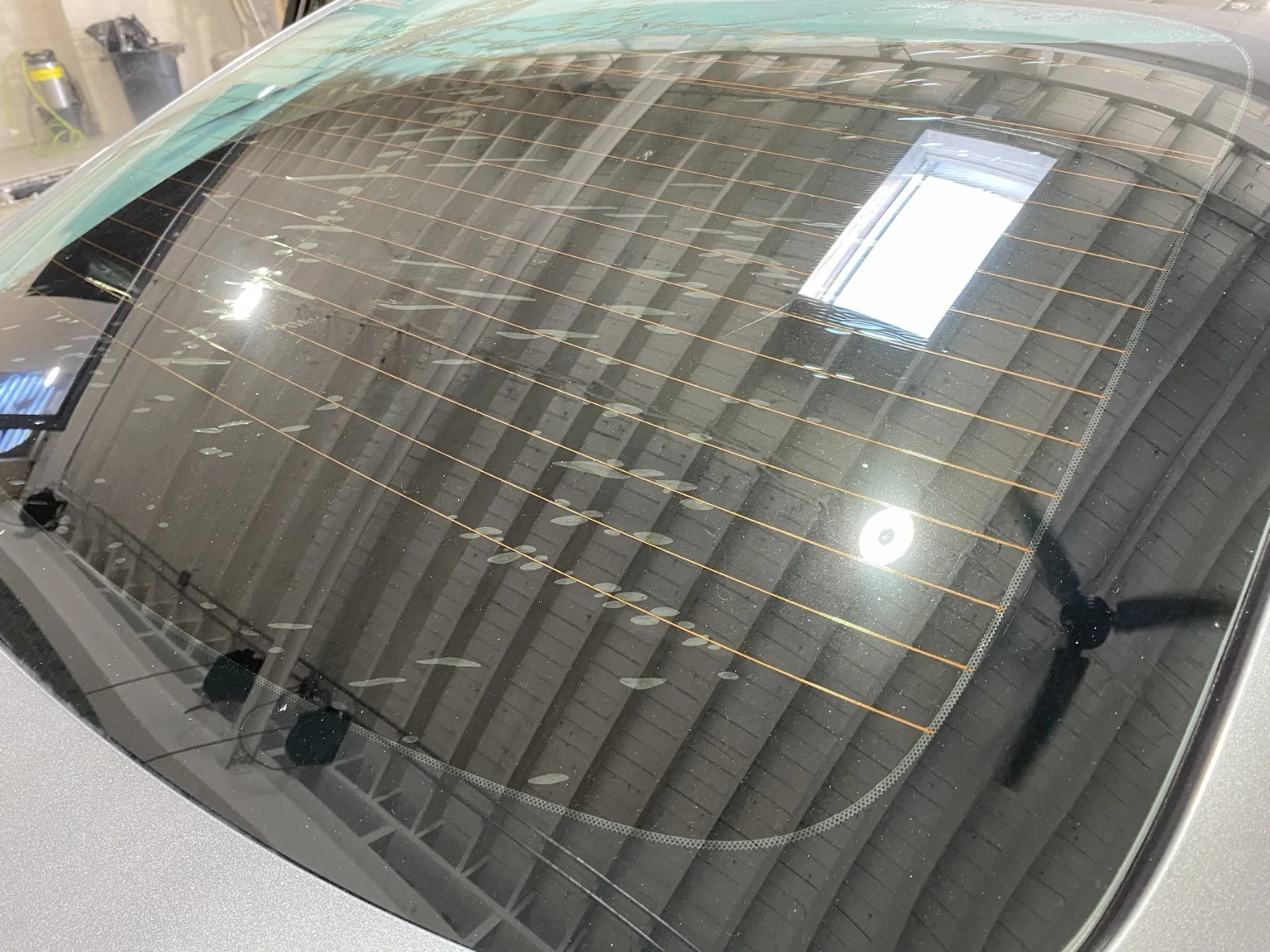
If large bubbles appear in your back window tint months or years after installation, the film may be separating or delaminating from the glass. This is different from the small moisture pockets that can appear while fresh tint is curing. Large permanent bubbles in already-cured rear tint normally will not disappear, cannot simply be squeegeed back down, and usually require the rear film to be removed and replaced.**
At Dope Tintings in Pennsauken, New Jersey, we've been tinting vehicles for more than 20 years.
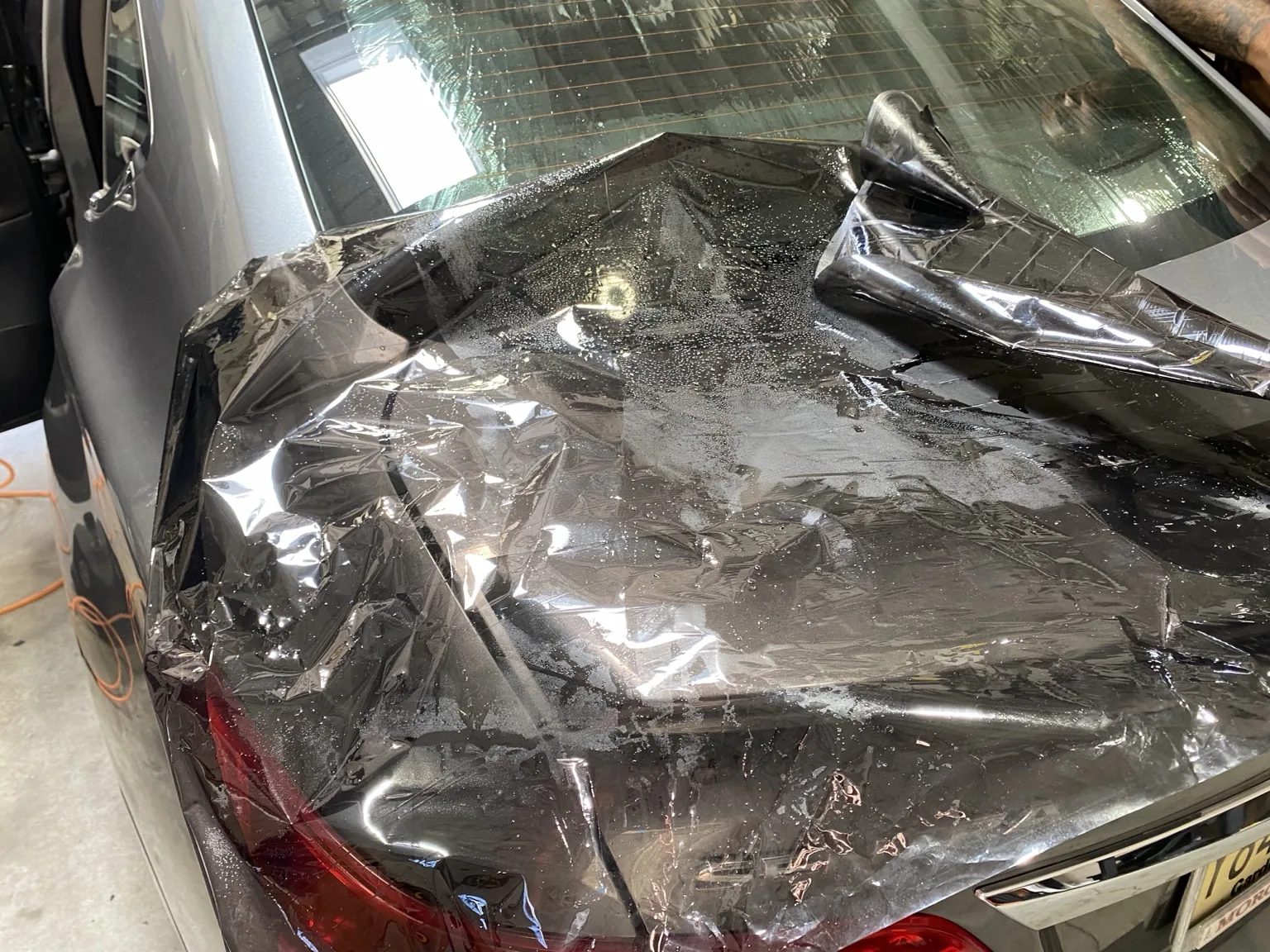
We've seen rear-window tint fail in many different ways, but one of the most recognizable problems is the large bubbling and separation shown in the real customer photographs in this guide.
The vehicle we're using as our example is a 2019 Nissan Sentra that we originally tinted with 15% carbon window film on March 22, 2021.
Approximately four years later, the rear window had developed major bubbling.
The four side windows had not.
That makes this vehicle a useful real-world example of what permanent rear-tint failure can look like and how we evaluate it.
What Does Failed Back Window Tint Look Like?
Failed rear-window tint doesn't usually look like a few tiny water pockets from a fresh installation.
Once older cured film begins separating, you may notice:
- Large bubbles
- Long or oval-shaped separated areas
- Film lifting away from the glass
- Distortion when looking through the rear window
- Bubbling that gradually spreads
- Film beginning to release from the glass
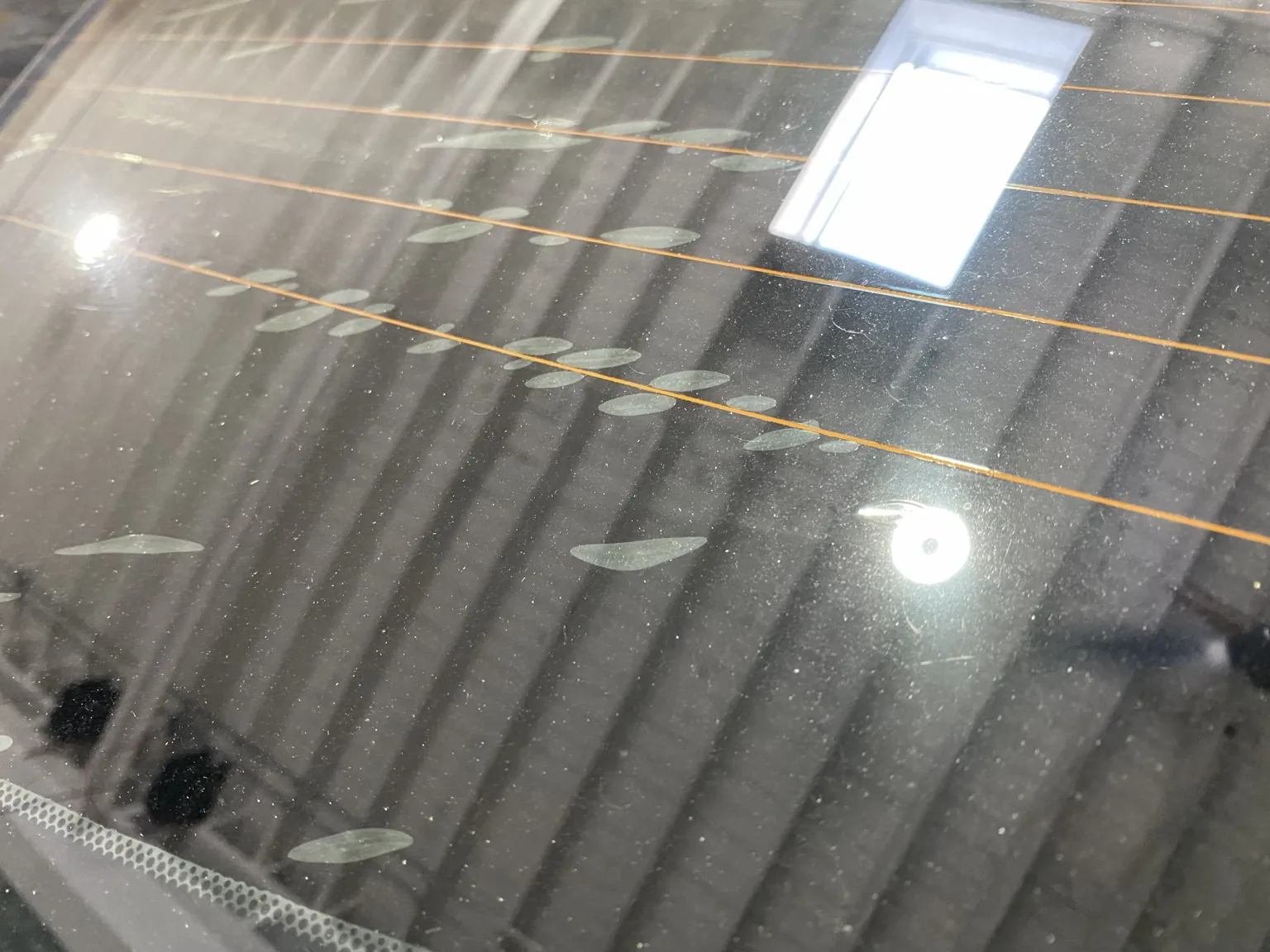
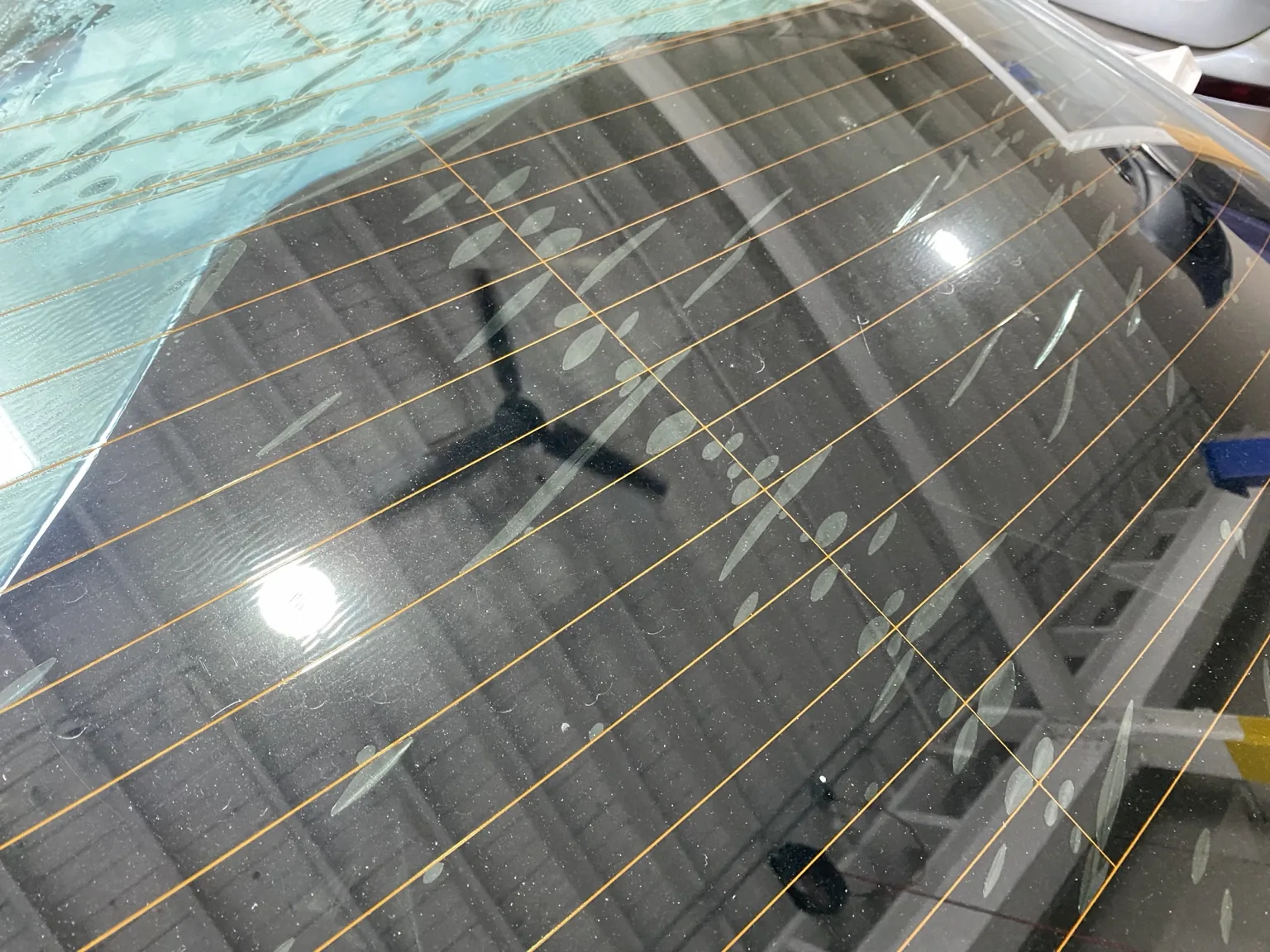
The photographs in this article show exactly that type of developed failure.
In severe cases we've encountered, deteriorated film has progressed far enough that portions of the film eventually began releasing from the glass.
Once the tint reaches this stage, you're no longer waiting for normal installation moisture to dry.
Real Example: 2019 Nissan Sentra With Bubbling Rear Tint
This customer brought us a 2019 Nissan Sentra.
We originally tinted the vehicle on March 22, 2021 using 15% carbon film on all four doors and the back window.
Approximately four years later, the rear film looked like the photographs shown in this guide.
What made the case interesting was the condition of the rest of the vehicle.
The four side windows still looked visually healthy.
We didn't see the same large bubbles developing on the door glass.
We didn't see the same type of separation beginning across the entire installation.
The visible failure was concentrated on the back window.
That doesn't prove exactly what happened to the rear film during those four years, but it gives us important information when diagnosing the problem.
Does One Bubbling Window Mean the Tint Film Was Defective?
Not automatically.
When a vehicle returns with a problem, we don't look at one bubble and immediately decide the entire roll of film was defective.
We inspect the complete installation.
On this Sentra, the rear window and four doors were part of the same original 15% carbon installation.
Four years later:
Rear window: substantial bubbling and separation.
Four side windows: still visually healthy.
That pattern gives us a reason to investigate the rear window's history, exposure and aftercare instead of automatically assuming every piece of film installed on the vehicle was defective.
We also have to acknowledge what we don't know.
We weren't with the vehicle during those four years.
We cannot prove every product or substance that touched the rear film after the vehicle left our shop.
What Did We Learn From the Sentra Owner?
One of the first questions we ask when an older installation comes back with a problem is:
"What have you been using to clean your tinted windows?"
The customer initially told us that she never cleaned the inside of the windows.
After discussing the problem, we agreed to replace the rear film as a courtesy.
She then asked what she should use to clean the windows in the future so the problem wouldn't happen again.
That raised a concern for us about whether our original aftercare instructions had been followed.
But we still cannot honestly say:
"This exact cleaner caused this exact Sentra failure."
We don't know that.
What we can say is that aftercare becomes one of the things we investigate when a previously healthy installation develops a problem years later.
Why Does the Back Window Often Show Tint Problems First?
In our experience, the back window is commonly one of the first places where deterioration becomes obvious.
A major factor is its exposure.
On many vehicles, the rear glass is:
- Large
- Angled upward
- Regularly exposed to sunlight
- Subjected to repeated heating and cooling
The film on that glass can experience substantial solar exposure over years of ownership.
If an installation has become compromised, the rear glass may be where the problem becomes visually obvious first.
That doesn't mean every rear window will eventually bubble.
Quality film that is properly installed and properly maintained can last many years.
For more information about film lifespan, read How Long Does Tint Last on a Car?.
Does the Rear Defroster Cause Window Tint to Bubble?
In our experience, normal use of the rear defroster is not what causes the large permanent bubbling shown in these photographs.
This is an easy assumption to make because many of the separated areas appear close to the horizontal defroster lines.
But seeing a bubble near a defroster line does not automatically prove that the defroster created the failure.
In fact, during cold-weather curing, we may tell customers to use their rear defroster to help the newly installed film dry.
We do not tell customers that they need to stop using a properly functioning rear defroster simply because the window has been tinted.
The important distinction comes later if the old film needs to be removed.
That's when the installer must work carefully around the defroster grid.
Are These Large Bubbles the Same as Tint Peanuts?
No.
Professional tinters sometimes use the term "peanut" for a much smaller installation-related area that can occur around a raised rear defroster line.
That's not what you're seeing on this Sentra.
Peanuts are an installation issue that a professional installer addresses during the installation process.
The large areas shown in these photographs developed years after the original installation had already cured.
So there are two different conditions:
Small installation-related peanut: addressed during installation.
Large developed bubble/delamination: appears after cured film begins separating.
We don't consider them the same problem.
Are Small Bubbles Normal After Fresh Window Tint?
Small moisture pockets can be normal shortly after installation.
Window tint is installed using an application solution.
Even after the installer removes as much solution as possible, some moisture can remain between the film and glass while the installation cures.
During that period, a customer may notice:
- Tiny water pockets
- Small moisture bubbles
- Slight haze
- A cloudy appearance
Those conditions can change as the film dries.
That's completely different from a four-year-old installation suddenly developing large permanent bubbles.
How Can You Tell Curing Moisture From Failed Tint?
The easiest things to consider are:
When did it appear?
How large is it?
Is it improving or getting worse?
Fresh curing moisture normally:
- Appears shortly after installation
- Consists of relatively small moisture pockets
- Changes as the film dries
- Gradually disappears during curing
Permanent film failure normally:
- Develops after the installation has already cured
- Creates larger bubbles or separated areas
- Does not improve with additional curing time
- Can continue spreading
- Can distort the view through the glass
If your tint was installed yesterday, don't compare a few small moisture pockets with the failed four-year-old film shown in these photographs.
Follow your installer's curing instructions first.
Will Large Bubbles in Old Window Tint Go Away?
No—not when the cured film has actually begun separating from the glass.
Once the problem has reached the stage shown on this Sentra, waiting longer won't make the film rebond itself.
In our experience, established separation can continue getting worse.
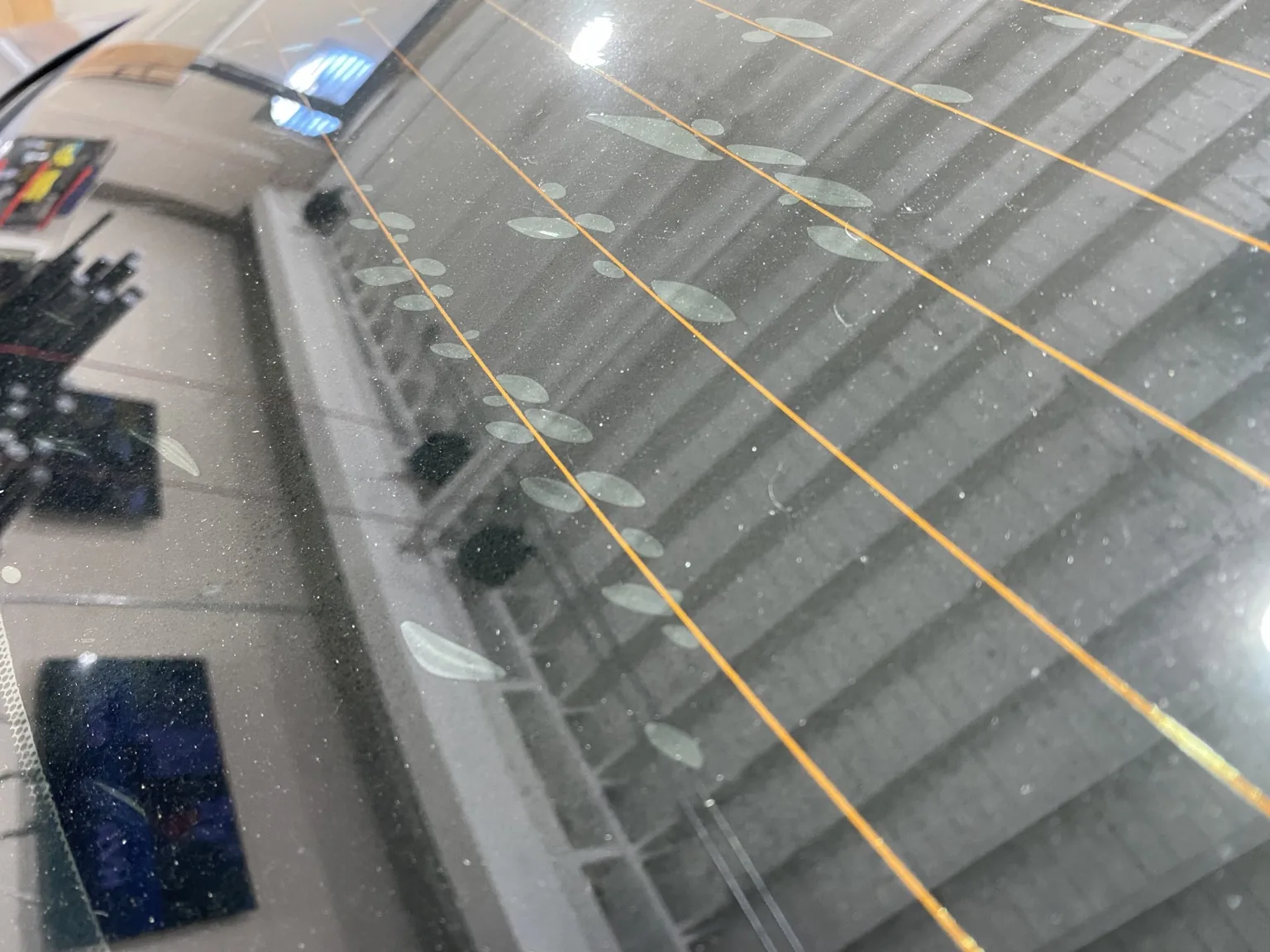
Hot weather and repeated sun exposure can make an already compromised installation more noticeable.
We've even seen severely deteriorated film eventually begin releasing from the glass.
That's why we don't tell a customer with an older bubbling rear window:
"Give it another few weeks to dry."
The installation finished curing years ago.
Can You Fix Old Tint Bubbles Without Replacing the Film?
Not when the cured film has actually failed.
Customers sometimes ask whether we can:
- Push the bubble down
- Squeegee it out
- Poke it with a needle
- Cut the bubble
- Heat it
- Press the film back against the glass
Those methods don't restore a failed bond between the old film and glass.
Once the rear film has reached the condition shown in these photographs, the proper repair is generally:
Remove the failed film.
Properly clean and prepare the rear glass.
Install new window film.
We don't recommend cutting holes or using sharp objects around the rear window in an attempt to save failed film.
The rear glass contains defroster lines, which creates an additional risk if someone begins scraping the window improperly.
If you're wondering whether another layer can simply be installed over the failed film, read Can You Put New Window Tint Over Old Tint?.
Can Bubbling Rear Tint Affect Your Visibility?
Yes.
A few small bubbles may initially seem like nothing more than an appearance problem.
But as separation spreads across the rear glass, the distortion can make it harder to see clearly through the window.
That matters when:
- Backing up
- Checking traffic behind you
- Changing lanes
- Driving at night
- Driving in rain
Once the rear tint becomes heavily bubbled, the issue isn't just that the vehicle looks bad.
It can interfere with the driver's view through the back glass.
Does the Entire Back Window Tint Need to Be Replaced?
Yes, once the rear film has developed this type of permanent widespread failure.
We don't cut individual bubbles out and patch the rear window.
The back glass is normally tinted with one complete piece of film.
When that film fails, the proper correction is to remove the failed installation, prepare the glass and install a new piece.
The condition of the old film determines how difficult that next step will be.
Why Is Bubbling Rear Window Tint Harder to Remove?
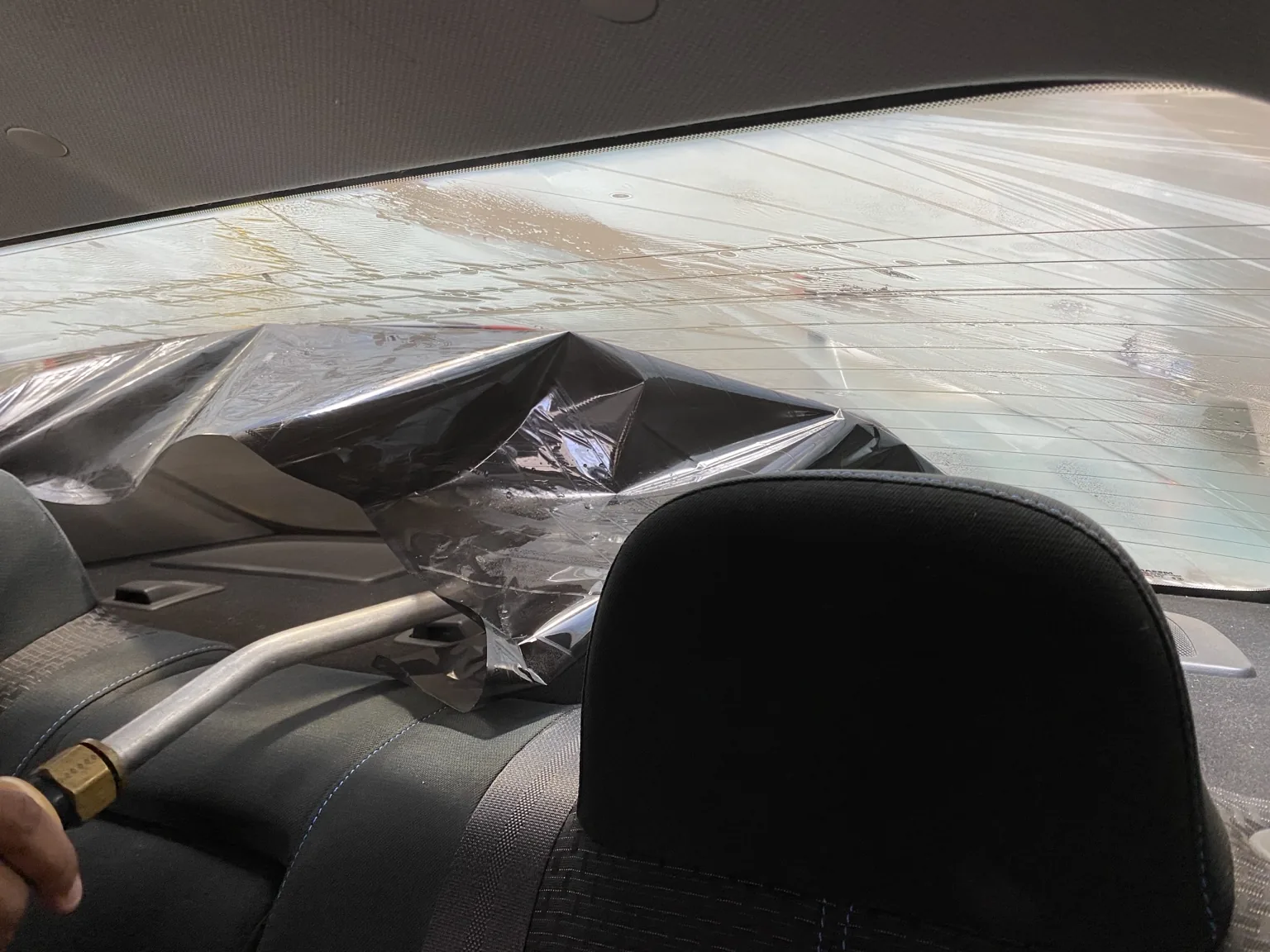
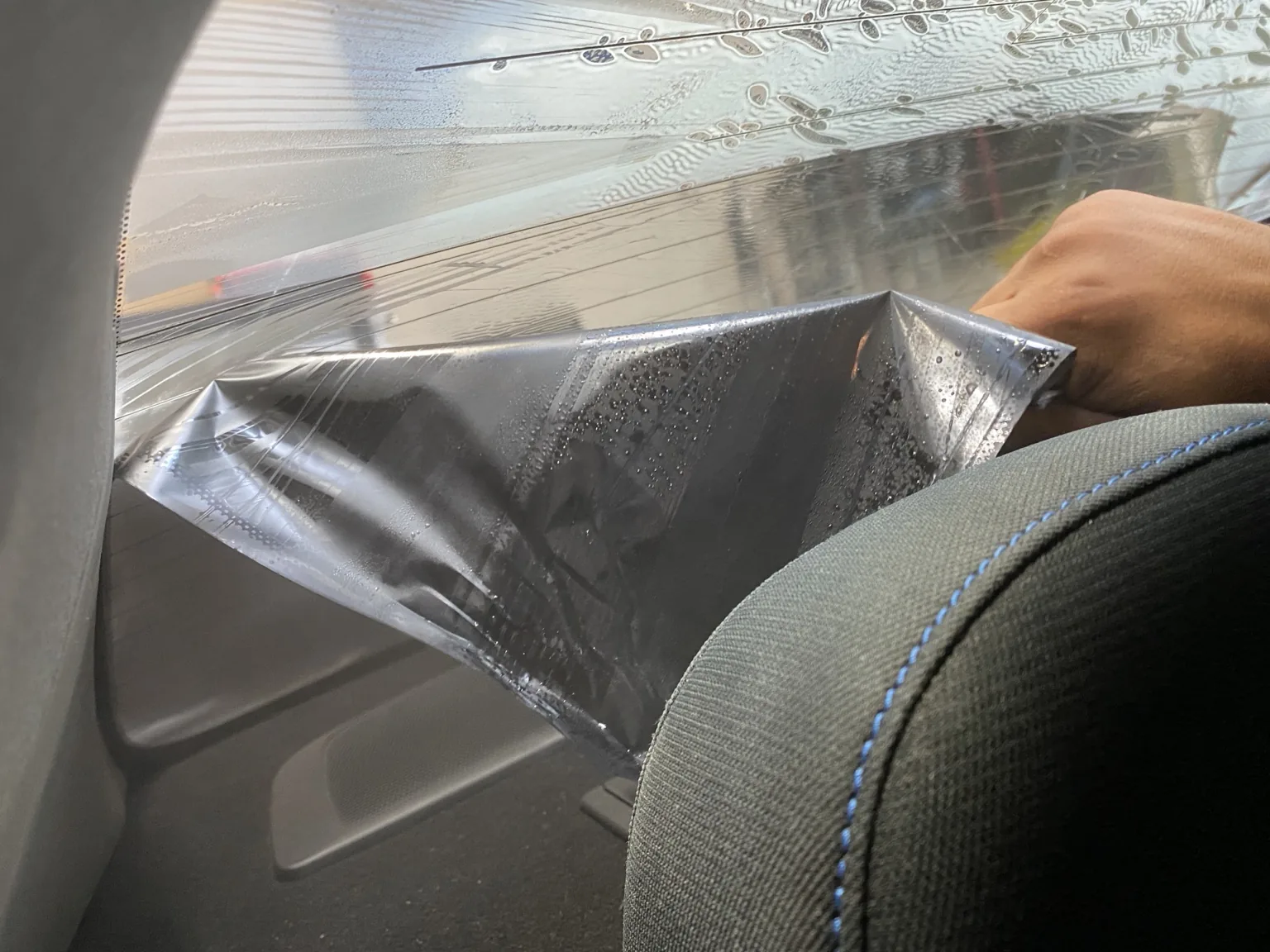
The worse the film deteriorates, the more unpredictable removal can become.
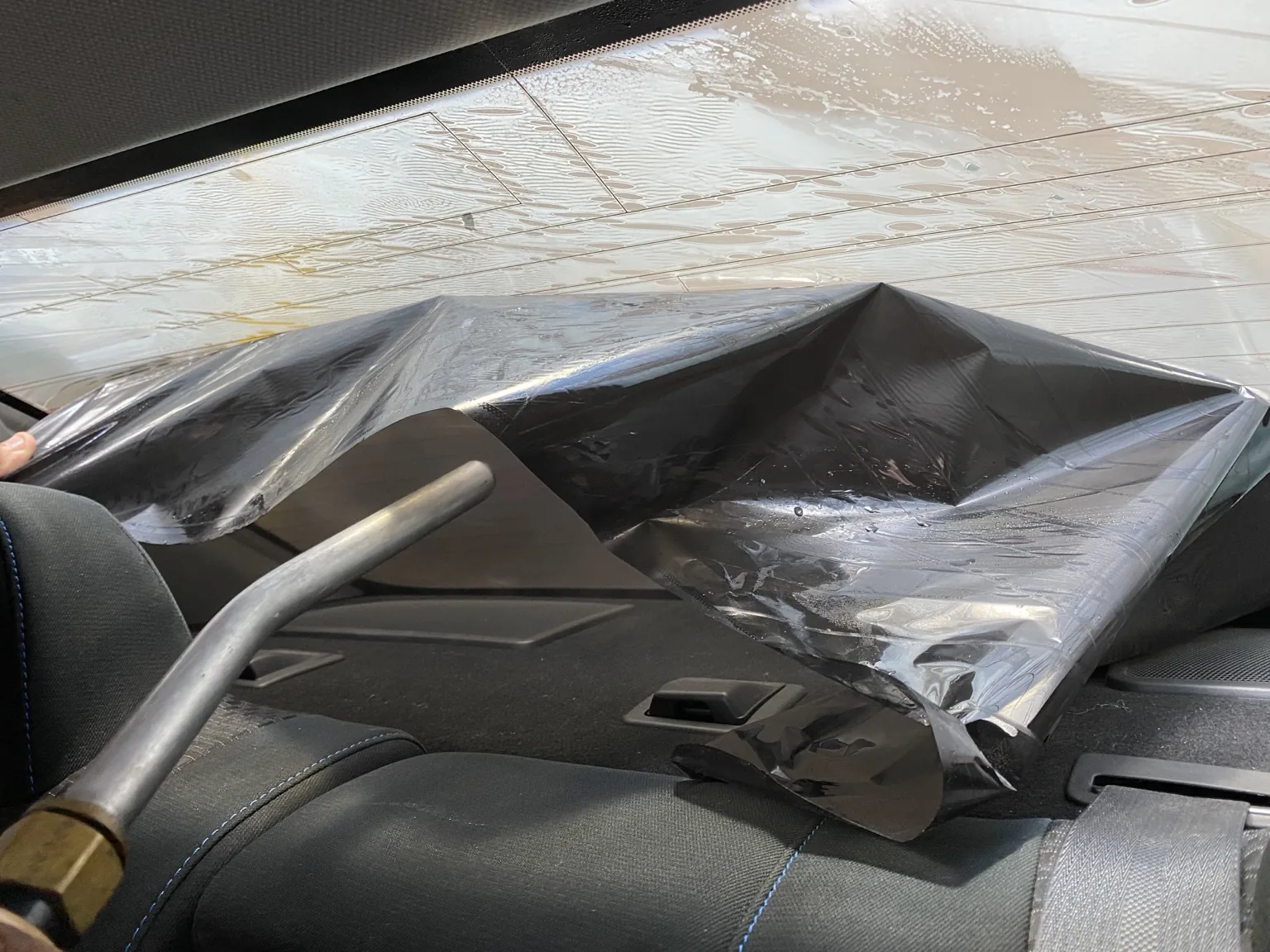
Healthy film may release in a relatively large piece.
Badly deteriorated rear tint can behave differently.
It may:
- Tear into small pieces
- Separate into layers
- Leave adhesive behind
- Require considerably more time
- Become difficult to release around the defroster grid
This is one reason we want to inspect badly bubbled rear tint before giving a firm removal price.
A rear window that looks like a simple removal from outside can become much more time-consuming once we actually start working on it.
For a detailed breakdown of pricing and removal difficulty, read How Much Does Rear Window Tint Removal Cost?.
Why Does the Rear Defroster Matter During Tint Removal?
The rear defroster doesn't prevent the glass from being tinted.
The concern comes when old film eventually needs to be removed.
Unlike ordinary side glass, we can't simply approach the rear window aggressively with a razor because the defroster grid is attached to the glass.
Damaging those lines can cause sections of the rear defroster to stop working.
That's why professional rear-window removal may involve controlled heat, steam and other techniques intended to release the old film while protecting the grid.
In more than 20 years of tinting, we've encountered a small number of extreme situations where deteriorated film or adhesive made rear-window removal especially difficult.
Our goal isn't:
"Get the tint off no matter what."
Our goal is to remove it without unnecessarily damaging the customer's rear glass.
Can Old Tint Pull the Defroster Lines Off the Glass?
It can happen.
Sometimes the problem isn't somebody scraping the defroster with a razor.
Old film can have an aggressive bond to the glass, and during removal a portion of the defroster material can begin lifting with the film.
We cannot always know beforehand whether an older defroster grid has become vulnerable.
At Dope Tintings, if we begin removing rear film and see a defroster line starting to come away with it, we stop.
We contact the customer and explain what we're seeing before continuing.
That's very different from blindly pulling the entire film off and hoping for the best.
What Can Contribute to Premature Window Tint Problems?
Once a professionally tinted vehicle leaves our shop, we aren't with it every day.
We don't know every product that touches the film over the next several years.
When an older installation comes back with an unexpected problem, we ask about the vehicle's history and aftercare.
Some of the things we consider include:
- Glass cleaners
- Professional detailing
- Interior cleaning at automatic car washes
- Dealership courtesy cleaning
- Smoking inside the vehicle
- Vaping inside the vehicle
- Other chemicals or residue that may have contacted the film
This does not mean we can look at every bubbled window and identify one product as the cause.
In the Sentra shown here, we could not prove exactly what caused the rear film to deteriorate.
These are simply some of the things we investigate when trying to understand what a previously healthy installation has been exposed to.
What Should You Use to Clean Tinted Windows?
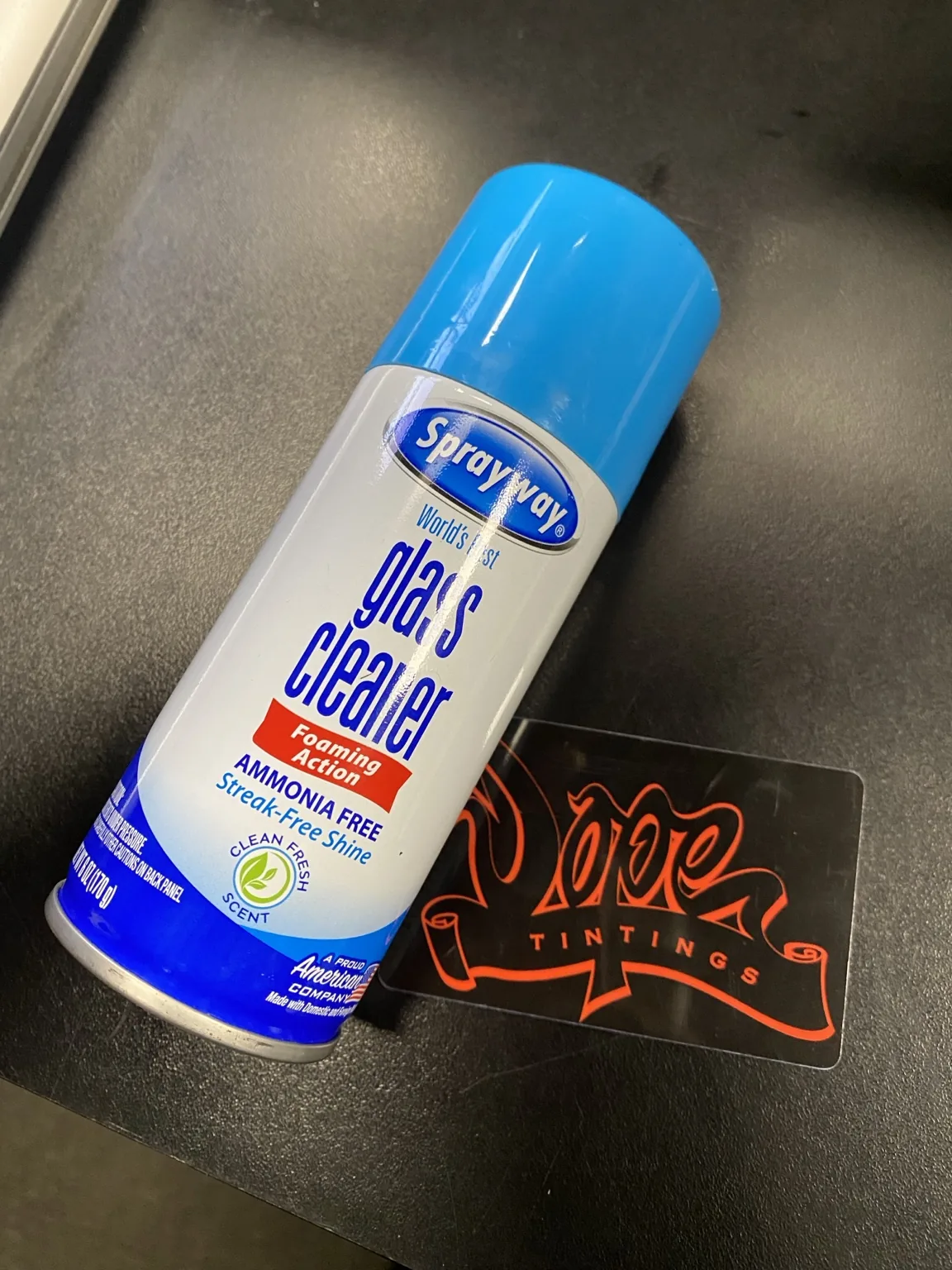
At Dope Tintings, we recommend using a tint-safe, ammonia-free glass cleaner.
Our go-to product is:
Sprayway Glass Cleaner — Foaming Action, Ammonia Free
The photograph in this article shows the actual product we use at our shop.
We've used it successfully for years, which is why we're comfortable recommending it to customers.
That doesn't mean Sprayway is the only cleaner that can ever be used on window tint.
We simply prefer recommending a product we know from firsthand experience.
We also prefer a foaming glass cleaner.
Can You Use Windex on Tinted Windows?
At Dope Tintings, we don't recommend Windex to our customers, including versions marketed as ammonia-free.
We prefer that customers use a tint-safe, ammonia-free cleaner we've had consistent experience with.
The larger point isn't that customers need to become chemists every time they clean their windows.
It's that aftermarket window film is a product installed on the inside of the glass, and we want customers to use products appropriate for that surface.
Can a Detailer Clean Tinted Windows?
Yes.
Having your vehicle professionally detailed does not automatically damage window tint.
The important thing is making sure the person cleaning the interior glass knows that aftermarket film is installed.
Different detailers use different products and dilution ratios.
Before the interior glass is cleaned, tell the detailer:
"These windows have aftermarket tint. Please use a tint-safe cleaner."
That simple conversation can remove a lot of uncertainty.
What About Dealerships and Automatic Car Washes?
Customers don't always personally clean their windows.
A dealership may clean the vehicle during a courtesy wash after:
- An oil change
- Scheduled maintenance
- Warranty work
- Mechanical repairs
An automatic car wash may also include interior-window cleaning.
In either situation, the customer may not know which product is being used on the inside glass.
We're not saying every dealership or car wash will damage tint.
We're saying that someone else is choosing the product touching your aftermarket film.
If you want complete control over tint aftercare, tell them the vehicle has tinted windows or ask them not to clean the inside glass.
What About Smoking or Vaping in a Tinted Vehicle?
Smoking and vaping can leave residue on interior surfaces, including glass.
When we know a customer regularly smokes inside the vehicle, we specifically remind them to stay on top of properly cleaning the tinted windows.
The same applies to customers who vape.
Anyone who regularly vapes inside a vehicle has probably seen haze or residue develop on the inside glass over time.
Our recommendation is straightforward:
Keep the tinted glass properly maintained using a tint-safe cleaner.
We're not claiming that every vehicle smoked or vaped in will automatically develop bubbling tint.
It's simply another part of the vehicle's history we consider when evaluating an older installation.
Can Pets Affect Tinted Windows?
Pets are more relevant to the side windows than the rear-window failure shown in this article.
Dogs may press their noses against the door glass or lick the windows.
That means the side-window film can be exposed to saliva, oils and repeated cleaning.
It's another reason pet owners should properly maintain aftermarket window film.
But we are not saying pet exposure caused the bubbling on the Sentra's back window.
Why Does Window Tint Aftercare Matter?
Professional installation is only one part of a film's life.
Once the vehicle leaves our shop, we can't control:
- What products are used on it
- Who cleans the windows
- Whether the vehicle is professionally detailed
- Whether someone smokes or vapes inside
- What a dealership uses during a courtesy cleaning
- How frequently the interior glass is maintained
That's why we give customers aftercare instructions.
A lifetime warranty should not be interpreted as:
"Nothing that happens to the film after installation matters."
The applicable warranty still has terms and conditions, and the installation needs to be evaluated if a problem develops.
What Did We Do for the Bubbling Nissan Sentra?
After inspecting the vehicle and speaking with the customer, we agreed to replace the Sentra's rear tint as a courtesy.
We also explained that the replacement needed to be properly maintained moving forward.
The four side windows from the original installation still appeared visually healthy.
The rear film was the problem.
We couldn't prove exactly what the rear window had been exposed to during the previous four years, so we handled the situation based on what we could actually inspect and the conversation we had with the customer.
That's how we prefer to handle tint problems:
Look at the vehicle first.
Ask questions.
Then determine what makes sense.
What Should You Do After Bubbling Rear Tint Is Replaced?
Treat the replacement like a new installation.
Follow the tint shop's curing instructions.
Don't panic over small moisture pockets immediately after installation.
Give the film time to dry.
During colder weather, we may recommend using the rear defroster to help aid the drying process.
Once the film has cured, clean it with an appropriate tint-safe product.
And if someone else is cleaning your vehicle, tell them that the windows have aftermarket film.
Those simple steps remove a lot of unnecessary uncertainty about what products are touching the tint.
Should You Wait to Remove Badly Bubbling Rear Tint?
Once older cured film has developed widespread permanent bubbling, we recommend having it evaluated rather than waiting until the entire back window becomes heavily distorted.
The longer deteriorated film remains on the glass, the condition can continue progressing.
Depending on how the film ages, removal may also become more difficult.
That doesn't mean every bubbling rear window is an emergency.
But once you know you're looking at permanent failure rather than curing moisture, there isn't much benefit in pretending the bubbles will eventually heal themselves.
For broader removal pricing around our area, read How Much Does Window Tint Removal Cost in South Jersey?.
Can You Remove Bubbling Back Window Tint Yourself?
You can attempt your own tint removal, but the back window is the glass where we recommend the most caution.
The biggest issue is the defroster grid.
A DIY removal becomes risky when someone gets frustrated because the old film won't release.
They grab a razor.
They start scraping.
The film may come off, but portions of the rear defroster can be damaged in the process.
If you're considering doing the removal yourself, read Can You Remove Window Tint Yourself? DIY vs. Professional Removal.
How Much Does Bubbling Rear Tint Cost to Remove?
At Dope Tintings, a straightforward rear-window tint removal currently starts at $74.99.
That starting price is for a rear film that isn't showing major signs of:
- Bubbling
- Brittleness
- Delamination
- Severe deterioration
Once the film is badly deteriorated, the removal price can increase because we don't know how the film will behave until we begin working with it.
A difficult rear removal may take considerably longer than a healthy film that simply needs to come off.
That's why we prefer to inspect badly failed rear tint before giving a firm price.
For the complete pricing explanation, read How Much Does Rear Window Tint Removal Cost?.
Frequently Asked Questions About Bubbling Back Window Tint
Why is my back window tint bubbling after a few years?
Large bubbles developing years after installation can indicate that the cured film is separating or delaminating from the glass. This is different from temporary moisture pockets during the initial curing period.
How do I know if my tint bubbles are permanent?
If the film has been installed for months or years and the bubbles are large, spreading or becoming worse rather than disappearing, you're likely dealing with film failure rather than normal curing moisture.
Does the rear defroster make window tint bubble?
In our experience, normal rear-defroster use is not what causes the large permanent bubbling shown in this article. We may actually recommend using the defroster during cold-weather curing to help a fresh installation dry.
Can bubbling rear window tint be repaired?
Once cured rear film has actually begun separating, we don't consider spot repair the proper solution. The failed film normally needs to be removed and replaced.
Can I put new tint over bubbling tint?
We don't recommend it. Installing new film over a failed layer doesn't repair the problem underneath. Read Can You Put New Window Tint Over Old Tint? for a complete explanation.
Is badly bubbled rear tint dangerous?
Severe bubbling can distort the driver's view through the back window. What begins as an appearance problem can eventually interfere with rear visibility.
What cleaner should I use on tinted windows?
At Dope Tintings, our preferred cleaner is Sprayway Glass Cleaner — Foaming Action, Ammonia Free. We generally recommend using an appropriate tint-safe, ammonia-free glass cleaner.
Should I take bubbling tint back to the original tint shop?
If the original shop is still in business, that's a good place to start. Let them inspect the installation before you begin peeling or altering the film yourself.
What if I bought a used car with bubbling rear tint?
If you don't know who installed the film, how old it is or what brand was used, a professional tint shop can still inspect its current condition and discuss removal and replacement options.
Bubbling Rear Window Tint in Pennsauken and South Jersey
If your back window tint is bubbling, separating or becoming difficult to see through, Dope Tintings can inspect the condition before you decide what to do.
We're located in Pennsauken, New Jersey, and work with customers from:
- Pennsauken
- Camden
- Cherry Hill
- Maple Shade
- Cinnaminson
- Delran
- Collingswood
- Haddonfield
- Marlton
- Mount Laurel
- Moorestown
- Surrounding South Jersey communities
When we inspect a bubbling rear window, we're looking at:
- Age of the film
- Size and pattern of the bubbles
- Whether the film is delaminating
- Condition of the rear defroster
- Condition of the other tinted windows
- How difficult removal may be
- Whether the rear glass can be prepared for new film
We'd rather look at the actual vehicle than guess from a phone description.
Final Answer: Why Is My Back Window Tint Bubbling?
If large bubbles develop in your back window tint months or years after installation, the cured film may be separating or delaminating from the glass. Unlike small moisture pockets that can appear while fresh tint is curing, permanent bubbles in older film generally will not disappear on their own or permanently push back down.
The real 2019 Nissan Sentra shown in this guide is a good example.
We installed 15% carbon film on March 22, 2021.
Approximately four years later, the rear film had developed substantial bubbling while the four side windows still appeared visually healthy.
We couldn't prove exactly what the rear film had been exposed to during those four years.
That's why we inspected the entire vehicle, asked about aftercare and evaluated what we could actually see instead of automatically blaming one cause.
Once cured rear film has reached this stage, the proper solution is generally:
Remove the failed film.
Protect the rear defroster during removal.
Properly prepare the glass.
Install new window tint.
And after replacement, follow your tint shop's care instructions and use an appropriate tint-safe cleaner.
For rear-window removal pricing, read How Much Does Rear Window Tint Removal Cost?.
For complete South Jersey removal pricing, read How Much Does Window Tint Removal Cost in South Jersey?.
For DIY removal questions, read Can You Remove Window Tint Yourself? DIY vs. Professional Removal.
Dope Tintings
6830 N Crescent Blvd
Pennsauken NJ 08110
856-577-4119