What Does Legal Window Tint Look Like on an SUV in New Jersey?
See what a New Jersey legal-style SUV window setup looks like using a factory 2025 Jeep Grand Cherokee. Learn why the front glass looks clear, why the rear privacy glass is darker, and what SUV owners can tint behind the driver.
What Does Legal Window Tint Look Like on an SUV in New Jersey?
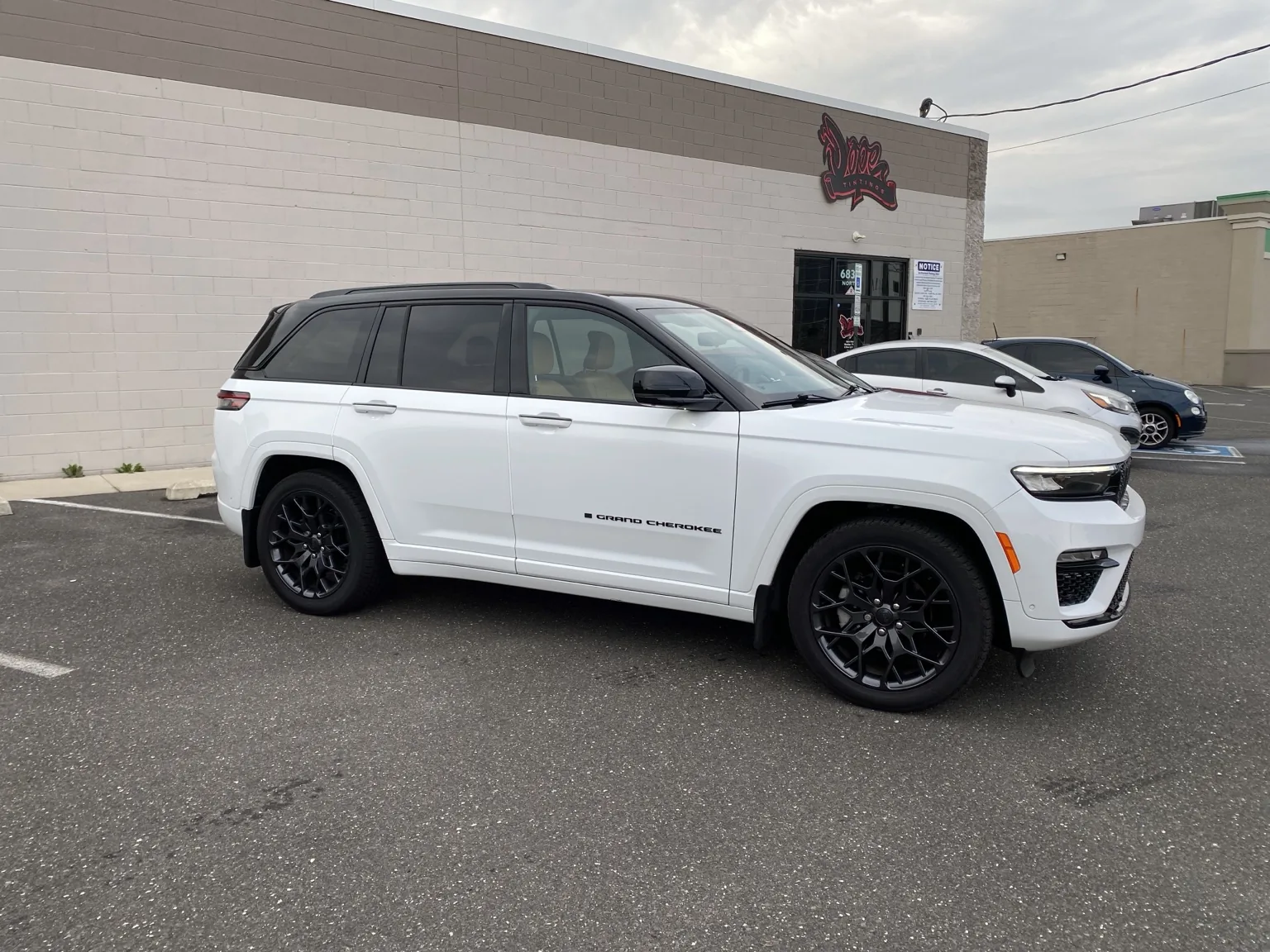
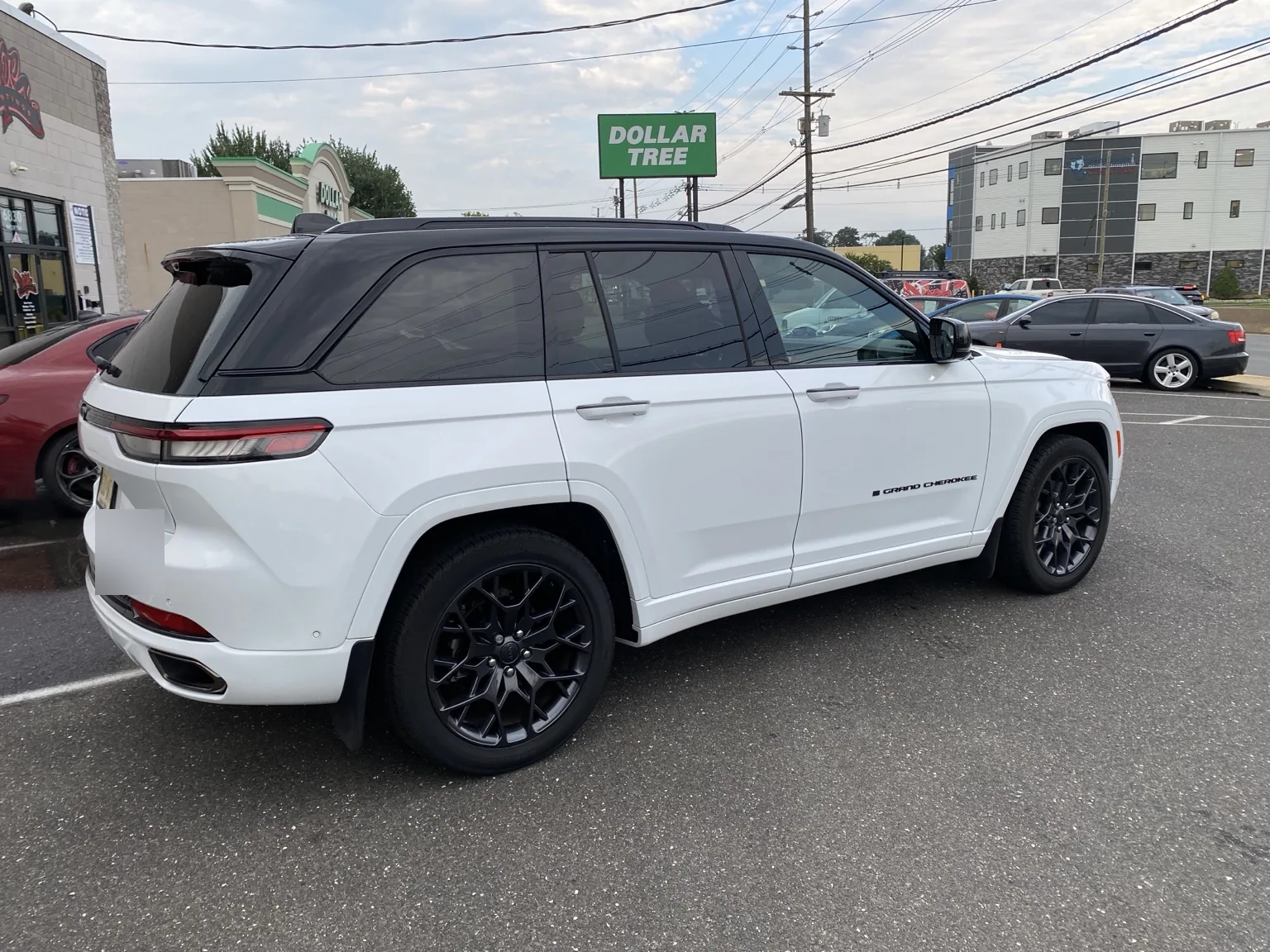
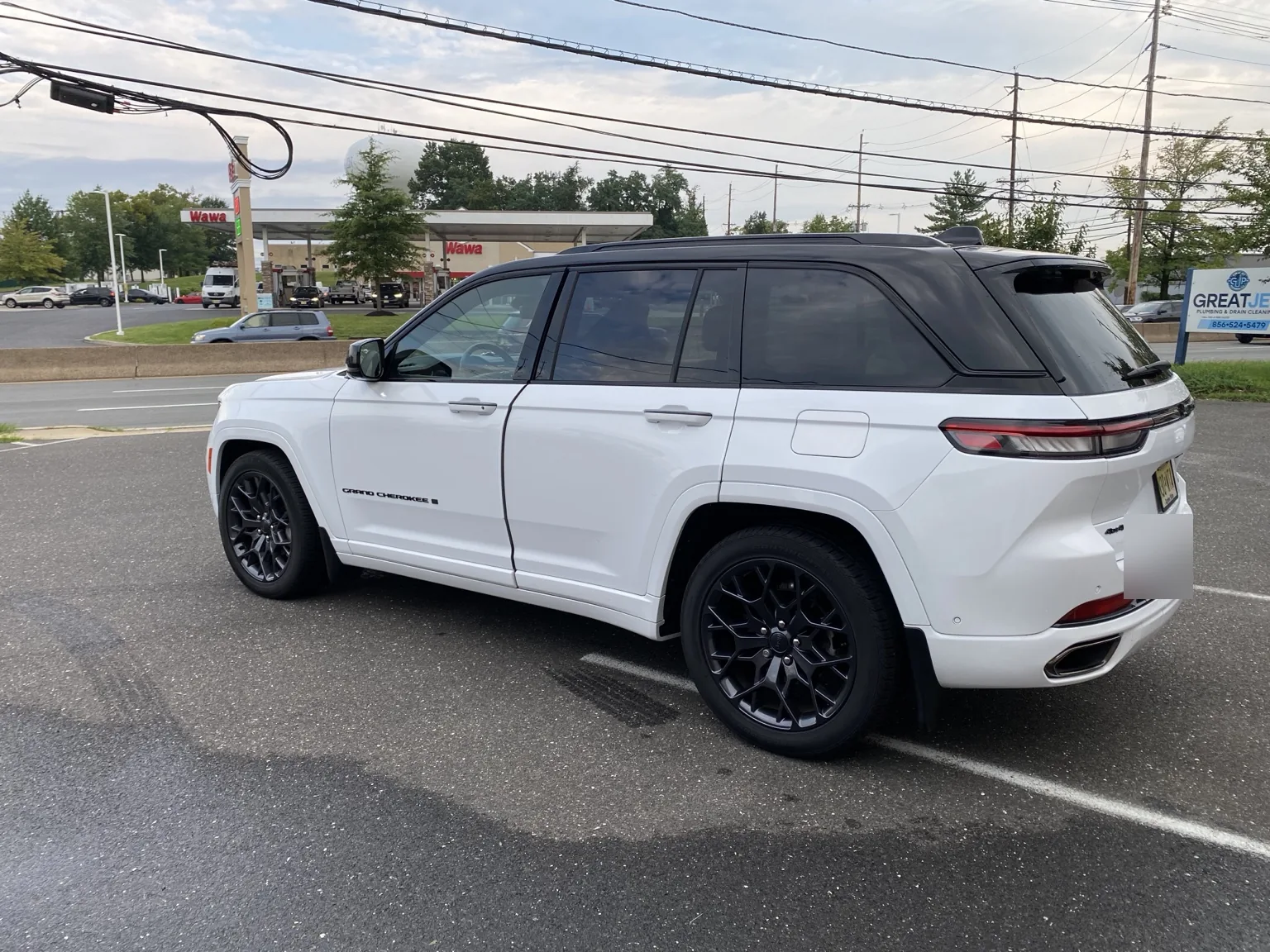
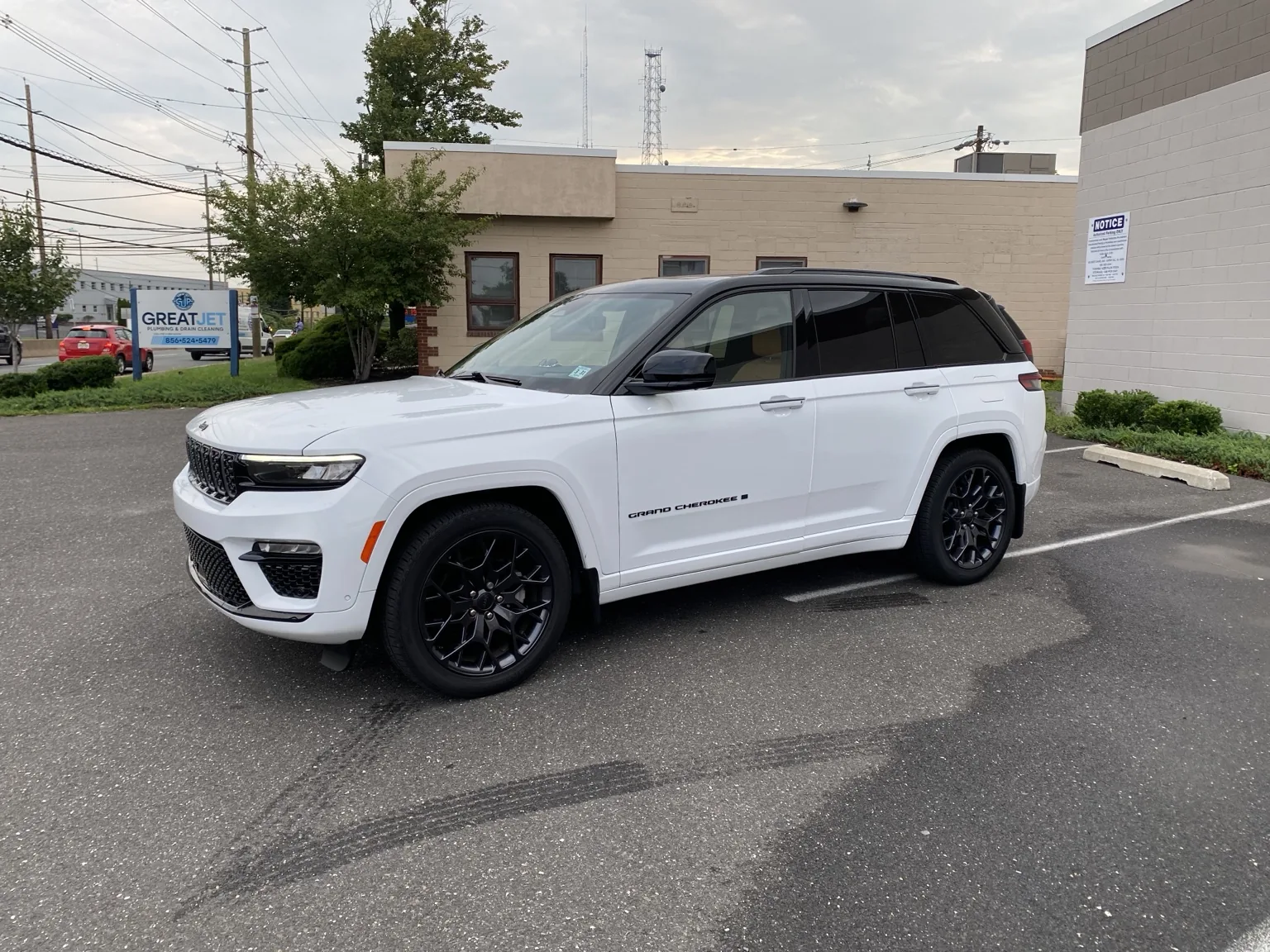
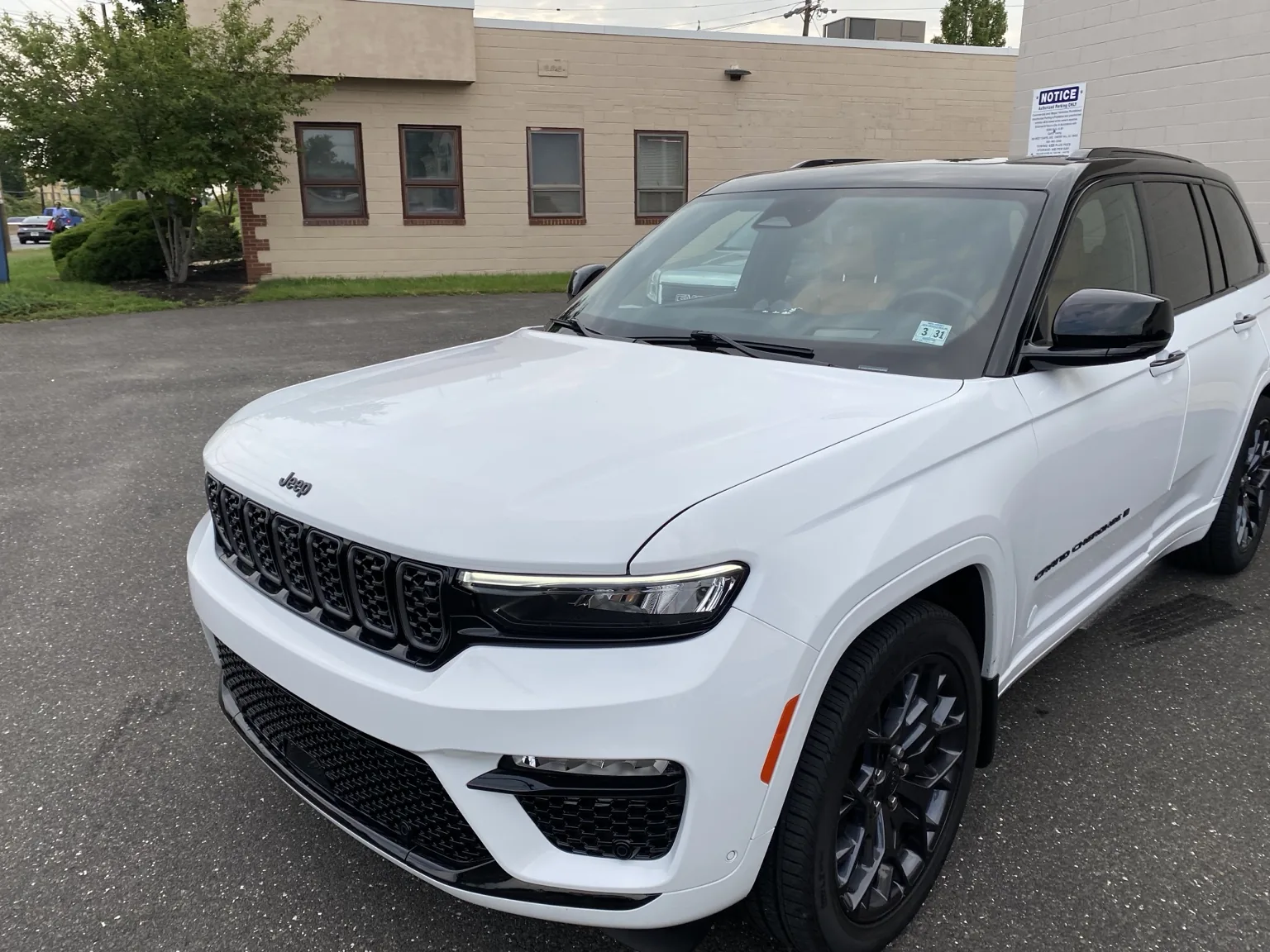
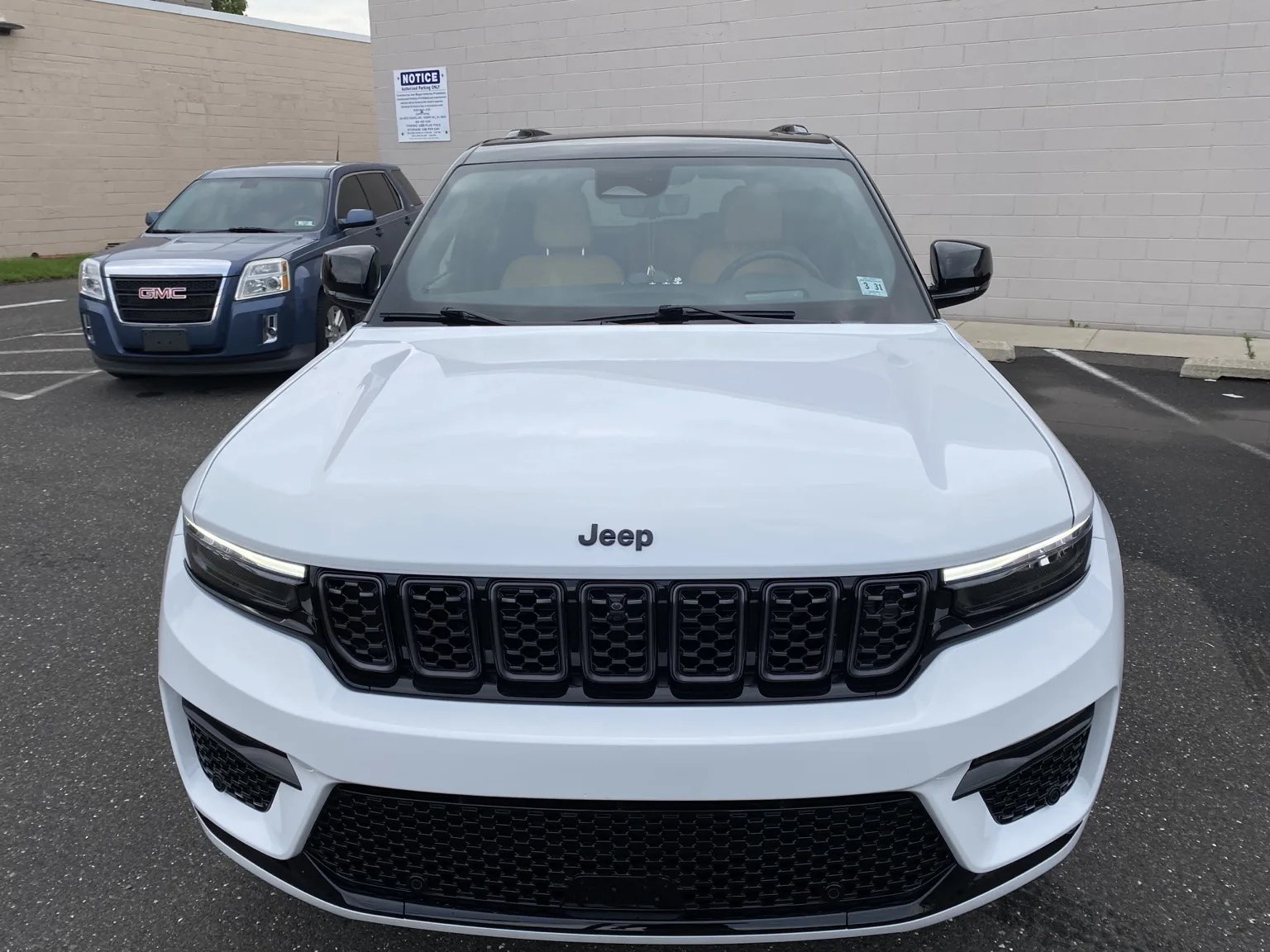
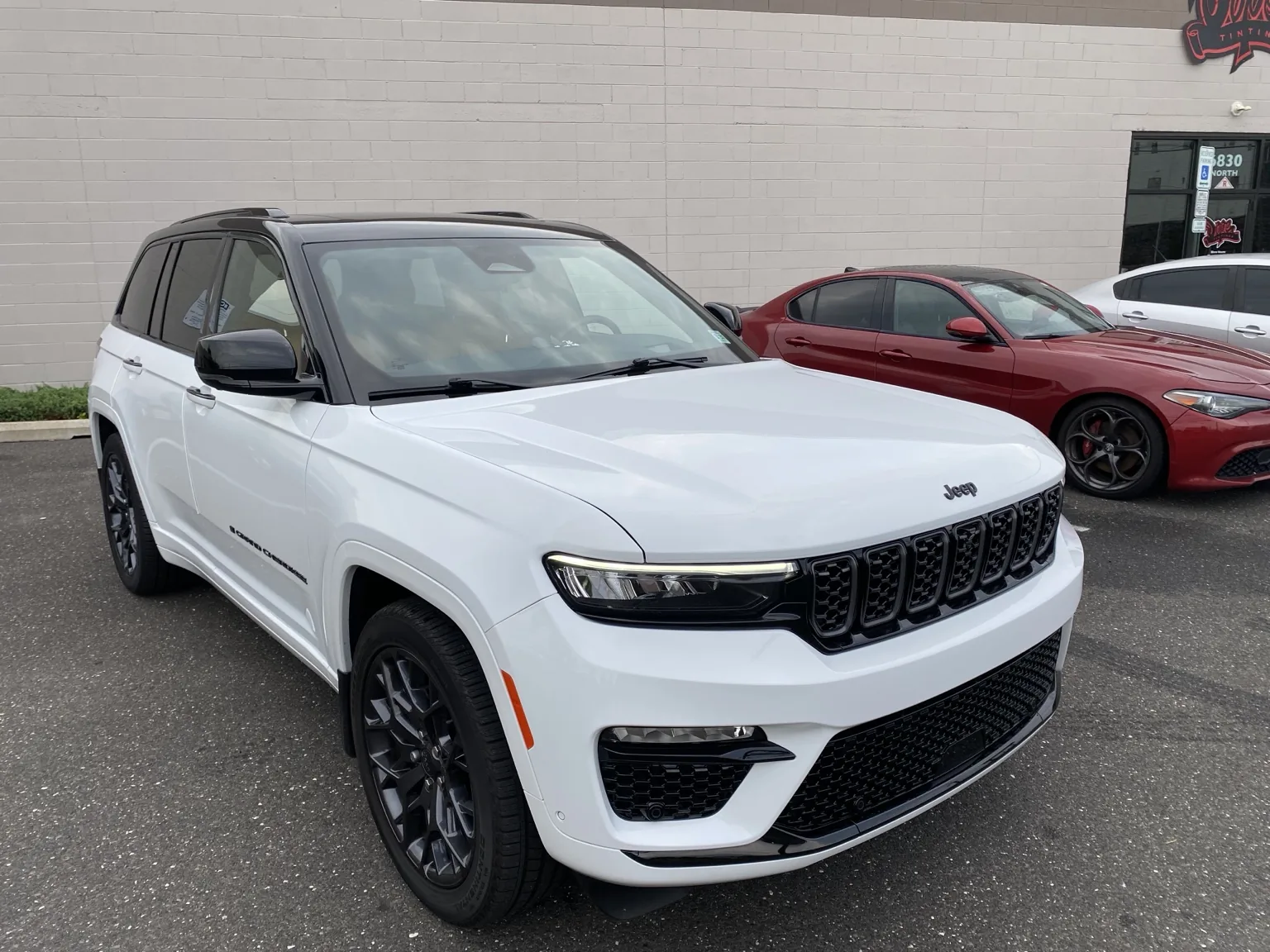
If you want to see what a normal New Jersey legal-style SUV looks like without a medical tint exemption, look at the factory 2025 Jeep Grand Cherokee shown in this guide. The windshield and two front door windows have no aftermarket tint, while the rear doors, cargo/quarter windows and back window have darker factory privacy glass. For most drivers without an approved medical exemption, New Jersey restricts aftermarket sunscreening on the windshield and front side windows, while glass behind the driver is treated differently.**
This 2025 Jeep Grand Cherokee is an actual vehicle we're using as a real-world example. No aftermarket window tint was installed for these photos.
The same basic visual example applies to many compact SUVs, midsize SUVs, full-size SUVs, crossovers and similar wagon-style vehicles that come from the manufacturer with clear-looking front glass and darker privacy glass behind the driver.
And that's what makes an SUV look very different from a sedan before a tint shop even touches it.
What Does a Factory SUV Window Setup Look Like?
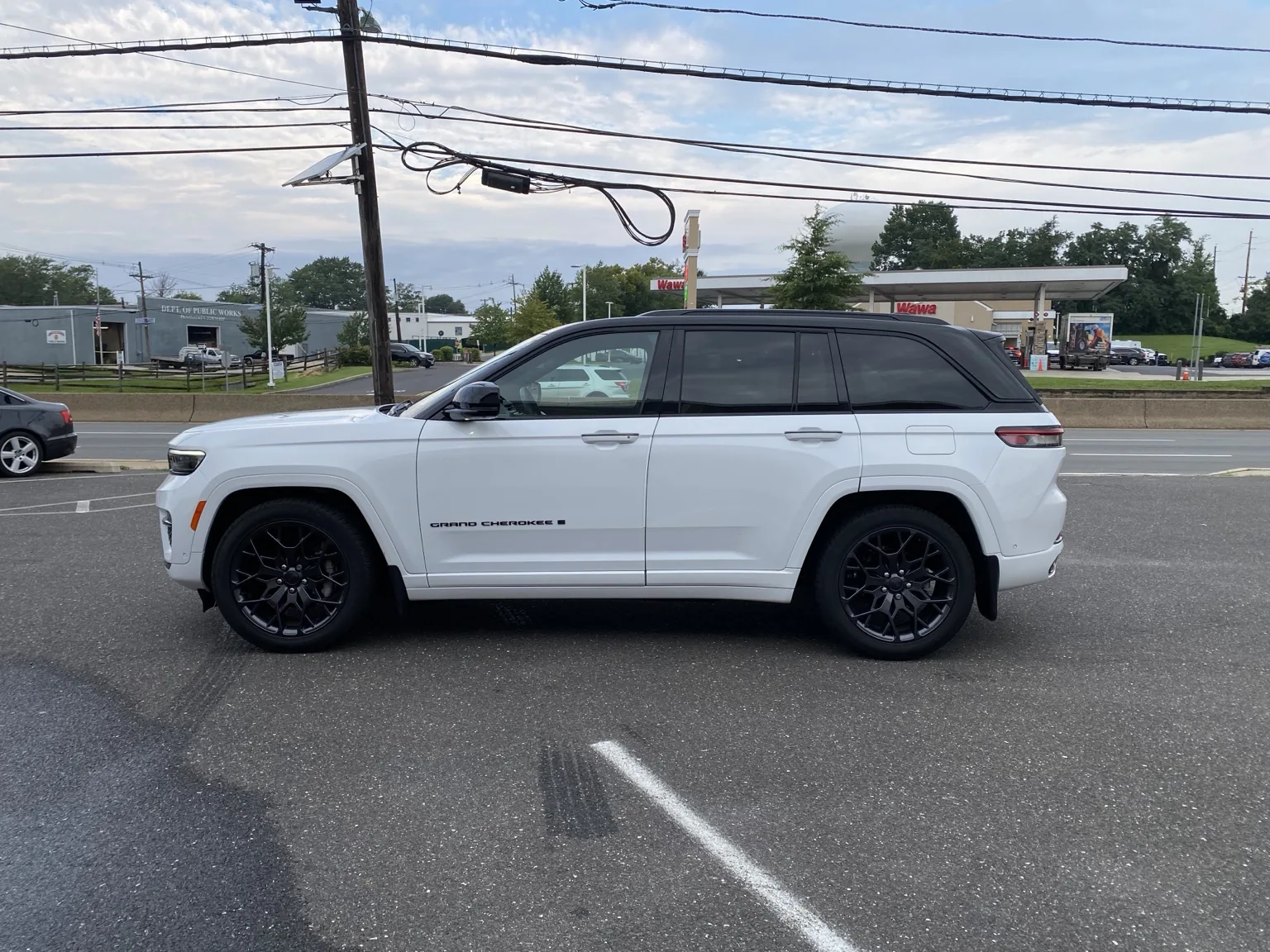
Look at the Grand Cherokee in these photos.
From the factory, there is an obvious contrast:
Front: clear-looking windshield and front driver/passenger glass.
Rear: darker privacy glass on the rear doors, rear cargo/quarter windows and back glass.
Nothing is wrong with the SUV.
Nothing is missing.
That's simply how many SUVs come from the manufacturer.
If a New Jersey SUV owner comes into Dope Tintings and specifically tells us:
"I want to follow New Jersey's normal window tint rules,"
we aren't going to tell them they need to buy front-window tint.
If that's their priority, our answer is simple:
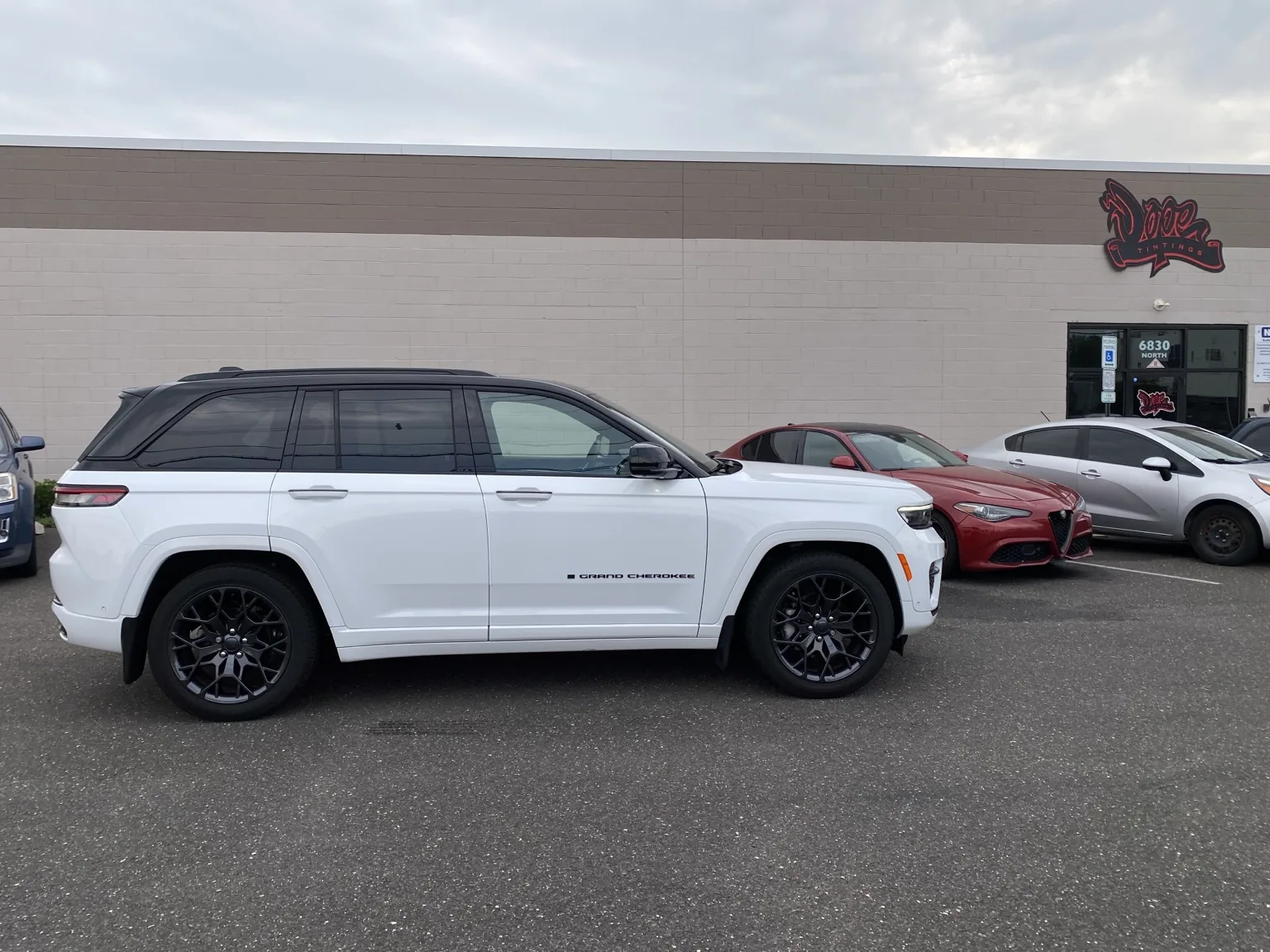
Leave the windshield and two front doors without aftermarket film.
For the complete statewide rules, read New Jersey Window Tint Laws: Complete 2026 Guide.
What Did the Factory Glass Measure on This 2025 Jeep Grand Cherokee?
The factory privacy glass behind the driver on this particular Grand Cherokee measured approximately 23% VLT with our tint meter.
That included the rear-door glass, rear cargo/quarter glass and back glass, which measured in roughly the same range.
But don't assume every Grand Cherokee—or every SUV—will meter exactly 23%.
We've measured factory privacy glass that varies from vehicle to vehicle.
One SUV might read approximately 22%.
Another might read 23%.
Another could be 24% or somewhere nearby.
The actual glass matters.
That's why we meter the vehicle instead of assuming every piece of factory privacy glass is exactly the same.
Are the Clear-Looking Front Windows Really 100% Clear?
No.
Clear-looking automotive glass does not necessarily transmit 100% of visible light.
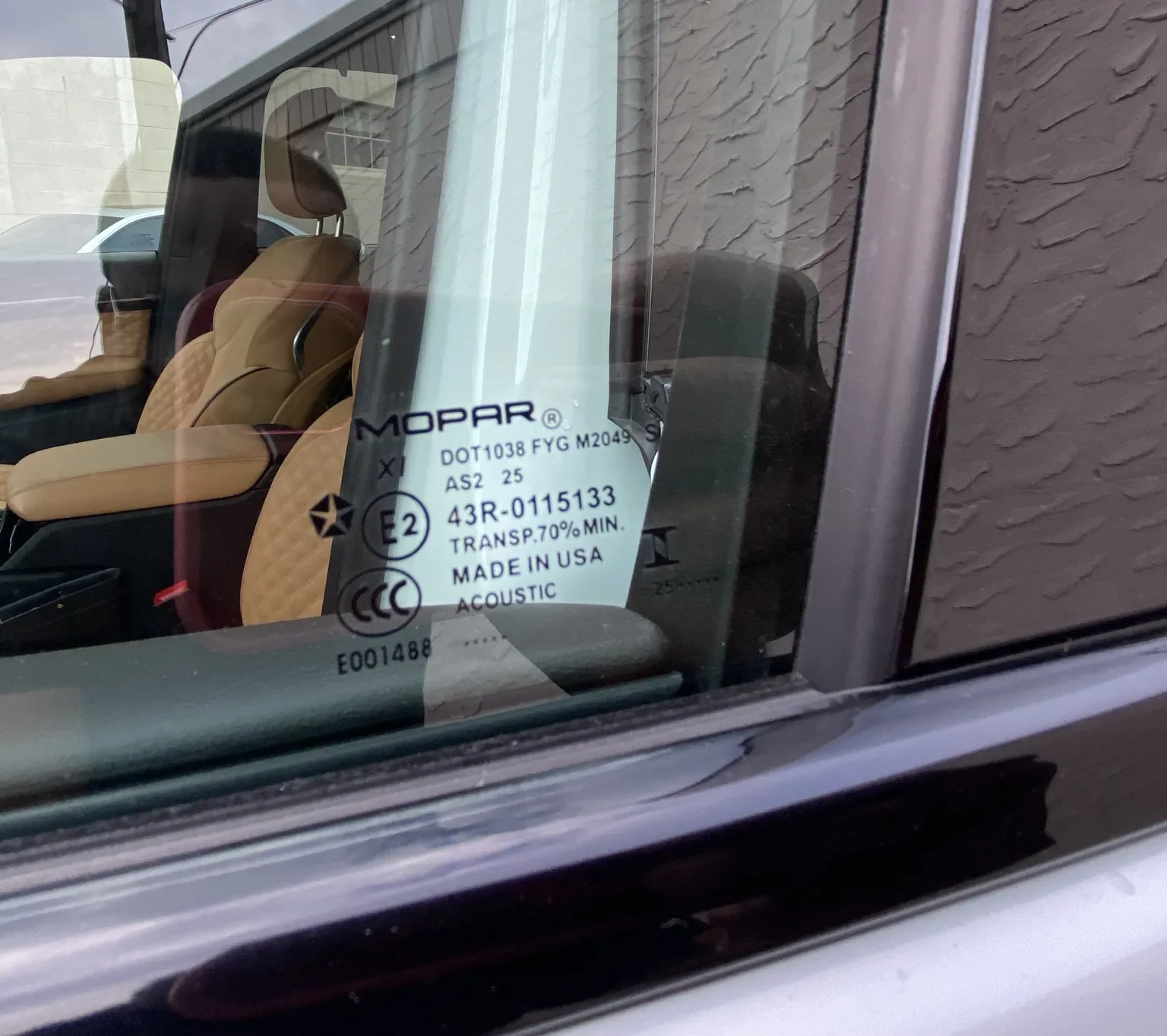
On many vehicles we've worked on, the manufacturer information etched into the front-door glass includes a marking such as 70% minimum.
We're including a close-up photograph of the factory glass marking on this Grand Cherokee so you can see an example yourself.
When we meter clear-looking factory front glass, readings can also vary somewhat depending on the actual glass and tint meter.
We've commonly seen readings in roughly the 70–75% neighborhood, with occasional readings outside that range.
The important point is:
Clear-looking does not mean 100% light transmission.
But it also does not mean the front doors already have removable aftermarket window tint.
Is Factory Privacy Glass the Same as Window Tint?
No.
This is one of the biggest SUV misconceptions we hear.
The dark rear glass on many SUVs isn't necessarily a sheet of aftermarket film that somebody installed.
The darkness is manufactured into the glass.
That's why a customer can't simply say:
"Take the factory tint off my rear windows."
There may be no aftermarket film there to peel off.
Factory privacy glass and aftermarket window film are two different things.
Why Are the Rear Windows Dark but the Front Windows Clear?
That's how many SUVs are manufactured.
The 2025 Grand Cherokee shown here has an obvious light-front/dark-rear appearance straight from the factory.
Some customers don't like that contrast.
They tell us:
"The back already looks tinted. I just want you to make my two fronts match."
Visually, we understand exactly why.
Matching the fronts can make the SUV look much more uniform.
But appearance and New Jersey's front-window rules are separate issues.
Can I Tint My Two Front SUV Windows to Match the Factory Rear Glass?
Physically, yes, aftermarket film can be installed on the front doors.
But if your question is:
"What should I do if my goal is to follow New Jersey's normal rules without a medical exemption?"
our answer is different:
Leave the two front doors without aftermarket sunscreening.
NJMVC states that windshield and front-side sunscreening requires an approved medical exemption.
Some customers still choose to tint their front doors because they prefer the uniform appearance.
That's their decision after understanding the issue.
What we don't want to tell someone is:
"Matching your fronts to the factory backs automatically makes it legal."
It doesn't.
Will Lighter Front Tint Like 35% Attract Less Attention?
A lighter film can be less visually obvious than an extremely dark film.
We've had SUV customers choose lighter front percentages because they want some tint while trying to keep the vehicle from looking extremely dark.
But:
Less noticeable does not mean the same thing as compliant.
If a customer specifically tells us their number-one priority is following New Jersey's normal front-window rules and minimizing tint-related police concerns, we recommend leaving the front doors and windshield factory/untreated unless an applicable approved exemption allows otherwise.
For more information about enforcement, read Can Cops Pull You Over for Just Window Tint in New Jersey?.
Can I Make the Factory Rear Windows Darker?
Yes.
This is where SUV owners have considerably more flexibility.
Aftermarket window film can be installed over the factory privacy glass behind the driver.
A customer might want:
- More privacy
- A darker appearance
- UV protection
- Better heat rejection
- More protection for children riding in the rear
The final darkness depends on both the factory glass and the aftermarket film being added.
What Happens If You Put Tint Over Factory Privacy Glass?
The finished glass becomes darker because light now has to pass through both the factory-darkened glass and the aftermarket film.
For example, on factory privacy glass in approximately the low-20% range, our real-world experience has shown combinations such as:
Approximately 15% aftermarket film over the factory rear glass → roughly a 5% finished appearance/readout in some applications.
Approximately 35% aftermarket film over the factory rear glass → roughly a 10% finished appearance/readout in some applications.
These are approximate real-world examples, not guaranteed formulas.
Factory glass varies.
Film VLT varies.
Tint meters vary.
That's why we evaluate the actual vehicle.
Does an SUV Have to Have 5% Rear Tint to Follow NJ Rules?
No.
5% isn't what makes the rear configuration legal-style.
An SUV owner could leave the factory privacy glass completely alone.
Or, where permitted, they could make the eligible rear glass darker with aftermarket film.
The customer chooses the rear darkness based on what they're trying to accomplish.
If maximum darkness is the question you're researching, read What Is the Darkest Legal Tint in NJ? 2026 Guide.
Does Factory Privacy Glass Already Provide the Same Protection as Carbon or Ceramic Tint?
No. Factory privacy glass and aftermarket performance film should not be treated as equivalent products.
Factory privacy glass provides the darker appearance and some privacy.
Automotive glass itself can also filter portions of ultraviolet radiation, so we would not tell customers that factory glass provides literally zero UV protection.
But if a customer's goal is known UV and heat-rejection performance, we recommend comparing the published specifications of the aftermarket film being installed.
At Dope Tintings, our professional films are designed with specific performance characteristics.
Our carbon and ceramic films are particularly relevant when heat rejection is an important goal.
Should Parents Add Tint Over Factory Privacy Glass?
If protecting children riding in the rear from additional sun exposure and heat is a major goal, yes, we would discuss adding an appropriate aftermarket film over the factory privacy glass.
The exact recommendation depends on what the parent wants.
If they want:
UV protection without making the rear dramatically darker: we can discuss a lighter performance film.
If they want:
UV protection + heat rejection + more privacy: carbon or ceramic with a darker VLT may make more sense.
There isn't one percentage that every parent needs.
We ask what they're trying to accomplish first.
Is Carbon or Ceramic Better for an SUV?
It depends on the customer's goal and budget.
Carbon is a good option for SUV owners who want meaningful heat rejection without paying for our highest heat-rejection film.
Ceramic is our higher heat-rejection option.
But we don't automatically tell every SUV owner:
"You need ceramic."
If they're only tinting the rear and their budget matters, carbon may make more sense.
If maximum heat rejection is the priority, ceramic becomes more relevant.
For the full comparison, read What Is the Difference Between Carbon and Ceramic Window Tint?.
What If I Want Maximum Ceramic Heat Protection?
That's a different conversation from asking what a normal NJ legal-style SUV looks like.
For maximum cabin-wide heat performance, we look at all the major glass areas:
- Windshield
- Front doors
- Rear doors
- Cargo glass
- Back glass
- Sunroof or panoramic roof
However, very light or clear-looking ceramic film is still aftermarket film.
A 70% ceramic film doesn't become exempt from New Jersey's front-glass rules simply because it looks almost clear.
If you're specifically trying to follow the normal NJ configuration without an approved medical exemption, keep that distinction in mind.
NJMVC maintains a specific medical-sunscreening process for qualifying windshield and front-side applications.
Does This SUV Article Also Apply to Crossovers and Other SUVs?
Yes.
We're using the 2025 Jeep Grand Cherokee because it gives us a clear real-world visual example.
But this guide is intended for SUV-style vehicles generally, including:
- Compact SUVs
- Midsize SUVs
- Full-size SUVs
- Crossovers
- Similar wagon-style vehicles
The exact shape and number of windows may change.
The factory privacy-glass percentage may change.
But the important question remains:
Which glass is beside the driver and which glass is behind the driver?
That's more useful than creating separate near-identical articles for every SUV size.
Frequently Asked Questions
What does legal window tint look like on an SUV in New Jersey?
For a normal SUV without an approved medical exemption, a legal-style configuration can look exactly like the factory 2025 Jeep Grand Cherokee shown here: clear-looking factory windshield and front side glass with darker factory privacy glass behind the driver and no aftermarket film added to the front glass.
Do I need to tint a brand-new SUV to make it NJ compliant?
No. If the SUV comes from the manufacturer in the normal factory configuration shown here, you don't need to add aftermarket tint just to create the legal-style setup demonstrated in this guide.
Can I tint the rear windows darker on my SUV in NJ?
Eligible glass behind the driver can generally be made darker, subject to applicable New Jersey vehicle requirements.
Can I tint my front SUV windows to match the factory backs?
Aftermarket film can physically be installed, and many customers request it for appearance. However, matching the fronts to the factory rear privacy glass changes the front glass from its factory configuration and introduces New Jersey's restrictions on aftermarket front-side sunscreening.
Is factory privacy glass removable?
No. Factory privacy glass gets its darker appearance from the glass itself. It isn't necessarily a removable aftermarket film.
What percentage is factory SUV privacy glass?
It varies. The 2025 Jeep Grand Cherokee used in this guide measured approximately 23% on its rear factory privacy glass, but another vehicle may measure differently.
Does factory privacy glass block heat like ceramic tint?
Don't assume factory privacy glass provides the same solar-performance characteristics as an aftermarket ceramic film. If heat rejection is your goal, compare the specifications of the aftermarket film being considered.
New Jersey SUV Window Tint in Pennsauken and South Jersey
The 2025 Jeep Grand Cherokee shown in this guide is an actual vehicle used to demonstrate what a factory SUV configuration looks like before aftermarket tint is added.
At Dope Tintings, we help SUV and crossover owners from Pennsauken, Camden, Cherry Hill, Maple Shade, Cinnaminson, Delran, Collingswood, Haddonfield, Marlton, Mount Laurel, Moorestown and throughout South Jersey understand the difference between:
- Factory privacy glass
- Aftermarket tint
- Front-window restrictions
- Rear-window darkness
- UV protection
- Heat rejection
- Standard, carbon and ceramic film
If you tell us:
"I want to follow New Jersey's normal window tint rules,"
we're going to answer that question honestly—even if that means telling you that you don't need to buy anything for your front glass.
We're here to educate customers first, then let them decide what they want to do with their vehicle.
For the complete state-law breakdown, read New Jersey Window Tint Laws: Complete 2026 Guide.
For the sedan version of this visual guide, read What Does Legal Window Tint Look Like on a Sedan in New Jersey?.
For maximum darkness questions, read What Is the Darkest Legal Tint in NJ? 2026 Guide.
Dope Tintings 6830 N Crescent Blvd Pennsauken NJ 08110 856-577-4119