
New Jersey Window Tint Laws: Complete 2026 Guide
New Jersey window tint laws restrict aftermarket tint on the windshield and front side windows for most drivers, while rear windows have different rules. Learn NJ tint laws, medical exemptions, rear-window darkness, police enforcement and what South Jersey drivers should know.
New Jersey Window Tint Laws: Complete 2026 Guide
**For most drivers in New Jersey without an approved medical exemption, aftermarket window tint is not permitted on the windshield or front driver and passenger side windows. Windows behind the driver are treated differently and can generally be tinted very dark, including 5% limo tint, subject to applicable vehicle-equipment requirements. If rear visibility is obstructed, the vehicle needs outside rearview mirrors that provide the required view.
At Dope Tintings in Pennsauken, NJ, we've been tinting vehicles for more than 20 years and have completed more than 30,000 automotive window tint installations.
One of the biggest sources of confusion we hear from customers is that they search for:
"What percentage tint is legal in New Jersey?"
and expect one number.
New Jersey's rules don't work that way.
The windshield, front side windows and windows behind the driver are treated differently.
Here's the basic breakdown before we get into the details.
| Window | General New Jersey Rule |
|---|---|
| Windshield | Aftermarket sunscreening is restricted for most drivers without an approved medical exemption |
| Front driver window | Aftermarket sunscreening is restricted for most drivers without an approved medical exemption |
| Front passenger window | Aftermarket sunscreening is restricted for most drivers without an approved medical exemption |
| Rear side windows | Very dark tint can generally be used, subject to applicable vehicle-equipment requirements |
| Rear window | Very dark tint can generally be used; mirror requirements matter when rear visibility is obstructed |
The most important takeaway is:
New Jersey does not simply have a universal "35% legal tint" rule for the entire vehicle.
For a focused answer about maximum darkness, read What Is the Darkest Legal Tint in NJ? 2026 Guide.
Are Tinted Front Windows Legal in New Jersey?
For most ordinary drivers without an approved medical exemption, aftermarket sunscreening on the front driver and passenger side windows is restricted in New Jersey.
This is one of the most misunderstood parts of New Jersey tint law.
Customers regularly tell us:
"I thought 35% was legal on the fronts."
Or:
"My friend has 20% and never gets stopped."
Or:
"Everybody in New Jersey has tinted front windows."
None of those statements establishes what the law permits.
What you see people driving with and what New Jersey legally allows are two separate questions.
Is 35% Tint Legal on the Front Windows in NJ?
Don't use:
"35% is legal in New Jersey"
as a blanket rule.
35% is a window-film percentage, not a universal New Jersey legal limit.
If you're asking whether 35% can be installed on a particular rear window, that's one question.
If you're asking whether ordinary aftermarket 35% film is permitted on the front driver and passenger windows without an exemption, that's a different question.
This distinction is why we always ask:
Which windows are you talking about?
Why Do So Many Cars in New Jersey Have Tinted Front Windows?
Because drivers still choose to tint them.
Customers request front tint for reasons including:
- Privacy
- Appearance
- Heat reduction
- Matching factory rear privacy glass
- Personal preference
- Medical needs
Some understand the potential enforcement consequences.
Others assume that because thousands of other vehicles have dark front windows, the setup must be legal.
That's not how traffic law works.
The number of people doing something doesn't determine whether the law permits it.
Can a Tint Shop Legally Install Front Window Tint in NJ?
A tint shop's willingness to install a particular film should never be treated as proof that the customer's road-use configuration complies with New Jersey law.
There is an important difference between:
What film physically can be installed
and
what the law permits the driver to use on that window.
Medical sunscreening creates an additional regulated situation because New Jersey requires qualifying drivers to obtain approval and use an appropriately registered installation facility.
So when you're choosing tint, don't rely on:
"The shop installed it, so it must be legal."
Understand the rules yourself.
What Are New Jersey's Windshield Tint Laws?
For most drivers without an approved medical exemption, aftermarket windshield sunscreening is restricted in New Jersey.
The windshield deserves extra attention because it's the primary glass the driver looks through.
That means windshield tint isn't only a legal question.
It's also a visibility question.
Extremely dark windshield tint can make driving considerably more difficult:
- At night
- During heavy rain
- On roads without streetlights
- In poorly illuminated areas
- During bad weather
We've had customers choose very dark windshield film because they liked the appearance and later discover that the nighttime tradeoff was much greater than they expected.
What About Tint Above the AS-1 Line?
The AS-1 line is a marking used on automotive windshield glazing.
It identifies an upper windshield area relevant to visibility and sunscreening standards.
This is where online explanations can become confusing because people often repeat:
"The top six inches are automatically legal."
rather than looking at the actual rule and the circumstances under which sunscreening is being discussed.
For medical sunscreening, New Jersey's regulations specifically address the portion of the windshield above the AS-1 line and establish different light-transmission treatment for that area.
Because windshield requirements can involve both state rules and glazing specifications, we recommend verifying the current requirement for the exact windshield application rather than relying on a generic social-media chart.
Can You Tint the Full Windshield in New Jersey?
For a normal driver without an approved medical exemption, don't treat full aftermarket windshield tint as an ordinary legal installation.
New Jersey does provide a medical sunscreening process that can authorize qualifying windshield treatment.
But that requires approval.
It isn't simply:
"My doctor told me sunlight bothers me, so I can tint my windshield."
The NJMVC process needs to be completed before qualifying medical sunscreening is installed.
We'll explain that process later in this guide.
Is Ceramic Windshield Tint More Legal Than Regular Tint?
No.
Ceramic describes film technology.
It doesn't create a legal exemption.
A ceramic film may provide significantly better heat rejection than a basic film, but the word ceramic does not change which windows New Jersey allows you to sunscreen.
The same applies to carbon film.
Film technology and tint legality are separate issues.
Does Ceramic Tint Make a Dark Windshield Easier to See Through at Night?
Don't choose a dark ceramic windshield because someone told you ceramic makes extremely dark tint behave like clear glass at night.
Ceramic can have excellent optical clarity.
But optical clarity and VLT are different things.
If very little visible light passes through the windshield, nighttime visibility will still be affected.
For a complete explanation, read Can You See Through Ceramic Tint Better? Day & Night Visibility Explained.
What Are the Rules for Rear Side Window Tint in New Jersey?
Windows behind the driver are treated differently from the windshield and front side windows.
This is where very dark tint becomes possible.
Customers may choose rear-window percentages such as:
- 35%
- 20%
- 15%
- 5%
- Extremely dark options
depending on the vehicle, their goals and the applicable requirements.
This is why the statement:
"5% tint is illegal in New Jersey"
is too broad.
The correct question is:
"5% on which window?"
A 5% rear-window installation and a 5% front-driver-window installation are not the same legal question.
Can Rear Side Windows Be 5% in New Jersey?
Eligible rear side windows can generally use very dark tint, including approximately 5% limo tint, subject to the applicable vehicle-equipment requirements.
That makes 5% a common choice for customers who want:
- Maximum rear privacy
- A dark appearance
- Less visibility into the cargo or passenger area
But just because a very dark percentage can be used on eligible rear glass doesn't mean it's the best percentage for every driver.
Nighttime visibility still matters.
What Is the New Jersey Law for the Rear Window?
The rear window can also be treated differently from the windshield and front side windows.
Very dark rear-window tint can generally be used, but rear visibility and mirror requirements matter.
This is one of the details that short online tint charts often leave out.
If the rear window is tinted or otherwise treated so that the driver's view to the rear is obstructed, the vehicle needs appropriate outside rearview mirrors.
That is why saying simply:
"Any darkness is legal on the back window"
without mentioning the mirror requirement is incomplete.
Do You Need Two Side Mirrors With Dark Rear Tint in NJ?
When rear visibility is obstructed, New Jersey's vehicle-equipment rules require exterior mirror coverage that gives the driver the required rearward view.
In practical terms, this is why the driver-side and passenger-side exterior mirrors matter when the rear window is extremely dark or otherwise obstructed.
Modern passenger vehicles commonly already have mirrors on both sides.
But the mirror requirement is still part of understanding why very dark rear glass is treated differently.
Can You Put 5% Tint on the Rear Windshield in NJ?
Very dark film such as 5% can generally be used on eligible rear glass when the applicable vehicle and mirror requirements are satisfied.
Before choosing it, though, think beyond legality.
5% can make it much harder to see through the rear window at night.
That's particularly noticeable:
- On dark roads
- While backing up
- During rain
- In poorly lit parking areas
Legal doesn't automatically mean practical for every driver.
Is 1% Tint Legal on Rear Windows in New Jersey?
Extremely dark film such as 1% can be an option on eligible rear glass where the applicable requirements permit very dark tint.
But 1% is considerably darker than traditional 5% limo tint.
That creates an even greater nighttime-visibility tradeoff.
If your goal is maximum privacy, 1% may sound appealing.
If you frequently rely on the rear glass at night, you may prefer something lighter.
For a deeper discussion of maximum darkness, read What Is the Darkest Legal Tint in NJ? 2026 Guide.
Does Factory Privacy Glass Count as Rear Window Tint?
Factory privacy glass and aftermarket window tint are different.
Factory privacy glass gets its darker appearance from the glass itself.
Aftermarket tint is a film installed onto the glass.
This distinction is especially important on SUVs and trucks.
Many vehicles arrive from the factory with dark rear privacy glass and relatively clear front side windows.
The customer may then add aftermarket film over the factory rear glass for additional:
- Privacy
- Darkness
- Heat rejection
- UV protection
Installing film over factory privacy glass is a normal tinting application.
Can You Tint Over Factory Privacy Glass?
Yes.
Factory privacy glass is not another removable aftermarket film layer.
Aftermarket window film can be installed over it.
The finished darkness depends on:
- The factory glass
- Actual VLT of the new film
- Vehicle make and model
If the factory rear glass is already around the 20% range and approximately 20% film is added over it, the finished result can become much darker—sometimes around a 5% appearance or meter reading depending on the actual glass and film.
For a full explanation, read Can You Put New Window Tint Over Old Tint?.
Why Doesn't Every SUV's Factory Tint Measure the Same?
Factory privacy glass isn't universally one percentage.
We've measured different vehicles and seen variations in factory-darkened glass.
That's why we don't simply tell every SUV customer:
"Your factory rear glass is exactly 20%."
The actual vehicle should be evaluated.
That matters when a customer wants the front windows to visually match the rear or wants to make the factory rear substantially darker.
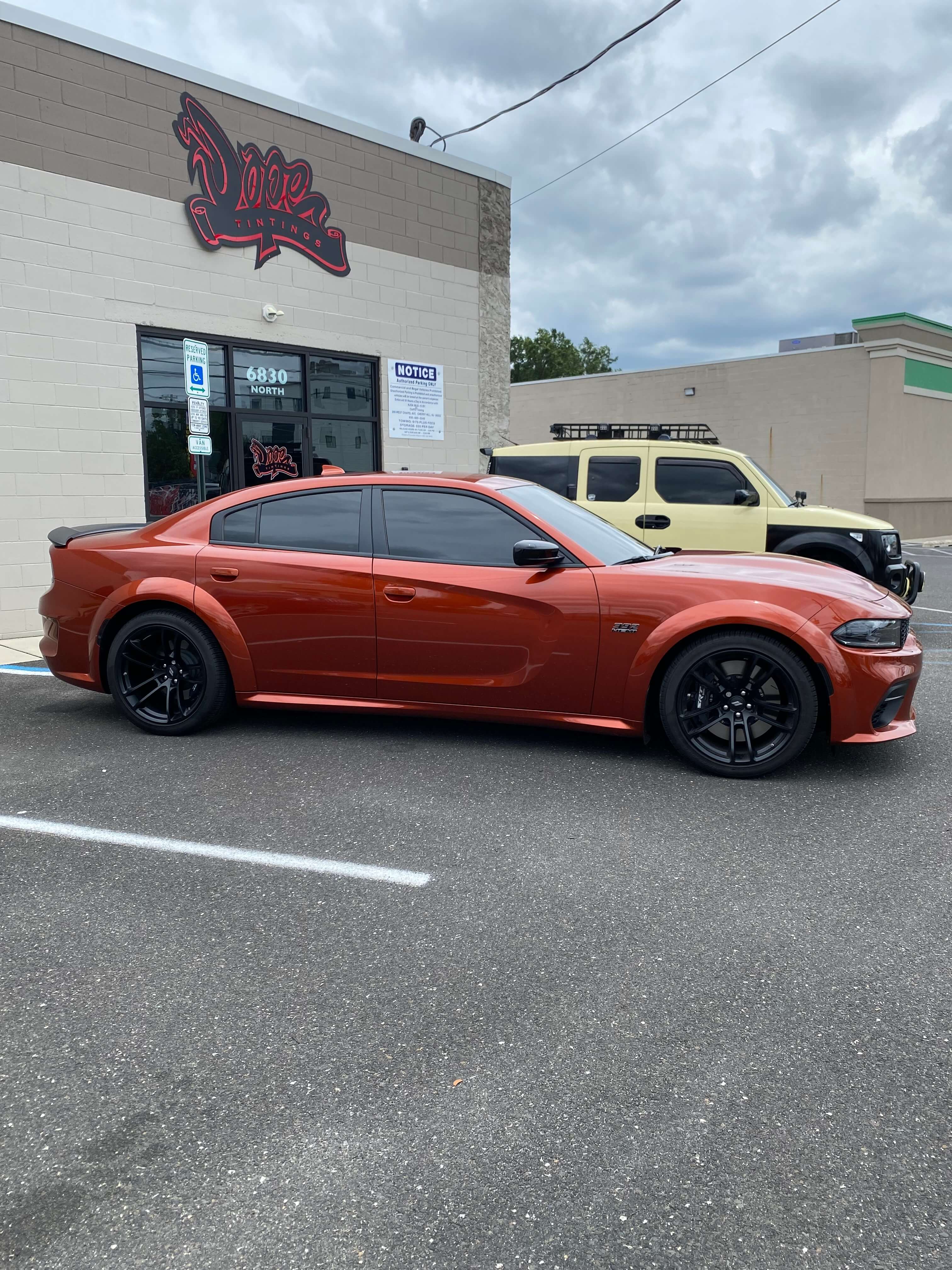
Does Interior Color Affect How Dark Legal Rear Tint Looks?
Yes.
Tint percentage tells you how much visible light is transmitted.
It doesn't guarantee that two vehicles will look identical from outside.
A black interior can make a given tint percentage appear darker.
A tan or light-gray interior can make the same percentage appear lighter.
Windshield light also affects the appearance of the front portion of the cabin.
That's why photographs online aren't a perfect way to choose your percentage.
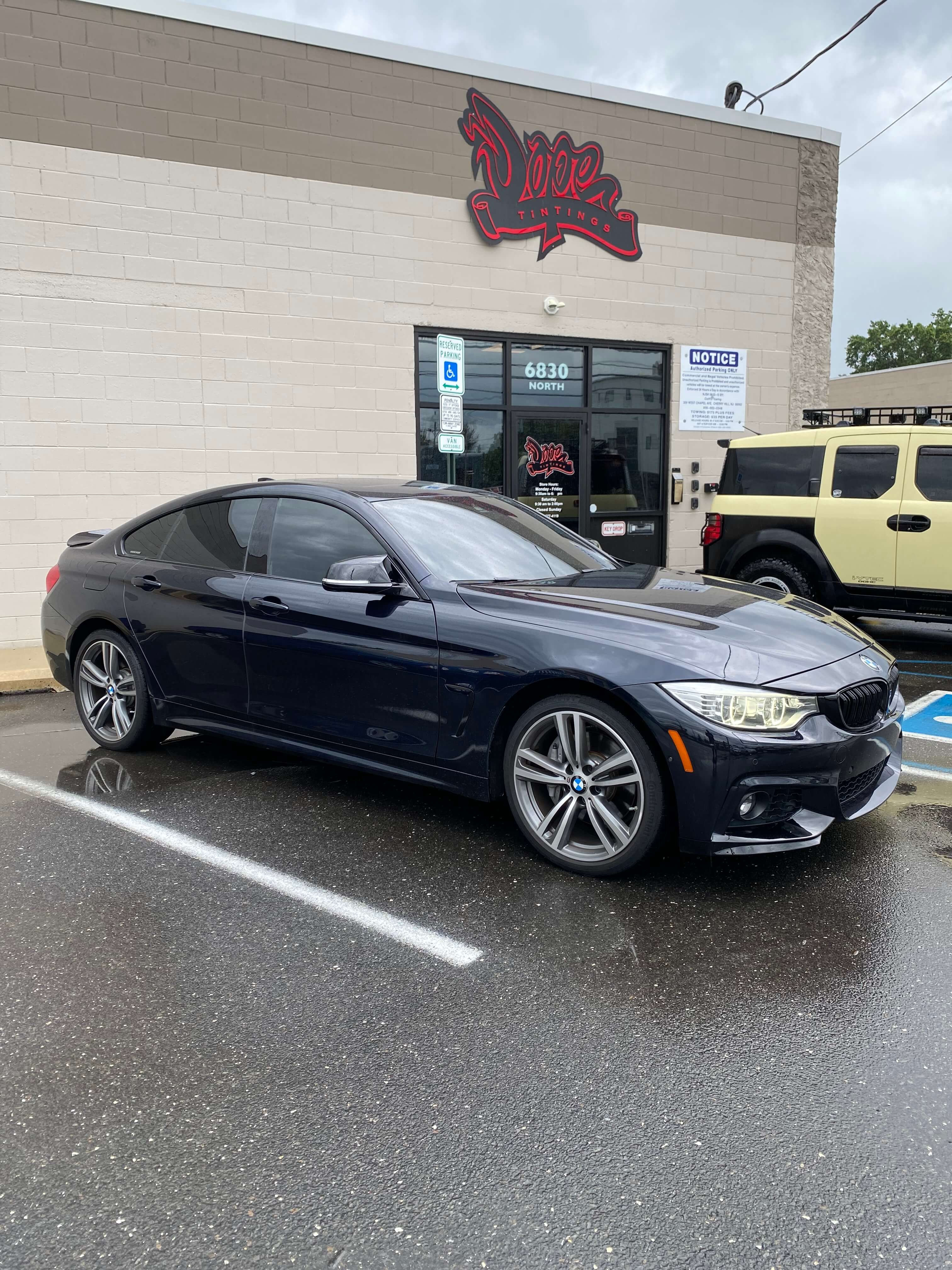
Why Can the Front Windows Look Lighter Than the Rear?
Even when film percentages are chosen to create a close visual match, the front windows can appear lighter because a large amount of sunlight enters through the windshield.
That light illuminates:
- Driver
- Front passenger
- Dashboard
- Front seats
The rear portion of the vehicle may receive less direct interior illumination.
This can create the appearance that the front tint is lighter even when the installation is exactly what was ordered.
Understanding these visual differences becomes especially important when trying to match clear front glass to factory-darkened rear glass.
How Does New Jersey's Medical Tint Exemption Work?
New Jersey provides a medical sunscreening exemption for qualifying individuals with certain medical conditions involving photosensitivity.
This is the legal pathway that can allow approved sunscreening on glass that would otherwise be restricted.
But there is an important distinction:
A medical exemption is not simply a doctor's note saying you should have tinted windows.
The driver must follow the applicable New Jersey Motor Vehicle Commission process and receive approval.
If you're requesting medical sunscreening at Dope Tintings, we want to see the proper documentation before treating the vehicle as an approved medical-exemption installation.
What Medical Conditions Can Qualify for a New Jersey Tint Exemption?
The NJMVC medical sunscreening program addresses qualifying medical conditions involving photosensitivity.
Whether a particular person qualifies is a medical and state-approval question—not something a tint shop decides.
If you believe you need window sunscreening for a medical reason, start with the current NJMVC medical-sunscreening requirements and your medical provider.
Don't rely on:
"My friend has a medical tint exemption."
Each person's approval needs to follow the applicable process.
What Percentage Tint Is Allowed With a NJ Medical Exemption?
New Jersey's medical sunscreening regulations establish specific visible-light-transmission requirements for approved installations.
For approved medical sunscreening:
The windshield sunscreening must have a luminous reflectance of 8% or less and light transmittance of at least 70%.
The front side-window sunscreening must have a luminous reflectance of 8% or less and light transmittance of at least 60%.
Those requirements are important because a medical exemption does not mean:
"I can legally put 5% on my windshield and front doors."
The approved medical installation still has specifications.
Can You Have 70% Tint on the Windshield With a Medical Exemption?
Approved medical sunscreening can permit windshield treatment that meets New Jersey's applicable requirements, including the required visible-light transmission and reflectance standards.
The important point is that the windshield remains relatively light compared with the dark percentages customers commonly associate with automotive tint.
A medical exemption isn't designed to turn the windshield into 5% limo tint.
It's designed to provide approved sunscreening for qualifying medical needs while maintaining required visibility.
Can You Have 60% Tint on the Front Side Windows With a Medical Exemption?
New Jersey's medical sunscreening requirements provide for approved front-side-window material meeting the applicable light-transmission and reflectance requirements.
That means the medical program should not be confused with permission to choose any darkness.
If you have an approved exemption, follow the specifications associated with that program.
Do You Need NJMVC Approval Before Getting Medical Tint Installed?
Yes, follow the NJMVC approval process before treating the vehicle as a medical-sunscreening installation.
At Dope Tintings, we don't want to rely on:
"My doctor said it's okay."
We want the applicable approval/documentation.
That protects the customer and makes it clear what type of installation is being requested.
Can Any Tint Shop Install New Jersey Medical Sunscreening?
New Jersey regulates medical sunscreening installations.
If you're obtaining sunscreening under the medical program, make sure you're following the current NJMVC requirements concerning the installation facility, documentation and approved materials.
Medical sunscreening should be handled as a regulated exemption—not as a normal dark-tint purchase.
Do You Need to Carry Medical Tint Documentation in the Vehicle?
Follow the current NJMVC requirements concerning the certificate or documentation associated with approved medical sunscreening.
If you're driving with sunscreening that relies on a medical exemption, you want the appropriate documentation available rather than trying to explain the exemption from memory during a traffic stop.
Can Police Pull You Over for Window Tint in New Jersey?
Window tint can lead to police enforcement in New Jersey.
One misconception we hear is:
"Police can't stop me just because of my tint."
Drivers should not build their tint decision around that assumption.
We've had many customers tell us about police interactions involving aftermarket tint.
Some drivers may go a long time without being stopped.
Others may attract attention much sooner.
The fact that someone else has driven with dark tint for years without a problem doesn't guarantee that you'll have the same experience.
For a dedicated discussion of this issue, read Can Cops Pull You Over for Just Window Tint in New Jersey?.
What Should You Do If You're Pulled Over for Tint in NJ?
Our practical advice is:
Be respectful.
Don't turn a roadside interaction into an argument about window-tint law.
If your side windows are extremely dark, rolling them down when appropriate can make it easier for the officer to see inside the vehicle.
And if you know aftermarket film was installed, don't claim:
"It came from the factory like this."
Factory privacy glass and aftermarket film are different.
If you chose a tint setup that may create enforcement issues, understand that risk before installation.
Can You Get a Ticket for Window Tint in New Jersey?
Improper window tint can result in enforcement and citations.
The exact outcome of an individual traffic stop depends on the circumstances.
What we don't tell customers is:
"Everybody has tint, so don't worry about it."
That's not useful advice.
If avoiding police attention is one of your biggest priorities, tell us that before choosing your tint setup.
Does New Jersey Inspection Check Window Tint?
New Jersey's passenger-vehicle inspection program and New Jersey's window-tint laws should be treated as separate issues.
Customers sometimes call and say:
"I need my two front windows stripped because I'm going for inspection."
Before paying for removal solely for that reason, verify the current NJMVC inspection requirements for your specific vehicle.
Whether your vehicle is due for an emissions inspection and whether your aftermarket tint complies with New Jersey law are not necessarily the same question.
If you do need the two front windows removed, read How Much Does It Cost to Remove Tint From Two Front Windows?.
Is 5% Tint Legal in New Jersey?
Now that we've separated the front and rear rules, we can answer the percentage questions more accurately.
5% can generally be used on eligible rear glass when the applicable vehicle-equipment requirements are satisfied.
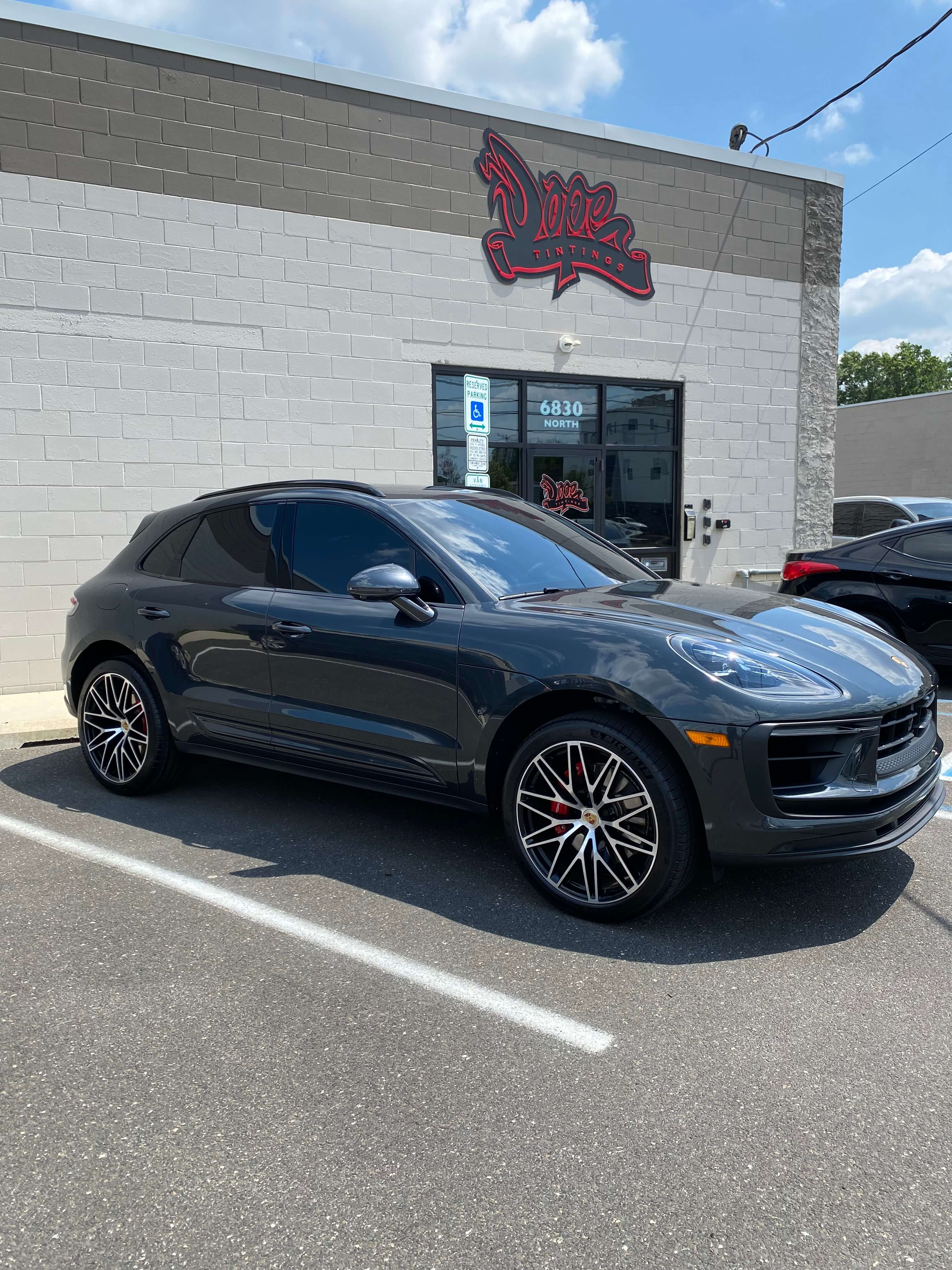
That does not mean 5% is permitted on every window.
5% is commonly called limo tint and provides substantial privacy.
The downside is nighttime visibility.
On dark roads, in heavy rain or while parking in poorly illuminated areas, 5% can be difficult to see through.
Is 15% Tint Legal in New Jersey?
Again, the answer depends on the window.
15% can be an option on eligible rear glass where that darkness is permitted.
That doesn't make 15% a universal legal percentage for the windshield or front side windows.
From a driving standpoint, 15% gives customers a dark appearance while allowing more visible light through than 5%.
For some customers, that's a better compromise between privacy and nighttime visibility.
Is 20% Tint Legal in New Jersey?
20% can generally be used on eligible rear glass where that darkness is permitted.
But don't confuse:
"20% is commonly installed"
with
"20% is legal everywhere in New Jersey."
Those are different statements.
20% is one of our more popular daily-driver percentages because it gives a noticeably dark appearance while remaining easier to see through at night than 5%.
Is 35% Tint Legal in New Jersey?
Don't treat 35% as New Jersey's universal legal tint percentage.
That's one of the biggest myths we hear from customers.
A 35% film can be appropriate for certain glass, but the fact that it is relatively light doesn't automatically make it legal on every window.
The legal question still starts with:
Which window are you tinting?
Is 20% or 35% Tint Darker?
20% is darker than 35%.
VLT represents how much visible light passes through.
So a lower percentage means a darker film.
If you're comparing these two popular shades:
20% = darker and more private
35% = lighter and easier to see through
For a more detailed comparison, read Is 20% or 35% Tint Darker?.
Is 15% or 20% Tint Better for Night Driving?
20% allows more visible light through than 15%, so it will generally be the easier of the two to see through at night.
That doesn't automatically make 15% a bad choice.
Customers who want slightly more privacy may prefer 15%.
Customers who prioritize nighttime visibility may prefer 20%.
The difference becomes more noticeable when you're driving:
- On dark roads
- In rain
- Without streetlights
- While parking
- In poorly illuminated neighborhoods
Your driving habits matter more than how the tint looks in a daytime photograph.
Is 5% Tint Hard to See Through at Night?
It can be.
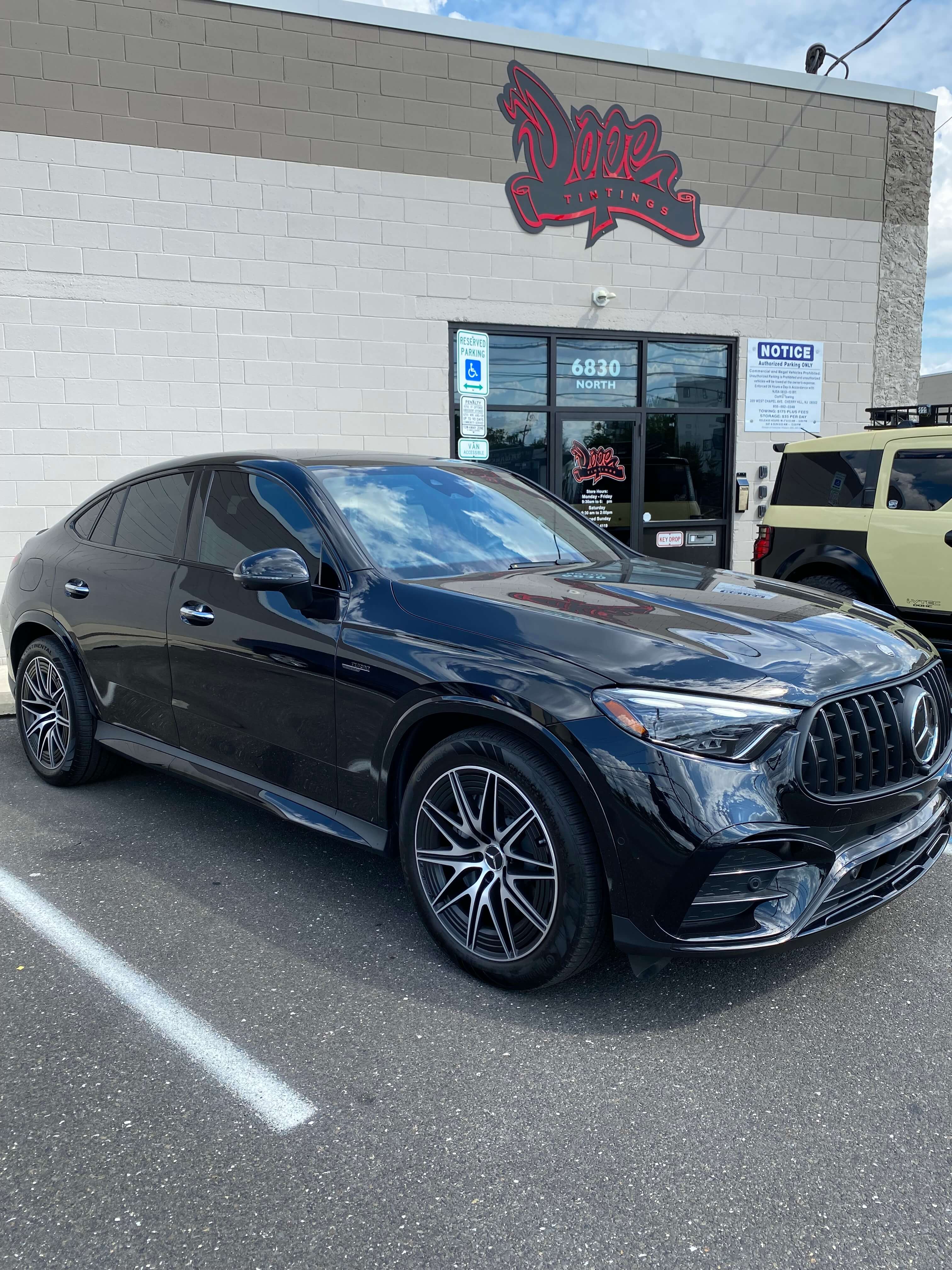
We've had customers who have used 5% for years and know exactly what they're getting.
We've also had first-time 5% customers realize afterward that it was darker at night than they expected.
That's why we don't tell everyone:
"You'll get used to it."
Some drivers do.
Others don't.
If you've never driven with 5%, think seriously about nighttime visibility before choosing it.
Is 1% Tint Harder to See Through Than 5%?
Yes.
1% allows even less visible light through than 5%.
It's an extremely dark option intended for customers who prioritize maximum privacy and understand the visibility tradeoff.
If you're deciding between extremely dark percentages, don't make the decision solely because one looks better from outside.
Think about how the vehicle will actually be driven.
Does Ceramic Tint Let You See Through Dark Tint Better at Night?
Ceramic film should not be sold as a solution to the visibility limitations of extremely dark VLT.
A professional ceramic film can have excellent optical clarity.
But if you're comparing 5% ceramic with another professional 5% film, you're still dealing with approximately the same darkness category.
Ceramic's major advantage is heat-rejection performance.
For the complete explanation, read Can You See Through Ceramic Tint Better? Day & Night Visibility Explained.
Does Darker Tint Block More Heat?
Not necessarily.
This is another major misconception.
Darkness and heat rejection are different.
A very dark basic film can reject less heat than a lighter high-performance film.
If heat is your priority, don't choose the film solely by VLT.
You need to consider the film technology.
What Is the Difference Between Standard, Carbon and Ceramic Tint?
At Dope Tintings, we explain the three categories in plain English.
Standard film is our value-oriented professional film and provides minimal heat rejection compared with our upgraded films.
Carbon film is the next step and provides good heat rejection.
Ceramic film is our higher heat-rejection option for customers who want maximum performance.
The tint percentage is a separate choice.
You can have:
- 20% standard
- 20% carbon
- 20% ceramic
and all three can have a similar darkness while providing different heat-rejection performance.
For the full comparison, read What Is the Difference Between Carbon and Ceramic Window Tint?.
Is Ceramic Tint Worth the Extra Money?
It can be, depending on what you want the film to do.
If your only goal is:
"I want dark windows."
you don't necessarily need ceramic.
If your goal is:
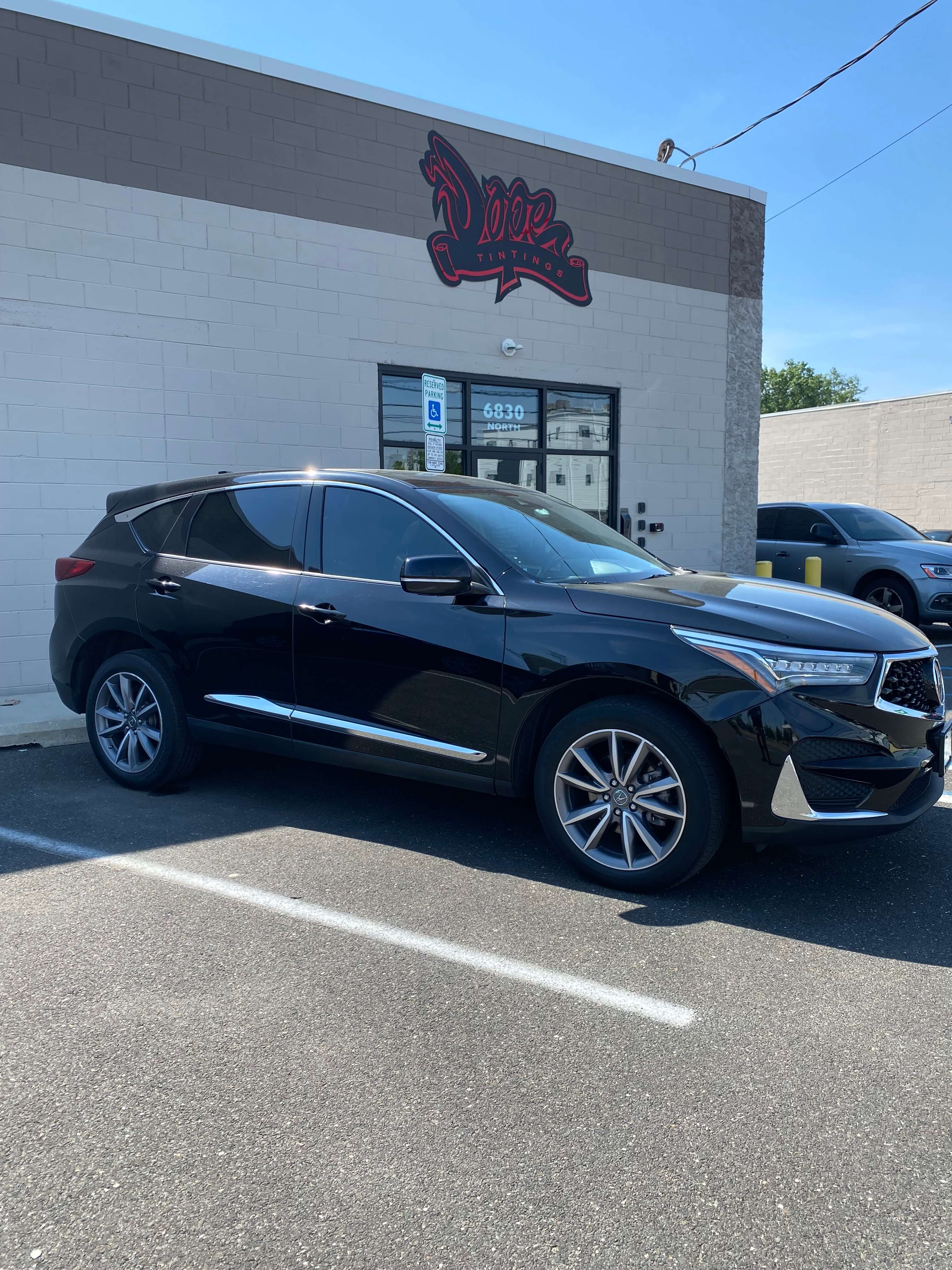
"I want maximum heat rejection."
ceramic becomes much more relevant.
And if maximum heat rejection is your goal, we encourage customers to think about all of the major glass areas rather than only the side windows.
An untreated windshield or panoramic roof can still allow significant solar energy into the cabin.
Is Carbon Tint a Good Middle Ground?
Yes.
Carbon is a good option for customers who want meaningful heat rejection but don't want to spend ceramic money.
That's why we often describe carbon as the next step above our standard film.
The decision should start with:
What do you want the tint to do for you?
Then we choose the film technology and darkness accordingly.
What Tint Percentage Is Best for a New Jersey Daily Driver?
There isn't one percentage that's best for everybody.
For practical driving, we generally look at percentages this way:
35% — lighter appearance and easier nighttime visibility.
20% — a strong balance between privacy, appearance and nighttime usability.
15% — darker appearance and more privacy than 20%, with a little more nighttime tradeoff.
5% — very dark with substantial privacy and noticeably more difficult nighttime visibility.
1% — extremely dark and intended for customers who understand the major visibility tradeoff.
These are practical visibility observations.
They are not statements that each percentage is legally permitted on every window.
What Tint Percentage Is Best for a First-Time Tint Customer?
For someone who has never driven with dark tint before, we usually want to understand their driving habits before recommending something extreme.
We ask questions such as:
- Do you drive a lot at night?
- Are your roads well lit?
- Is privacy your biggest concern?
- Have you ever driven with 5% before?
- Are you trying to match factory rear glass?
- Is heat rejection important?
A customer who drives mostly during daylight may have a very different experience with dark tint than someone who works nights and drives on poorly lit South Jersey roads.
Should You Choose Tint Based Only on the Legal Maximum?
No.
Even on glass where very dark tint can legally be used, the darkest option isn't automatically the best option.
You should also think about:
- Nighttime visibility
- Privacy
- Appearance
- Heat rejection
- Driving habits
- Interior color
- Vehicle design
Legal tells you what the rules allow.
It doesn't tell you what you'll enjoy driving with every day.
What If My Tint Is Too Dark After Installation?
If you decide your tint is too dark, the solution is normally to remove the existing film and replace it with a lighter percentage.
For example, someone who chose 5% may decide they'd be happier with:
- 15%
- 20%
- 35%
The existing film needs to be removed and the glass properly prepared before the new installation.
If the issue is only the two front windows, read How Much Does It Cost to Remove Tint From Two Front Windows?.
For full-vehicle removal pricing, read How Much Does Window Tint Removal Cost in South Jersey?.
Can You Put Lighter Tint Over Dark Tint to Make It Lighter?
No.
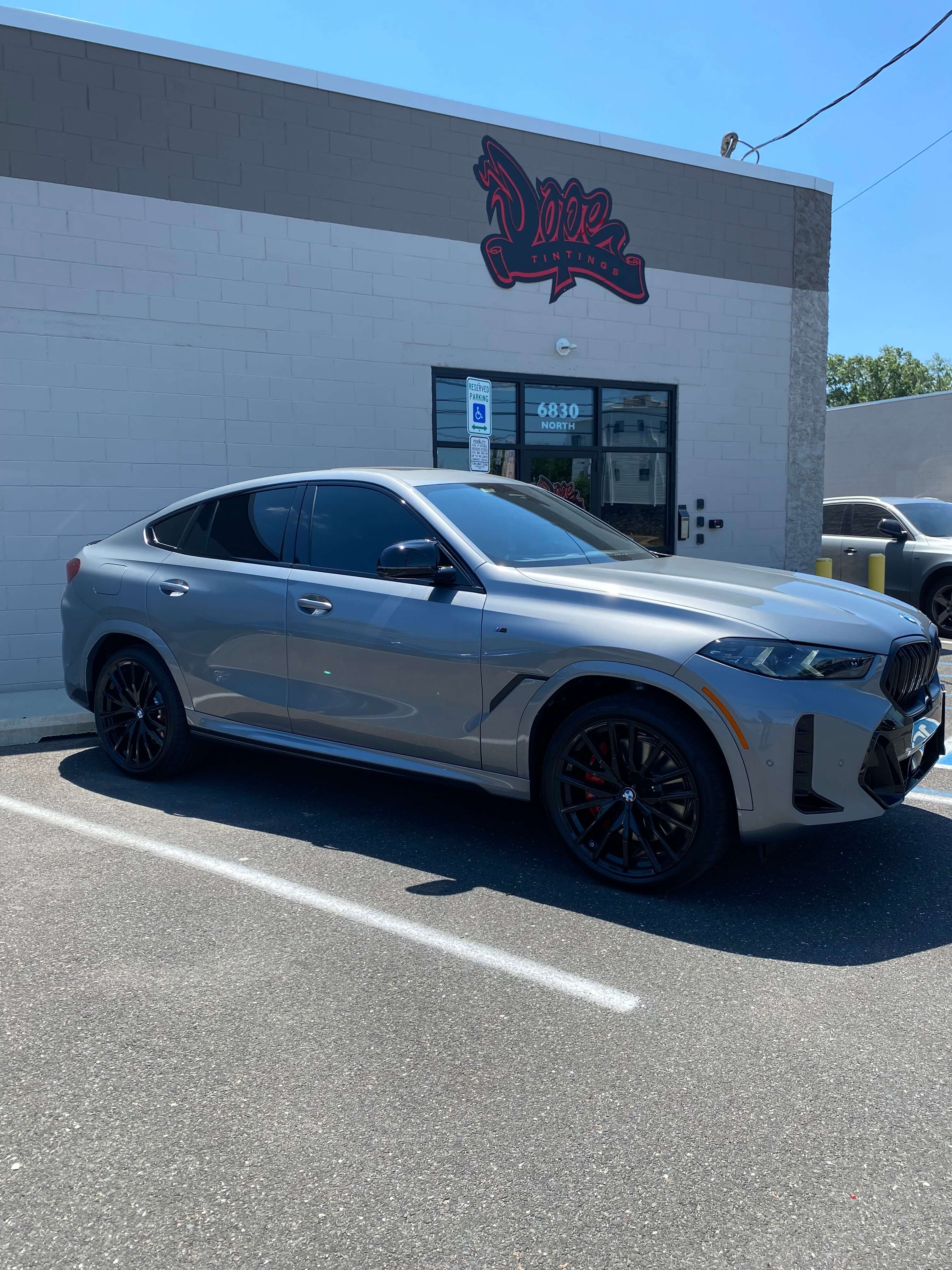
Adding another layer of film will not make an already-dark window lighter.
Stacking film reduces the combined amount of visible light passing through.
If your current tint is too dark, you need to remove it and install the lighter percentage you actually want.
If you're considering stacking film for another reason, read Can You Put New Window Tint Over Old Tint?.
Frequently Asked Questions About New Jersey Window Tint Laws
What are the window tint laws in New Jersey?
For most drivers without an approved medical exemption, New Jersey restricts aftermarket sunscreening on the windshield and front driver and passenger side windows. Windows behind the driver are treated differently and can generally use very dark tint, including 5% limo tint, subject to applicable vehicle-equipment requirements. Rear visibility and exterior-mirror requirements also matter when the rear window is obstructed.
What percentage tint is legal in New Jersey?
New Jersey does not have one universal VLT percentage that applies to every window.
The answer depends on whether you're talking about the windshield, front side windows, rear side windows or rear window.
That's why statements such as "35% is the legal tint in NJ" can be misleading.
Are tinted front windows legal in New Jersey?
For most ordinary drivers without an approved medical exemption, aftermarket sunscreening on the front driver and passenger side windows is restricted.
An approved medical sunscreening exemption can change what is permitted, subject to New Jersey's requirements.
Is 35% tint legal on the front windows in NJ?
Don't treat 35% as a universal legal front-window percentage in New Jersey.
The fact that 35% is relatively light or commonly installed does not automatically mean it is permitted on the front side windows.
Can you tint your windshield in New Jersey?
For most drivers without an approved medical exemption, aftermarket windshield sunscreening is restricted.
New Jersey has a medical sunscreening process for qualifying individuals, with specific light-transmission and reflectance requirements.
Can rear windows be tinted in New Jersey?
Yes.
Windows behind the driver are treated differently from the windshield and front side windows.
Very dark aftermarket tint can generally be used on eligible rear glass, subject to applicable vehicle-equipment requirements.
Can rear windows have 5% tint in NJ?
Yes, eligible rear glass can generally use very dark tint such as 5% limo tint when the applicable vehicle requirements are satisfied.
That does not mean 5% is permitted on every window of the vehicle.
Can the rear window be 5% in New Jersey?
Very dark film such as 5% can generally be used on eligible rear glass when the applicable requirements are met.
However, rear visibility and exterior-mirror requirements need to be considered when the rear view is obstructed.
Do you need two side mirrors with dark rear tint in New Jersey?
When the driver's rearward view is obstructed, New Jersey's vehicle-equipment requirements make exterior rearview mirrors important.
Drivers using very dark rear-window tint should make sure the vehicle has the required exterior mirror coverage.
Is 1% tint legal in New Jersey?
Extremely dark film such as 1% can be an option on eligible rear glass where very dark tint is permitted and applicable vehicle requirements are satisfied.
That does not make 1% a normal legal option for the windshield or front side windows.
Is 5% tint legal in New Jersey?
5% can generally be used on eligible rear glass when the applicable requirements are met.
Window location matters, so "5% is legal in NJ" should not be interpreted as permission to install it on every window.
Is 15% tint legal in NJ?
15% can be an option on eligible rear glass where that darkness is permitted.
The windshield and front side windows are treated differently.
Is 20% tint legal in New Jersey?
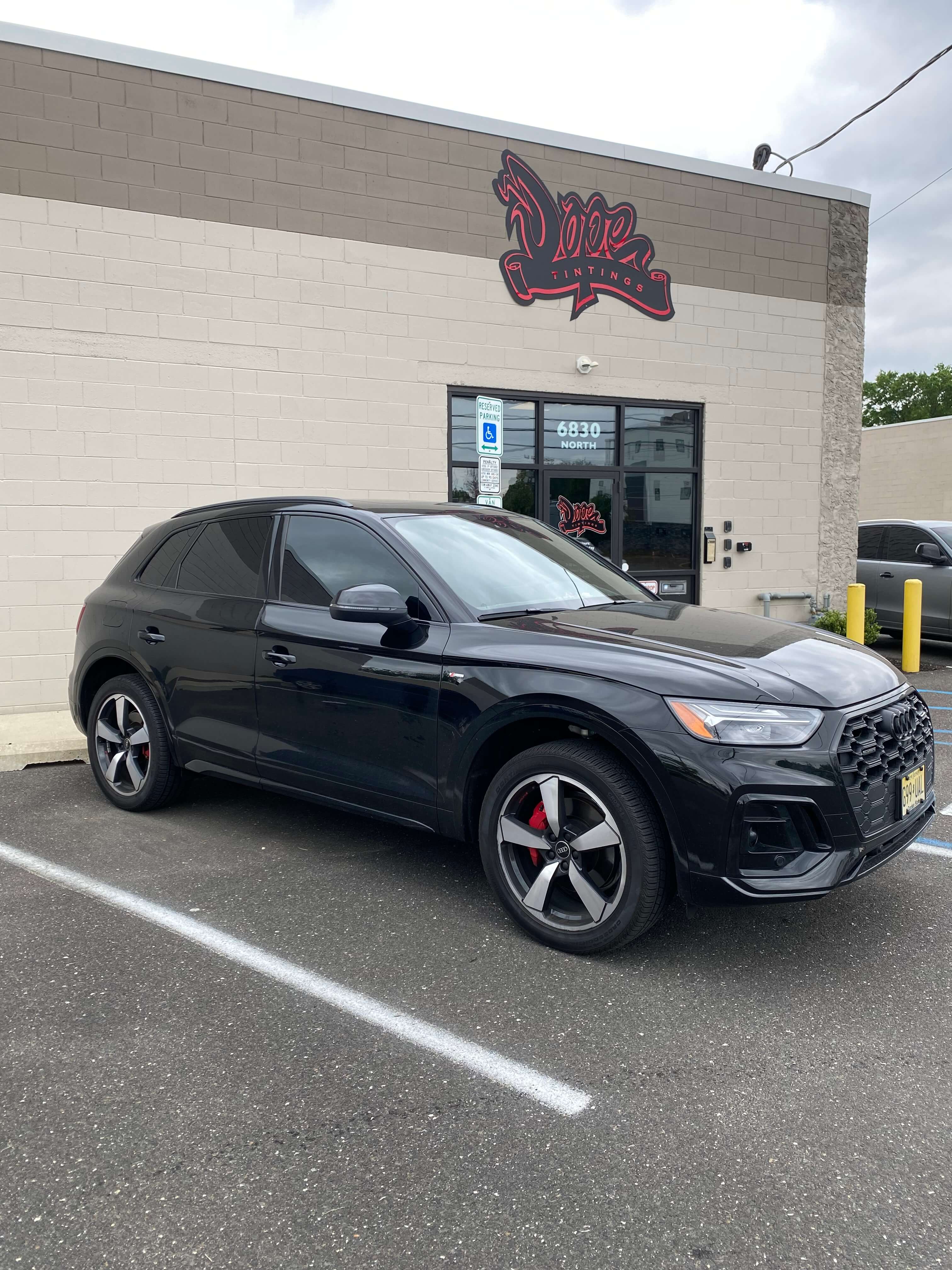
20% can generally be used on eligible rear glass where that darkness is permitted.
It is not New Jersey's universal legal tint percentage.
Is 35% tint legal in New Jersey?
35% should not be treated as a blanket legal percentage for the entire vehicle.
The legal answer depends on the window being tinted.
Does New Jersey allow medical tint exemptions?
Yes.
New Jersey provides a medical sunscreening program for qualifying individuals.
Approved sunscreening must follow the NJMVC requirements, including applicable light-transmission and reflectance standards.
What percentage is allowed with a New Jersey medical tint exemption?
Under New Jersey's medical sunscreening requirements, approved windshield sunscreening must retain at least 70% light transmission, while approved front side-window sunscreening must retain at least 60% light transmission, along with applicable reflectance requirements.
An approved medical exemption does not mean the customer can choose any darkness.
Is a doctor's note enough for medical tint in New Jersey?
No.
A doctor's recommendation should not be confused with completing the NJMVC medical-sunscreening approval process.
Drivers should obtain the appropriate state approval and documentation.
Can police pull you over for window tint in NJ?
Window tint can lead to police enforcement when an officer believes a vehicle violates applicable New Jersey requirements.
Drivers should not assume an unrelated traffic violation must occur before tint can become an issue.
For more information, read Can Cops Pull You Over for Just Window Tint in New Jersey?.
Does New Jersey inspection check window tint?
New Jersey's passenger-vehicle inspection requirements and its window-tint laws should be treated as separate questions.
If you're concerned about an upcoming inspection, verify the current NJMVC inspection requirements for your particular vehicle rather than assuming tint must automatically be removed.
Is factory privacy glass the same as aftermarket tint?
No.
Factory privacy glass gets its darkness from the glass itself.
Aftermarket window tint is a film installed onto the glass.
This distinction is particularly important on SUVs and trucks.
Can you put window tint over factory privacy glass?
Yes.
Aftermarket film can be installed over factory-darkened privacy glass for additional darkness, privacy or heat rejection.
That is different from stacking aftermarket film over another aftermarket film.
Is ceramic tint legal in New Jersey?
Ceramic film is subject to the same applicable window-location rules as other aftermarket window films.
Ceramic describes the film technology; it does not create a legal exemption.
Is ceramic tint easier to see through at night?
Ceramic film can provide excellent optical clarity, but it does not eliminate the visibility consequences of choosing an extremely dark VLT.
A 5% ceramic film is still extremely dark.
Does darker tint block more heat?
Not necessarily.
Tint darkness and heat rejection are different characteristics.
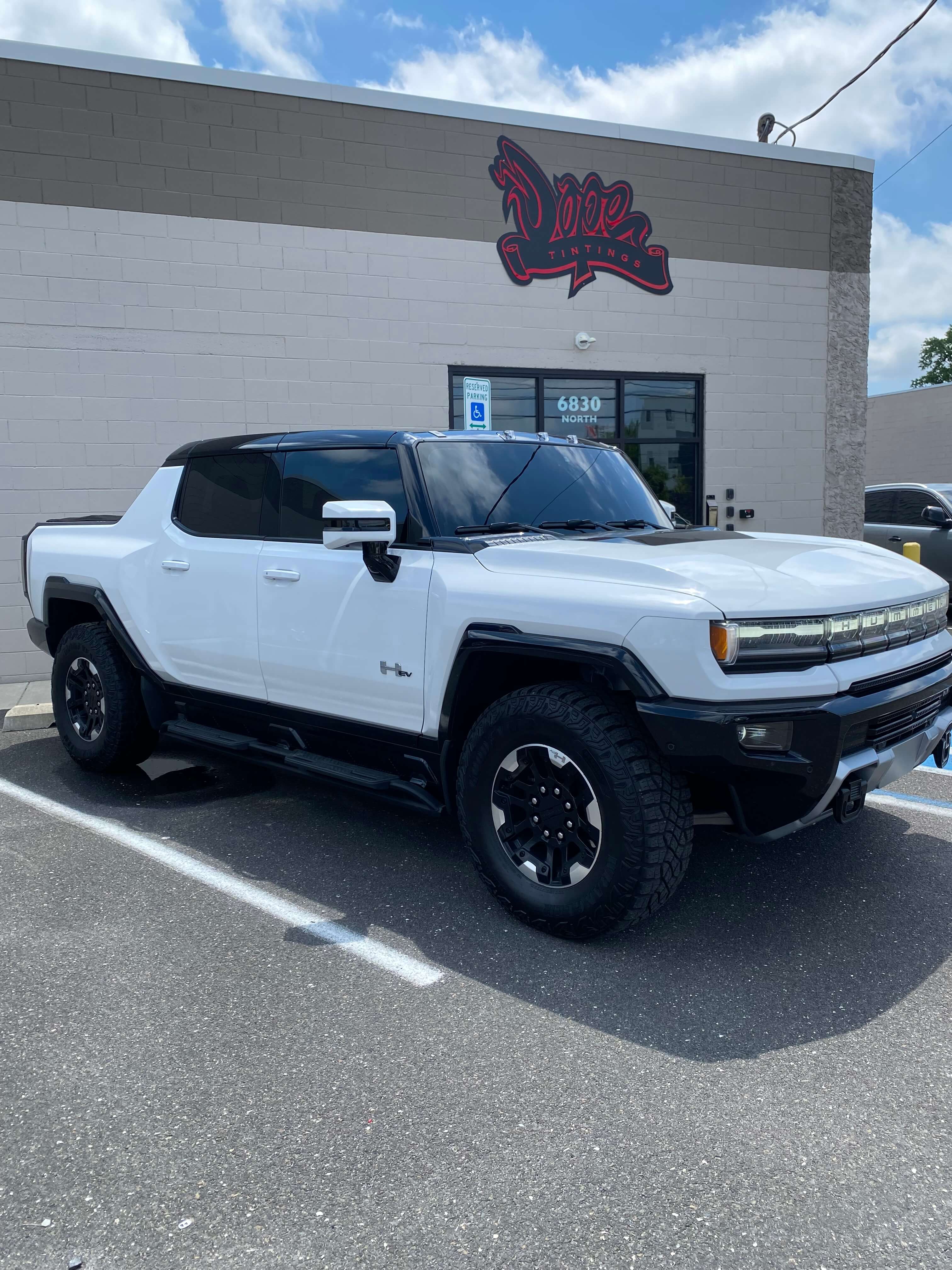
A lighter high-performance film can reject more heat than a darker lower-performance film.
What tint percentage is best for night driving?
Lighter film generally provides easier nighttime visibility.
For many customers, 20% offers a useful balance between privacy and nighttime usability, while 35% provides even easier visibility.
Very dark options such as 5% and 1% create substantially greater nighttime tradeoffs.
Is 20% or 35% tint darker?
20% is darker than 35%.
A lower VLT percentage means less visible light passes through.
For a full comparison, read Is 20% or 35% Tint Darker?.
New Jersey Window Tint Advice From 20+ Years of Experience
Window tint law is only one part of choosing the right film.
After more than 20 years in automotive window tinting and more than 30,000 vehicle installations, one of the biggest mistakes we've seen customers make is choosing tint based entirely on what another vehicle looks like.
Two vehicles with the same film percentage can look different because of:
- Interior color
- Windshield light
- Sunroof or panoramic-roof light
- Factory privacy glass
- Vehicle glass
- Sun direction
- Weather
- Viewing angle
And something that looks great at noon can be a completely different experience at night.
Before choosing a percentage, ask yourself:
- How much privacy do I want?
- How often do I drive at night?
- Are the roads I normally drive well lit?
- Do I care more about appearance or visibility?
- Is heat rejection important?
- Which windows am I tinting?
- What does New Jersey permit on those windows?
We'd rather explain those tradeoffs before installation than have a customer choose a percentage based solely on a social-media video.
New Jersey Window Tint Laws for Pennsauken and South Jersey Drivers
Dope Tintings Automotive Window Tint is located in Pennsauken, New Jersey.
We regularly work with customers from Camden County, Burlington County and surrounding South Jersey communities, including:
- Pennsauken
- Cherry Hill
- Camden
- Maple Shade
- Cinnaminson
- Delran
- Collingswood
- Haddonfield
- Marlton
- Mount Laurel
- Moorestown
- Palmyra
- Surrounding South Jersey communities
Customers regularly call us asking:
"What's legal?"
"Can I tint my front windows?"
"Can I put 5% on the back?"
"Is 35% legal in New Jersey?"
"Can I tint my windshield?"
The biggest thing we want South Jersey drivers to understand is that New Jersey does not use one tint percentage for every window.
The window location matters.
Your medical-exemption status can matter.
Rear visibility and vehicle equipment can matter.
And even when a very dark percentage can legally be used on eligible rear glass, your nighttime visibility and driving habits should still be part of the decision.
Final Answer: What Are the New Jersey Window Tint Laws in 2026?
For most drivers without an approved medical exemption, New Jersey restricts aftermarket sunscreening on the windshield and front driver and passenger side windows. Windows behind the driver are treated differently and can generally use very dark tint, including 5% limo tint, subject to applicable vehicle-equipment requirements. If rear visibility is obstructed, exterior rearview-mirror requirements also apply.
Here's the quick breakdown:
| Window | General New Jersey Rule |
|---|---|
| Windshield | Aftermarket sunscreening is restricted for most drivers without an approved medical exemption |
| Front driver window | Aftermarket sunscreening is restricted for most drivers without an approved medical exemption |
| Front passenger window | Aftermarket sunscreening is restricted for most drivers without an approved medical exemption |
| Rear side windows | Very dark tint, including 5%, can generally be used when applicable vehicle requirements are met |
| Rear window | Very dark tint, including 5%, can generally be used; exterior-mirror requirements matter when rear visibility is obstructed |
So if you're searching:
"What are the window tint laws in New Jersey?"
the most important thing to remember is:
There isn't one legal tint percentage for the entire vehicle.
The windshield and front side windows are treated differently from the windows behind the driver.
And if you qualify for New Jersey's medical sunscreening program, the approved windshield and front-side-window installation must still meet the state's specific requirements.
For the maximum-darkness question, read What Is the Darkest Legal Tint in NJ? 2026 Guide.
For police enforcement questions, read Can Cops Pull You Over for Just Window Tint in New Jersey?.
For nighttime visibility and ceramic-tint misconceptions, read Can You See Through Ceramic Tint Better? Day & Night Visibility Explained.
For carbon-versus-ceramic performance, read What Is the Difference Between Carbon and Ceramic Window Tint?.
Dope Tintings
6830 N Crescent Blvd
Pennsauken, NJ 08110
Call 856-577-4119 for automotive window tint information.