Is 20% or 35% Tint Darker? 20% vs. 35% Window Tint Explained
Is 20% or 35% tint darker? 20% tint is darker than 35% tint. See the difference between 20% and 35% window tint using real vehicles tinted by Dope Tintings in Pennsauken, NJ.
Is 20% or 35% Tint Darker?
20% tint is darker than 35% tint.
Window tint percentages work opposite of what many first-time customers expect:
- 20% tint lets approximately 20% of visible light through and blocks approximately 80% of visible light.
- 35% tint lets approximately 35% of visible light through and blocks approximately 65% of visible light.
The easiest way to remember it is:
The lower the tint percentage, the darker the tint.
So when comparing 20% vs. 35%:
20% = darker
35% = lighter
We install both percentages regularly at Dope Tintings in Pennsauken, New Jersey, and the difference between the two is definitely noticeable in person.
20% vs. 35% Tint at a Glance
| Comparison | 20% Tint | 35% Tint |
|---|---|---|
| Visible light transmitted | Approx. 20% | Approx. 35% |
| Visible light blocked | Approx. 80% | Approx. 65% |
| Which is darker? | Darker | Lighter |
| Privacy | More | Less |
| Daytime visibility | Good for many drivers | Very good |
| Nighttime visibility | Darker and more challenging | Easier to see through |
| Appearance | Darker, factory-style look | Lighter, classier look |
| Our customer demand | Very popular | Chosen for a lighter look |
Important: These percentages describe visible-light transmission. They should not be confused with heat rejection or UV rejection.
A darker film does not automatically mean it is the better heat-rejection film.
Why Is 20% Tint Darker Than 35%?
The percentage refers to Visible Light Transmission, commonly called VLT.
VLT tells you approximately how much visible light is allowed through the film.
That's where customers sometimes get confused.
Someone unfamiliar with window tint may assume:
35 is a bigger number than 20, so 35% must be darker.
It's actually the opposite.
A 35% film allows more visible light through than a 20% film.
Because 20% allows less visible light through, it appears darker.
Think of the percentages as describing how much light you're allowing into the vehicle—not how much tint you're adding.
What Does 20% Tint Look Like?
20% gives a vehicle a noticeably dark appearance.
From our experience at Dope Tintings, 20% is one of the percentages customers commonly choose when they want the appearance associated with factory-darkened rear glass on many SUVs and crossovers.
It provides considerably more privacy than 35%.
During the daytime, visibility looking out is comfortable for many of our customers.
At night, however, you will notice the additional darkness.
Some customers may find themselves rolling a window down when parallel parking, backing into a tight area or trying to see a curb in a poorly lit location.
Individual tolerance varies considerably.
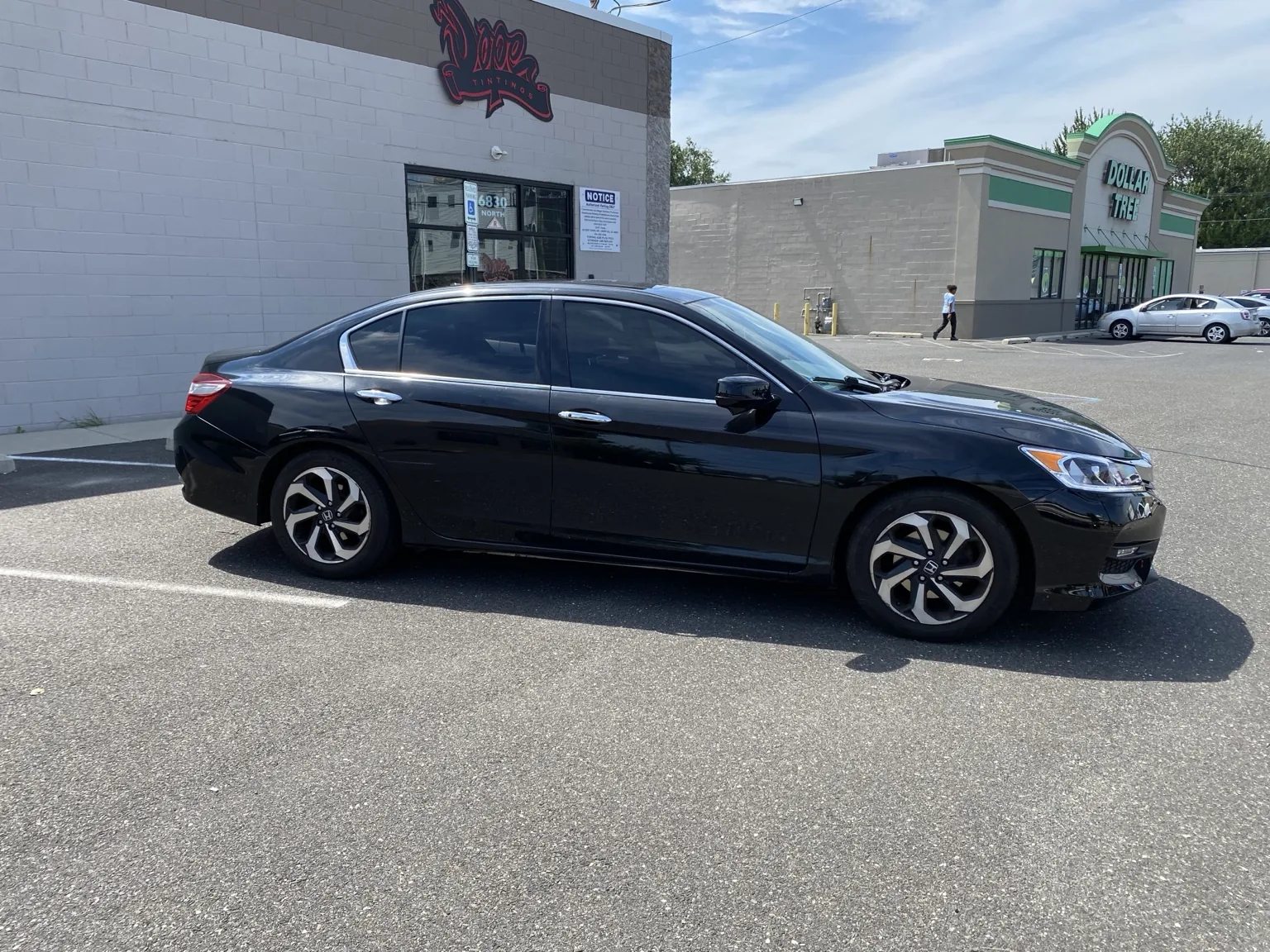
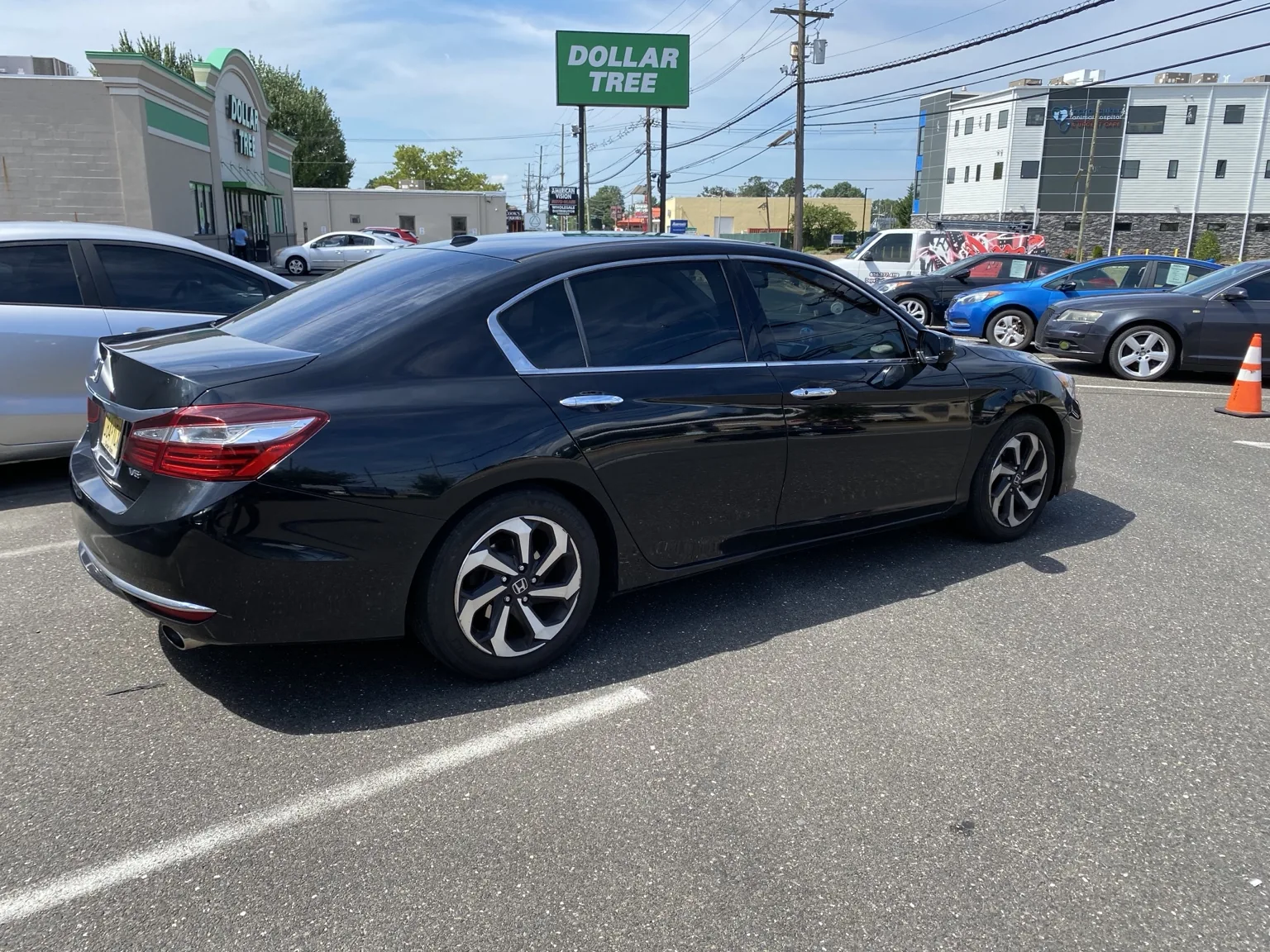
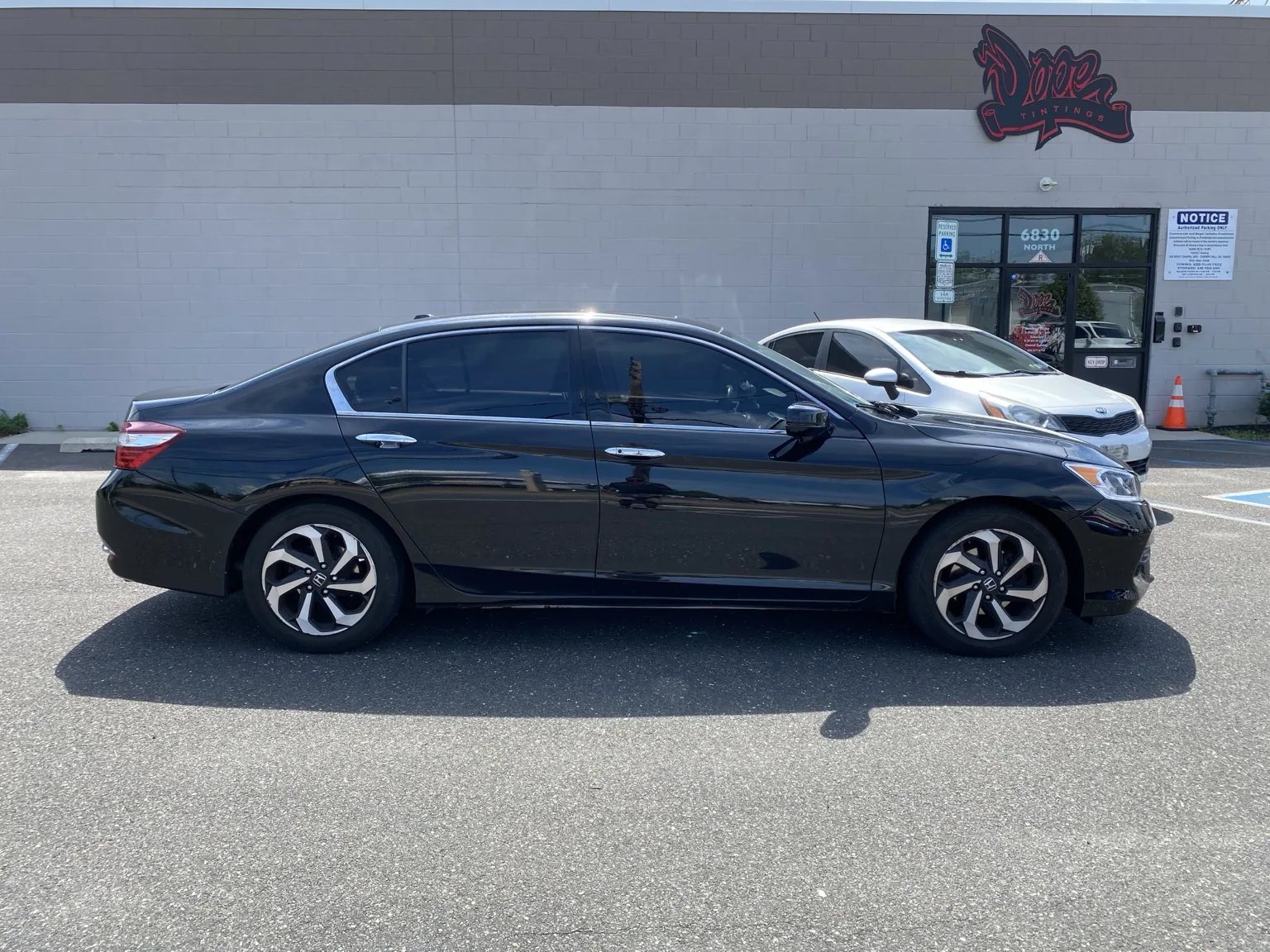
Real 20% Tint Example: 2017 Honda Accord
The 2017 Honda Accord pictured in this article has 20% window tint.
We chose this vehicle for our comparison because it gives you a real-world example of how 20% looks after being installed on a four-door sedan.
20% Tint on a Four-Door Sedan
Notice how much privacy the 20% provides when looking into the Accord.
The windows are clearly tinted and the interior is more difficult to see from outside.
The full side profile is particularly useful because it lets you see the combined appearance of multiple tinted windows rather than looking at a small film sample.
You'll also notice that 20% can appear slightly different depending on which direction you're looking at the vehicle and how much light is entering through the windshield and surrounding glass.
What Does 35% Tint Look Like?
35% is noticeably lighter than 20%.
We describe 35% as more of a classy or subtle tinted appearance.
It's enough tint to noticeably change the appearance of a vehicle without making the windows look extremely dark.
During daylight, you'll generally be able to see considerably more of the vehicle's interior compared with 20%.
That means:
35% does not provide as much daytime privacy as 20%.
The tradeoff is visibility.
35% provides very good outward visibility during the day and, from our experience, is considerably easier for most customers to see through at night.
Real 35% Tint Example: 2025 Lexus ES 350
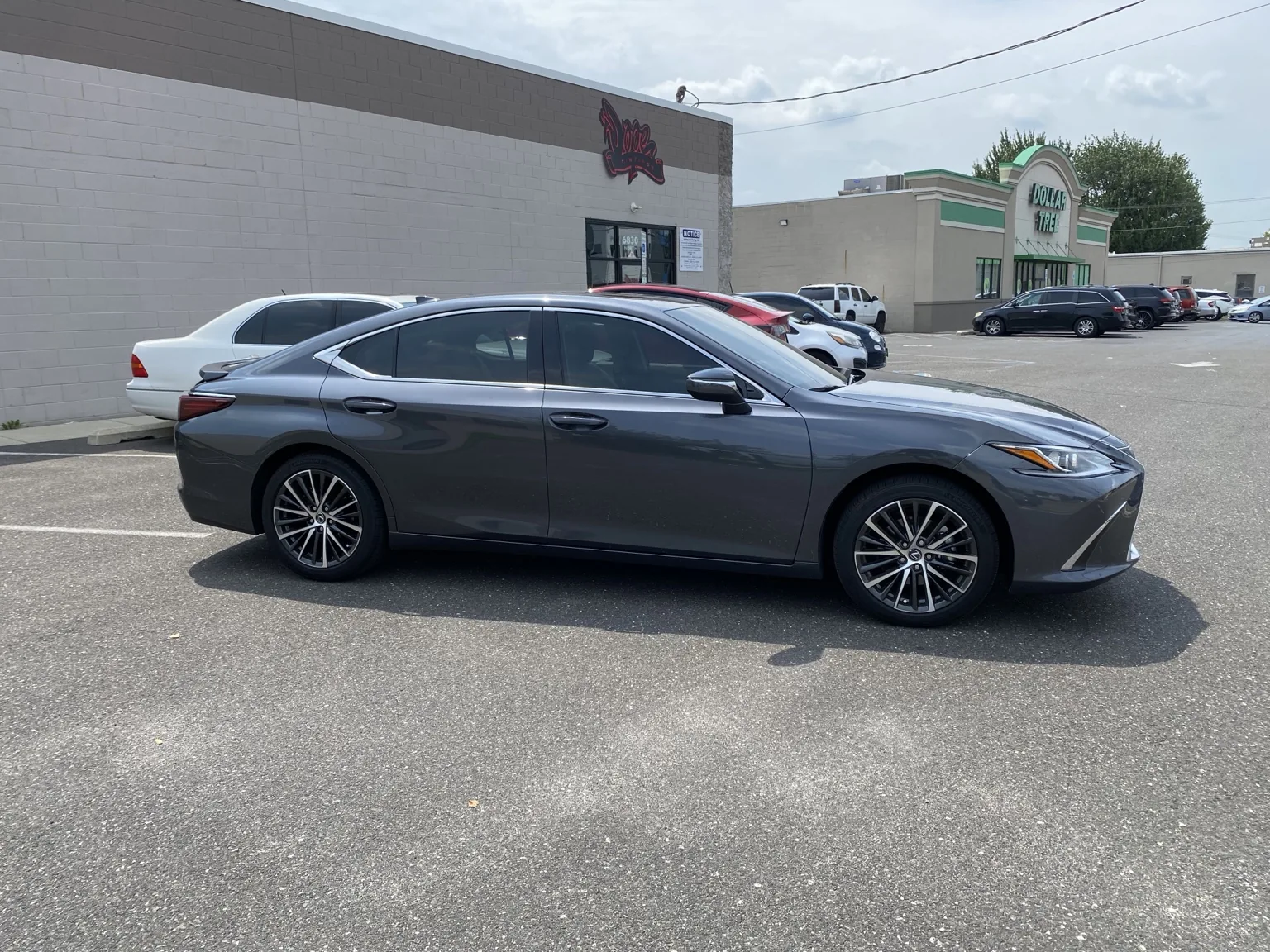
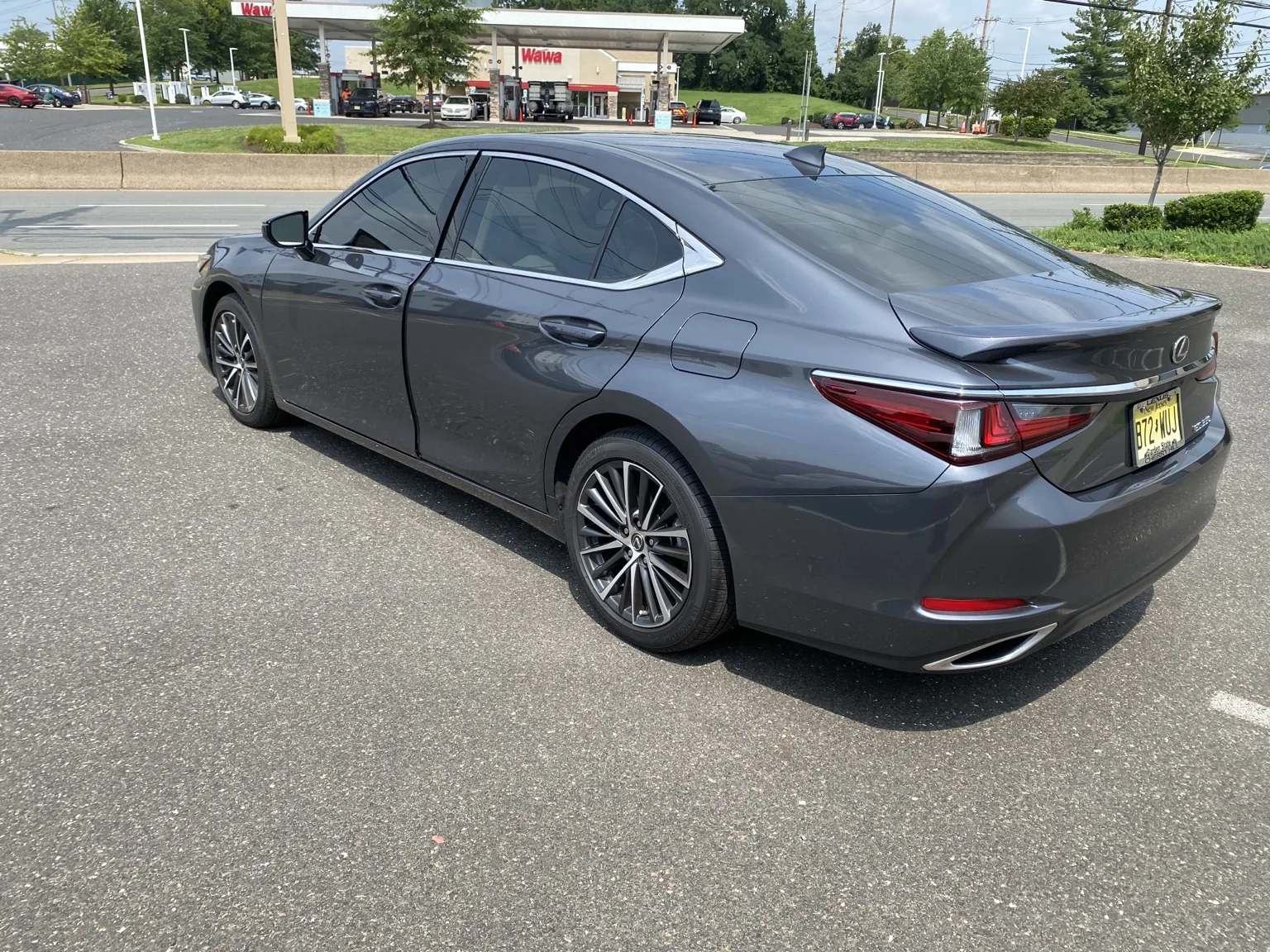
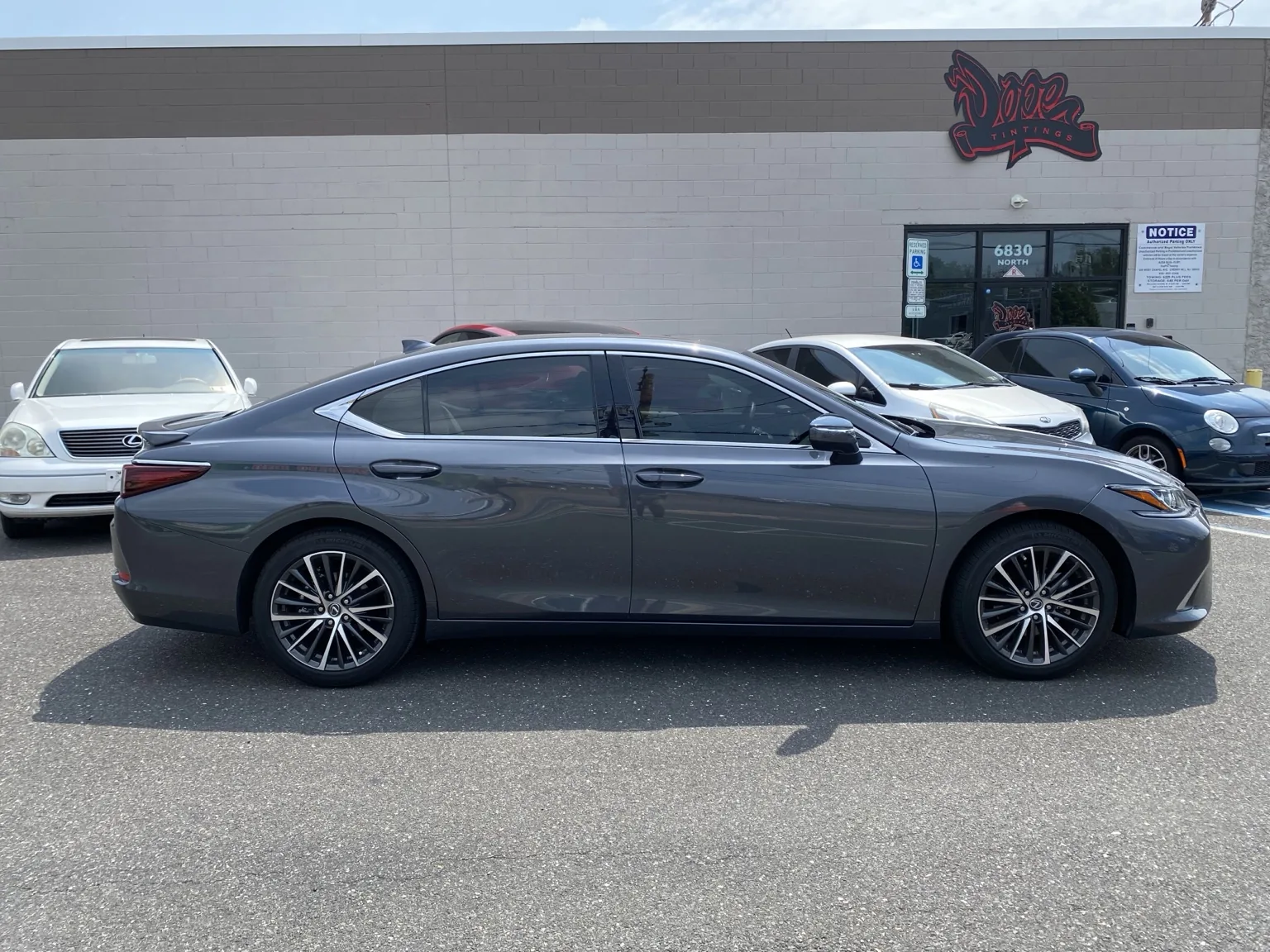
For the 35% side of this comparison, we're using a 2025 Lexus ES 350 that we actually tinted at Dope Tintings.
The Lexus received:
35% carbon film on the sides and rear glass.
The vehicle also received 50% carbon film on the windshield, but the 35% side and rear windows are what we're comparing in this article.
The Lexus demonstrates what we mean when we describe 35% as a classier appearance.
It's clearly tinted, but you can still see more through the glass than you can with the 20% Accord.
20% vs. 35% Tint: See the Difference
Here are our two real-world examples:
20% Tint
2017 Honda Accord — 20%
35% Tint
2025 Lexus ES 350 — 35%
When comparing the vehicles, you should be able to see that:
The 20% Accord appears darker and provides more privacy than the 35% Lexus.
That's exactly what we'd expect based on the percentages.
However, there's something very important to understand when comparing tint photographs.
Why Can Window Tint Look Different in Photos?
Never choose a window tint percentage based exclusively on one photograph you found online.
Several things can change how dark window tint appears:
- Sunlight
- Cloud cover
- Time of day
- Camera exposure
- Viewing angle
- Interior color
- Windshield light
- Number of windows tinted
- Amount of light entering from the opposite side of the vehicle
That's why we're showing real vehicles but still using the actual tint percentages to explain the difference.
The Honda and Lexus are also different vehicles.
Both are four-door sedans, which gives us a better comparison than comparing a sedan against an SUV or two-door coupe, but it still isn't a laboratory-controlled test.
The objective takeaway remains the same: 20% VLT is darker than 35% VLT.
Why Does Tint Look Darker on a Car Than on a Tint Display Board?
This is something we've had customers experience firsthand.
At Dope Tintings, like many professional tint shops, we can show customers different percentages on a window tint percentage display board.
You may look at:
- 5%
- 15%
- 20%
- 35%
- Other available percentages
and compare how each one looks on the sample glass.
That's a great starting point.
But there's something we explain to customers:
The percentage you see on an individual tint sample can look different once that percentage is installed throughout an entire vehicle.
Why Did My Tint Look Lighter on the Sample Board?
Because you're looking at one individual piece of sample glass.
Now imagine installing 35% across:
- Driver window
- Passenger window
- Both rear door windows
- Rear glass
- Additional quarter glass when applicable
The film itself hasn't magically changed from 35% to a darker percentage.
It's still 35% film.
But the overall vehicle can appear darker because you're reducing the amount of visible light entering the cabin from multiple directions.
Interior color, windshield light, glass angles and surrounding lighting can affect that appearance as well.
Can 35% Look Darker Once It's Installed on the Whole Car?
Absolutely.
We've had customers look at 35% on our tint display board, select it, and then return to pick up their completed vehicle and say:
"That looks darker than what I picked."
They didn't receive the wrong percentage.
They're now looking at 35% installed throughout an entire vehicle instead of looking through one individual sample.
That's an important difference.
Does That Mean the Tint Percentage Changed?
No.
If we install 35% film, the film doesn't become 20% because we installed it on multiple windows.
We're talking about perceived darkness of the completed vehicle.
The film specification remains the same.
That's why we tell customers to use a tint display board as a reference, not as a guarantee that their completed vehicle will look identical to one individual sample.
Is 20% More Private Than 35% Tint?
Yes.
If privacy is one of your main goals, 20% provides noticeably more privacy than 35%.
During daylight, you'll generally be able to see more of the interior through 35%.
With 20%, the interior becomes more difficult to see.
That's one reason 20% is more popular with customers who tell us:
"I want privacy, but I don't necessarily want 5%."
Is 35% Tint Private?
It provides some shading, but we don't consider privacy the biggest reason to choose 35%.
During daylight, people can generally see into the vehicle more easily than they can with 20%.
That's why we describe 35% differently.
For us, 35% is more about achieving a classy, noticeable tint appearance while maintaining excellent visibility.
If privacy is your priority, we'd have a different conversation.
Is 20% Tint Hard to See Through at Night?
It can be more challenging than 35%.
How challenging depends heavily on the driver.
We've had plenty of customers choose 20% and tell us they have no problem with it.
Other drivers are more sensitive to darker windows.
One situation where the difference becomes particularly noticeable is parallel parking at night.
You may need to roll the window down to clearly see:
- The curb
- Your wheels
- A nearby vehicle
- Parking-space boundaries
That's why we don't tell every customer that 20% is automatically the best percentage.
Is 35% Tint Easier to See Through at Night?
Yes.
If someone wants tint but is particularly concerned about nighttime visibility, 35% is the percentage we'd encourage them to look at when comparing these two options.
It provides a noticeable tinted appearance without reducing visible light as much as 20%.
For many customers, 35% provides a good middle ground:
Not extremely dark. Not nearly clear.
That's why we often describe the appearance as classy.
Which Is Better: 20% or 35% Tint?
Neither is automatically better.
They're intended for different customers.
Consider 20% if you want:
- More privacy
- A darker appearance
- A look similar to the dark rear appearance commonly seen on SUVs and crossovers
- More visible-light reduction
- You're comfortable driving with darker windows
Consider 35% if you want:
- A lighter tint
- A subtle or classy appearance
- Better nighttime visibility
- Easier outward visibility
- Less emphasis on privacy
Your tolerance for darkness matters.
We've had customers concerned about nighttime visibility choose 20% and love it.
We've also had customers who are much more comfortable with 35%.
Window tint percentage is personal preference.
Does 20% Tint Block More Heat Than 35%?
Don't use darkness alone to answer that question.
20% being darker than 35% does not automatically tell you which film has better overall heat-rejection performance.
Film construction matters.
For example, we offer different categories of automotive film, including:
- Standard
- Carbon
- Ceramic
A lighter high-performance film may be engineered for substantially better heat rejection than a darker film selected primarily for appearance.
So don't confuse:
Visible-light transmission
with:
Heat rejection.
If heat rejection is your priority, tell the tint shop that instead of simply asking for the darkest percentage.
Is 20% Tint the Same as Factory Tint?
Not exactly.
We often describe 20% as giving an appearance close to the factory-darkened rear glass commonly seen on SUVs and crossovers.
But factory privacy glass and aftermarket window film aren't necessarily the same product or exact measurement.
If you're trying to match factory rear privacy glass, the installer should evaluate the actual vehicle rather than blindly assuming every factory rear window is identical.
What Is the Biggest Misunderstanding About Tint Percentages?
The number itself.
One of the most common misunderstandings we hear is:
Customers think the higher number means darker tint.
It's the opposite.
When you're comparing VLT percentages:
Lower percentage = darker
Higher percentage = lighter
So:
5% is darker than 20%.
20% is darker than 35%.
35% is darker than 50%.
50% is darker than 70%.
Once you understand that, tint percentages become much easier to compare.
20% vs. 35% Tint FAQ
Is 20% or 35% tint darker?
20% tint is darker than 35% tint. 20% allows approximately 20% of visible light through, while 35% allows approximately 35%.
Is 20% darker than 35% tint?
Yes. Lower VLT percentages indicate darker film.
Does 20% tint give more privacy than 35%?
Yes. From our experience, the difference is clearly noticeable and 20% provides more privacy.
Can you see inside 35% tint?
Generally, yes, particularly during daylight. Lighting conditions, interior color and viewing angle can change how easily you can see inside.
Can you see inside 20% tint?
20% provides considerably more privacy than 35%, although it doesn't make a vehicle completely impossible to see into under every lighting condition.
Which looks better, 20% or 35%?
That's personal preference. We associate 20% with a darker, more private appearance, while 35% produces a lighter, classier look.
Which is better at night, 20% or 35%?
35% generally provides easier nighttime visibility because it allows more visible light through.
Is 20% impossible to see through at night?
No. Many of our customers drive with 20% without an issue, but individual tolerance varies and it will be darker than 35%.
Why does 35% look darker on my car than at the tint shop?
A tint display board shows an individual sample. Once multiple windows throughout a vehicle are tinted, the overall cabin receives less light and the completed vehicle can appear darker.
Does installing 35% on every window make it become a lower percentage?
No. The film hasn't changed percentage. The overall vehicle can simply appear darker because of the combined effect of multiple tinted windows and reduced cabin light.
Does darker tint automatically block more heat?
No. Tint darkness and heat-rejection performance are different measurements. Film technology and construction matter.
What Are New Jersey's Window Tint Laws?
Before choosing between 20% and 35%, remember that what looks best and what is legally permitted on a particular vehicle window are separate questions.
New Jersey has specific rules governing automotive window tint.
Read our complete guide:
New Jersey Window Tint Laws: Complete 2026 Guide
If you're particularly concerned about traffic stops, also read:
Can Cops Pull You Over for Just Window Tint in New Jersey? 2026 Guide
20% vs. 35% Window Tint in Pennsauken NJ
At Dope Tintings, we've installed both 20% and 35% window tint on thousands of vehicles over the years.
Based on our real-world experience:
20% is clearly darker than 35%.
20% provides:
- More privacy
- A darker appearance
- Less visible light entering the vehicle
35% provides:
- Less privacy
- A lighter, classier appearance
- Easier nighttime visibility
If you're unsure, come look at the percentages before making your decision.
Just remember:
A tint display board is a reference. The completed vehicle can appear darker once multiple windows are tinted.
Final Answer: Is 20% or 35% Tint Darker?
20% tint is darker than 35% tint.
Here's the simplest explanation:
20% tint: Approximately 20% of visible light passes through and approximately 80% is blocked.
35% tint: Approximately 35% of visible light passes through and approximately 65% is blocked.
Therefore:
20% = darker and more private
35% = lighter and easier to see through
The mistake many first-time tint customers make is assuming a bigger percentage means darker film.
Remember the opposite:
The lower the tint percentage, the darker the tint.
And before choosing your percentage from a sample board, remember that the finished vehicle can appear darker once the film is installed across multiple windows.
The 2017 Honda Accord with 20% and the 2025 Lexus ES 350 with 35% shown in this article give you real-world examples of that difference.
But photos are still affected by lighting, interior color, viewing angle and the vehicle itself.
The best percentage is ultimately the one that gives you the balance of privacy, appearance and visibility that you're comfortable driving with.
Get a Window Tint Quote in Pennsauken NJ
Need help deciding between 20% and 35% window tint?
Dope Tintings provides professional automotive window tinting in Pennsauken, NJ for customers throughout South Jersey.
Dope Tintings Automotive Window Tint
6830 N Crescent Blvd
Pennsauken, NJ 08110
Phone: 856-577-4119
Tell us what matters most to you:
- Privacy
- Appearance
- Nighttime visibility
- Glare reduction
- Heat rejection
We'll explain your options so you can choose a percentage you're comfortable with instead of simply picking a number.
Call now for a quote.