Can You Put New Window Tint Over Old Tint?
Can you put new window tint over old tint? Technically yes, but Dope Tintings generally recommends removing old aftermarket film first. Learn how stacked tint affects warranty, darkness, appearance, and why factory privacy glass is completely different.
Can You Put New Window Tint Over Old Tint?
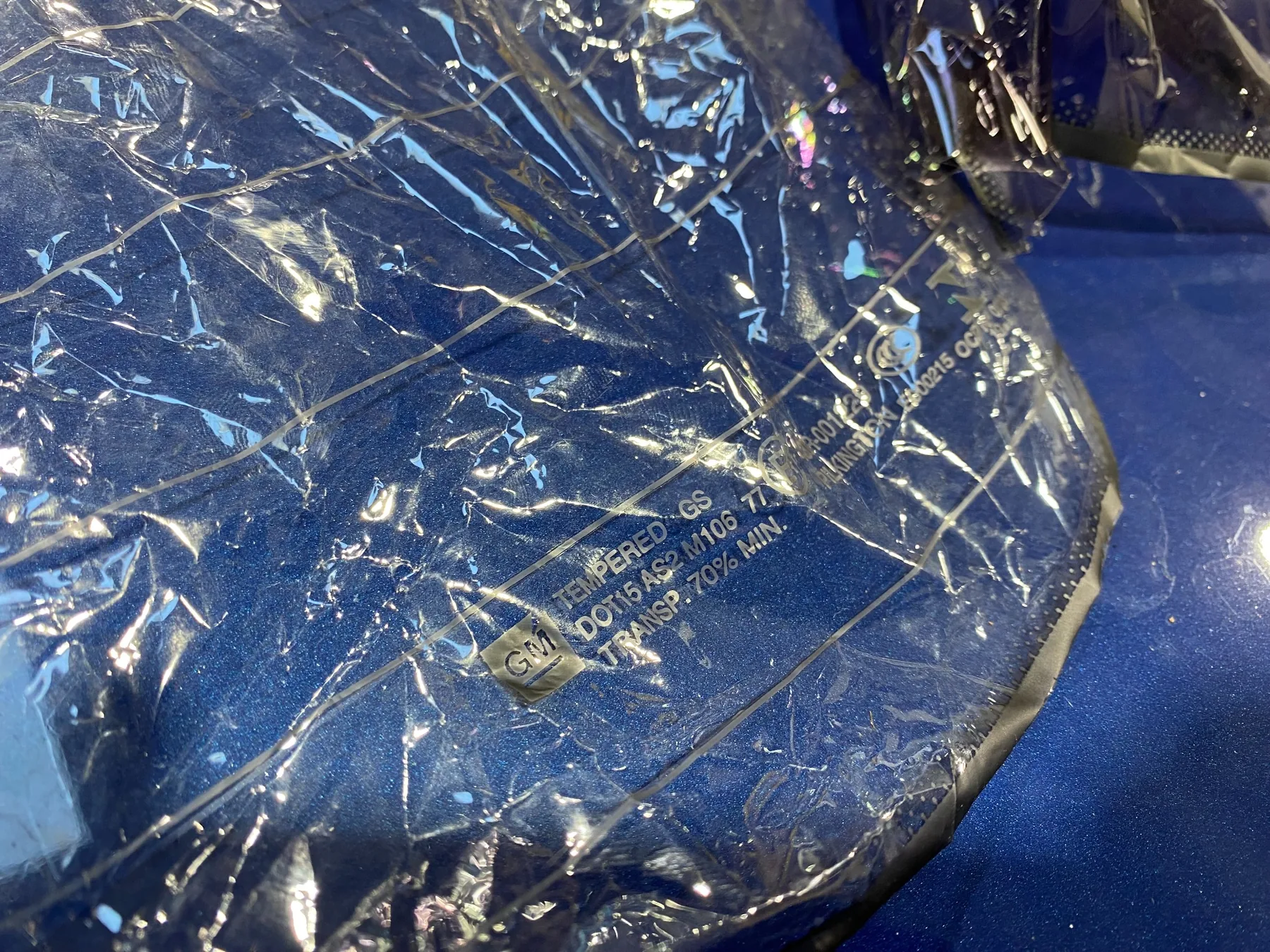
Yes, you can technically put new window tint over existing aftermarket tint if the original installation is in good condition, but it is generally not the method we recommend. At Dope Tintings, we prefer removing the existing aftermarket film and installing the new film directly onto properly prepared glass. If a customer chooses to stack film over existing aftermarket tint, we do not provide our normal warranty on that stacked installation.**
There's also an important exception that causes a lot of confusion:
Installing aftermarket window film over factory privacy glass is NOT the same thing as putting aftermarket tint over aftermarket tint.
Factory privacy glass is darkened glass.
It isn't another sheet of aftermarket window film attached to the window.
That's why it's completely normal for us to install window film over factory-darkened rear glass on an SUV or truck.
But when someone already has aftermarket tint installed and asks us:
"Can't you just put another layer over it?"
that's a completely different conversation.
After more than 20 years in the automotive window tint industry, we've seen customers stack film because they wanted darker windows, wanted to avoid paying for removal, or wanted a percentage that wasn't available as a single film.
It can be done.
The question is whether it should be done.
Can You Put Tint Over Existing Window Tint?
Technically, yes.
Window film can be installed over another layer of window film.
But that doesn't automatically mean it's the best way to tint the vehicle.
Our preferred professional installation is:
Window film installed directly onto properly prepared glass.
Why?
Because when we're installing directly to the glass, we're controlling the foundation underneath our installation.
When another layer of aftermarket tint is already there, we're now depending on that original film and installation.
If that underlying layer eventually fails, the new film sitting above it doesn't have a sound foundation anymore.
Does Dope Tintings Recommend Putting Tint Over Tint?
Generally, no.
Our recommendation is to remove the existing aftermarket film, properly prepare the glass and install the new tint directly onto the glass.
That gives us control over:
- Preparation
- Cleanliness
- Adhesion
- Film condition
- Installation quality
- Warranty
However, there are situations where a customer specifically requests another layer.
If the existing installation is in good condition, we can discuss that option.
But the customer needs to understand the tradeoff:
A stacked film installation does not receive our normal warranty.
Why Doesn't Dope Tintings Warranty Tint Installed Over Tint?
Because professional window film is designed to be installed onto a properly prepared glass surface.
If we install our new film on top of somebody else's existing film, we're now relying on that old film.
We don't necessarily know:
- Who manufactured it
- What film line it is
- How old it is
- How it was installed
- How well the glass was prepared
- What condition the adhesive is in
- How it will age in the future
Even if the film looks perfect today, that doesn't guarantee it will remain perfect.
We can't provide the same warranty on our installation when the surface underneath our film is another piece of aftermarket film that may eventually fail.
What If the Existing Tint Looks Perfect?
Customers ask us this all the time.
They'll say:
"There's nothing wrong with my tint. No bubbles. No purple. No peeling. I just want it darker."
We understand.
The film may look great.
But appearance doesn't tell us everything about the film.
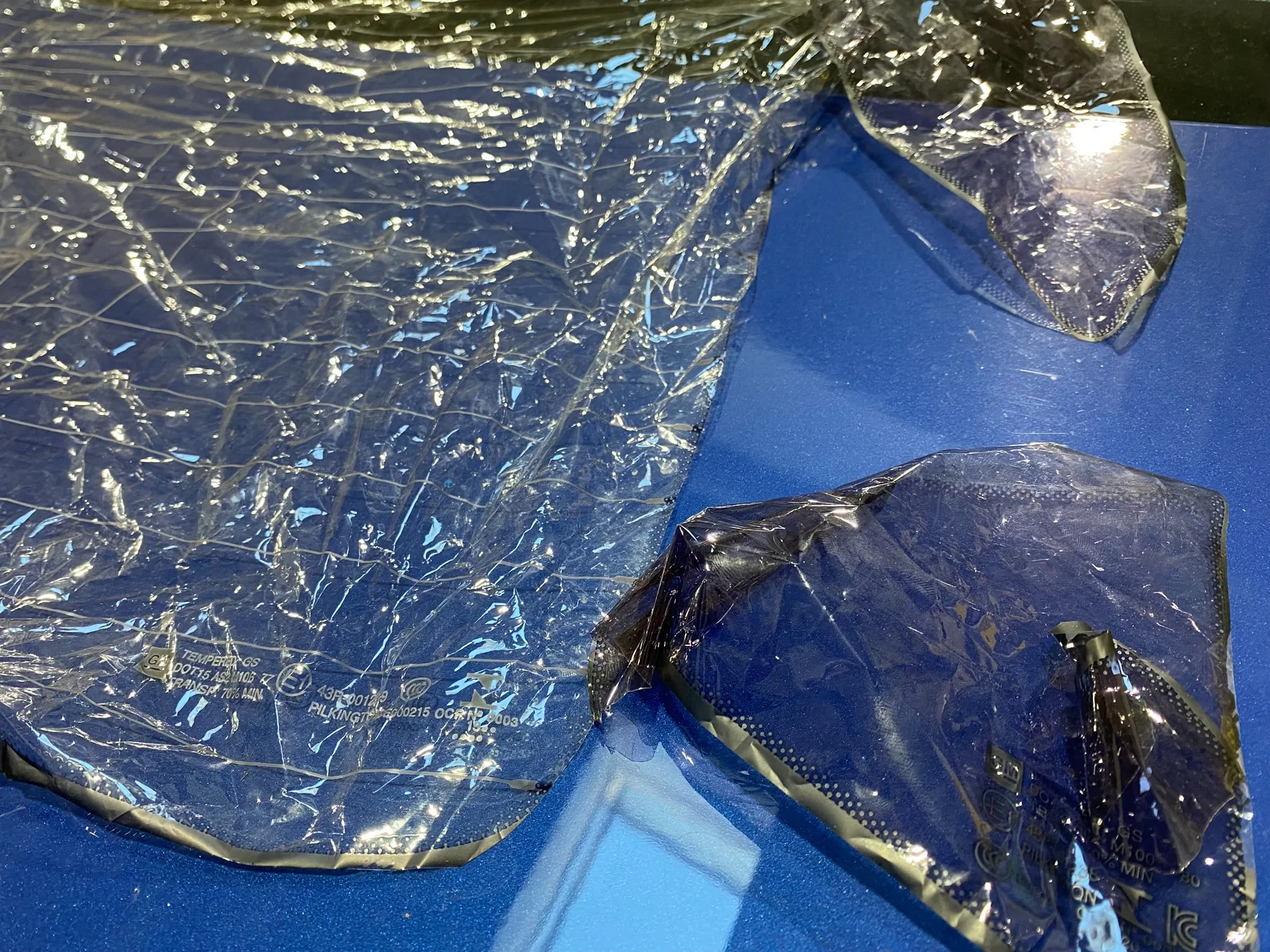
If another shop installed it, we may not know its:
- Manufacturer
- Film construction
- Adhesive
- Age
- Warranty
- Installation history
That's why our recommendation remains:
Remove it and install the new film directly to the glass if you want the proper installation and warranty.
If the customer still wants us to stack another layer after we inspect the existing installation, that's a different decision.
What If Dope Tintings Installed the Original Tint?
This is one situation where we're more familiar with the foundation we're working over.
If we installed the original film, we know:
- The film we used
- How the glass was prepared
- How the film was installed
- The quality of the original installation
We've had previous customers return and say:
"You put 20% on my car, but now I want it darker. Can you just put another layer over it?"
We give them two options.
Option 1: Remove the existing film and install the new percentage directly to the glass.
The customer pays for the removal and new installation, and the new installation can receive the applicable warranty.
Option 2: Install another layer over the existing film.
We may agree to do that if the existing installation is in good condition, but the customer understands that the stacked installation will not receive our normal warranty.
The choice ultimately belongs to the customer.
What If Another Tint Shop Installed the Existing Film?
We don't automatically refuse the job.
First, we inspect the existing installation.
If the film and workmanship appear good or acceptable, we'll explain the same options:
Remove the existing film + install new film = applicable warranty
or
Stack new film over existing film = no warranty
If the existing installation already looks bad, our recommendation becomes much easier:
Remove it.
There's no reason to build another installation on top of a bad foundation.
Can You Put Tint Over Bad Tint?
We don't recommend it.
If the existing film is:
- Bubbling
- Purple
- Brown
- Peeling
- Delaminating
- Contaminated
- Creased
- Poorly installed
putting another layer over it doesn't fix those problems.
You're simply covering a failed or poor installation with another sheet of film.
And making the windows darker can actually make some of those existing imperfections more noticeable.
If the existing film has failed, remove it.
For complete removal pricing, read How Much Does Window Tint Removal Cost in South Jersey?.
Will New Tint Hide Bubbles in Old Tint?
No.
If the underlying film is bubbling, adding another layer doesn't repair the failed layer underneath.
The bubble is still there.
The bottom film is still failing.
The new film is simply sitting on top of that compromised installation.
That's not how we recommend correcting failed window tint.
The proper solution is to remove the failed film, prepare the glass and install new film correctly.
Will New Tint Hide Dirt or Contamination Under Old Tint?
Don't count on it.
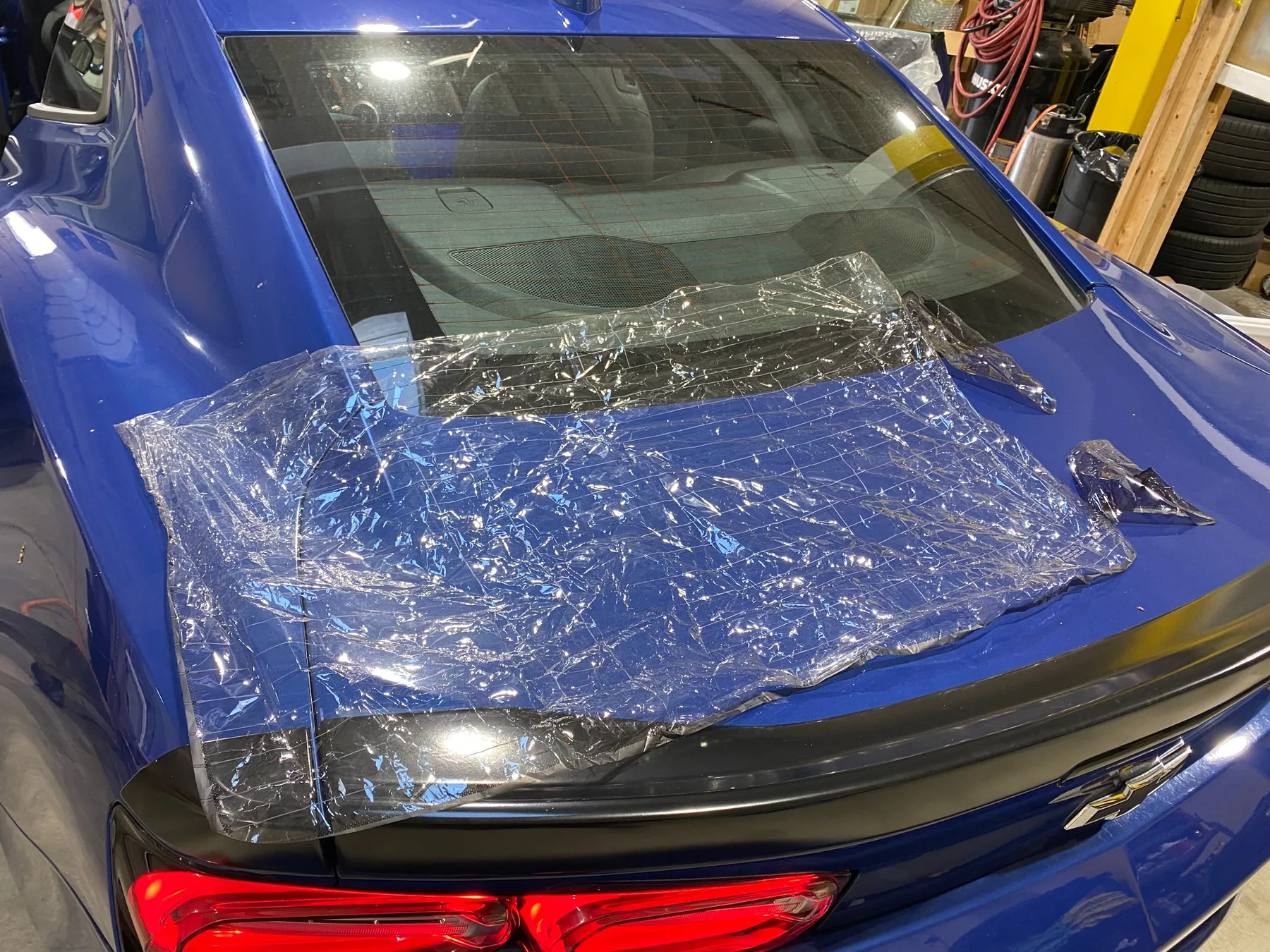
If the first installation contains visible contamination, another layer isn't going to magically remove what's trapped underneath.
In fact, making the window darker can increase contrast and make certain imperfections more noticeable.
That's why we don't recommend using another layer of tint to hide a poor installation.
If you're trying to determine what is normal versus excessive contamination in a professional tint job, read How Much Contamination Is Acceptable in Window Tint?.
Will Tint Over Tint Affect Clarity?
With quality film and a good underlying installation, stacking another layer doesn't automatically mean the glass will suddenly become distorted.
If the original film has good optical clarity and the second film is also a quality product, clarity can remain good.
But that's different from visibility.
If you're stacking film to make the windows darker, less visible light will pass through the combined setup.
So even though the film itself may remain optically clear, the windows can become substantially more difficult to see through because you've reduced the total VLT.
That's especially important at night.
Does Stacking Tint Make Existing Imperfections More Visible?
It can.
Suppose the original installation has:
- Small contamination
- A scratch
- A minor crease
- An edge issue
- Another imperfection
Now we make the window considerably darker by adding another layer.
That darker background can make imperfections in the original installation stand out more.
We've had customers go elsewhere after we recommended against stacking film and later return because they weren't happy with how the finished installation looked.
The second layer didn't create every imperfection.
In some cases, it simply made the imperfections in the original installation easier to see.
What Happens If the Bottom Layer of Tint Fails?
Think of the first layer as the foundation.
If that foundation begins:
- Bubbling
- Peeling
- Delaminating
- Separating
- Failing
the second layer doesn't magically hold the first layer together.
The upper film is still sitting on a compromised surface.
That's one of the biggest reasons we prefer installing new film directly to properly prepared glass.
A good installation needs a good foundation.
If the Bottom Tint Fails, Does the Top Tint Fail Too?
The two layers don't become one single piece of film simply because they're stacked.
But if the underlying layer starts failing, the overall stacked installation is compromised.
For example, if the bottom film begins bubbling, you'll see that failure through the upper layer.
If the bottom film begins peeling away from the glass, the upper film is sitting on a surface that is no longer properly bonded.
The problem begins with the foundation.
That's why the new layer isn't a solution for an old layer that's approaching failure.
Does Stacking Tint Make Future Removal Cost Twice as Much?
Not automatically.
At Dope Tintings, we don't charge double simply because there are two layers of film.
When the removal is approached correctly and we get underneath the original base layer, the stacked film can often come away together.
So we're not going to tell a customer:
"You have two layers, so we're charging you twice."
The actual removal price depends on the condition of the film and the amount of labor required.
Film condition matters more than simply counting layers.
Is Two Layers of Tint Harder to Remove?
Not necessarily.
Again, if we properly get underneath the original/base layer, the stacked layers may release together.
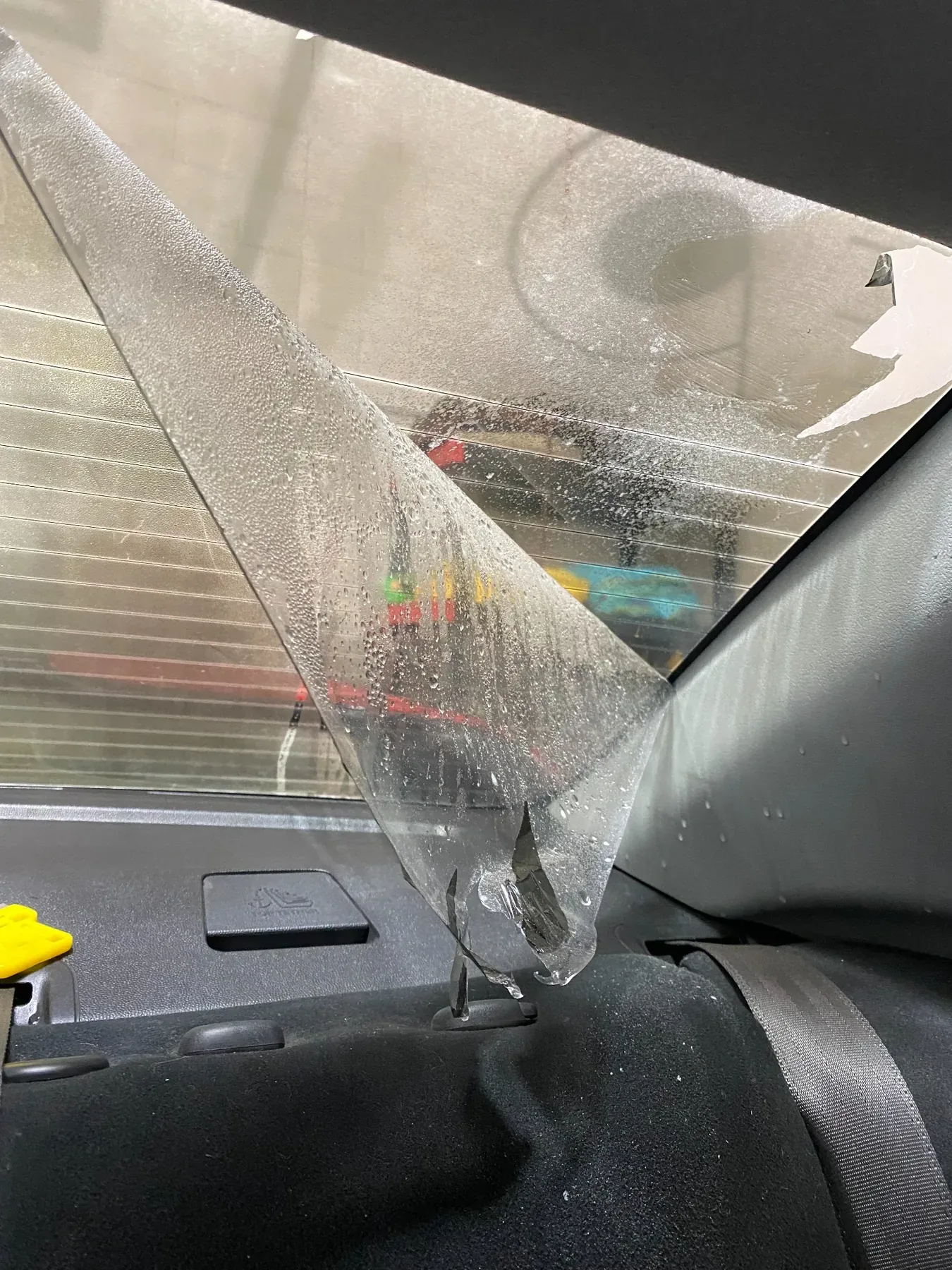
The bigger problem is the condition of those layers.
Two healthy layers may be easier to remove than one badly deteriorated layer that's:
- Brittle
- Bubbling
- Delaminating
- Breaking apart
- Leaving adhesive everywhere
That's why tint removal pricing isn't as simple as:
One layer = one price
Two layers = double
It doesn't work that way.
If you're considering removing the film yourself, read Can You Remove Window Tint Yourself? DIY vs. Professional Removal.
Can You Put 20% Tint Over 20% Tint?
Yes, but the final result will be much darker than 20%.
This is another area where customers get confused.
They sometimes think:
20% + 20% = 10%.
That's not how stacked VLT works.
When light passes through one film and then has to pass through another film, the combined transmission becomes substantially lower.
In our real-world tint-meter experience, 20% film over another approximately 20% surface can commonly produce a result around the 5% range, depending on the actual film and glass.
And that last part matters:
The number printed on the film box isn't always the exact number you'll measure on the vehicle.
Is 20% Film Always Exactly 20% VLT?
No.
Film percentages are nominal categories.
A product sold as "20%" may not meter exactly 20.0%.
Depending on the manufacturer and film line, an advertised 20% film may measure:
- Slightly below 20%
- Around 20%
- Slightly above 20%
That's normal.
Then we have the vehicle's glass itself.
Automotive glass isn't always transmitting exactly 100% of visible light before film is installed.
So the final meter reading is affected by:
Actual film VLT + underlying glass + any existing tint/privacy glass.
That's why we describe stacked results as approximate rather than guaranteed.
What Does 20% Tint Over 20% Tint Look Like?
Based on what we've measured and installed over the years, stacking approximately 20% over approximately 20% can produce a result around the 5% range.
It gives customers a very dark appearance.
But don't assume:
"Two 20s always equal exactly 5.0%."
The actual result depends on:
- Actual VLT of the first film
- Actual VLT of the second film
- Vehicle glass
- Tint meter
- Existing factory darkness
This is why we meter vehicles rather than rely solely on the name printed on a film box.
What Happens If You Put 35% Tint Over 20% Tint?
Based on our real-world installations and meter readings, 35% over an approximately 20% surface can commonly meter around the 10% range, depending on the actual films and underlying glass.
Again, that's an approximate real-world result.
It's not a universal guarantee that every 35-over-20 combination on every vehicle will read exactly 10%.
Different films and glass can move the final measurement.
What Happens If You Put 5% Tint Over 20% Tint?
This creates an extremely dark combination.
Based on what we've measured in real vehicles, 5% over approximately 20% can meter around 2% in some applications.
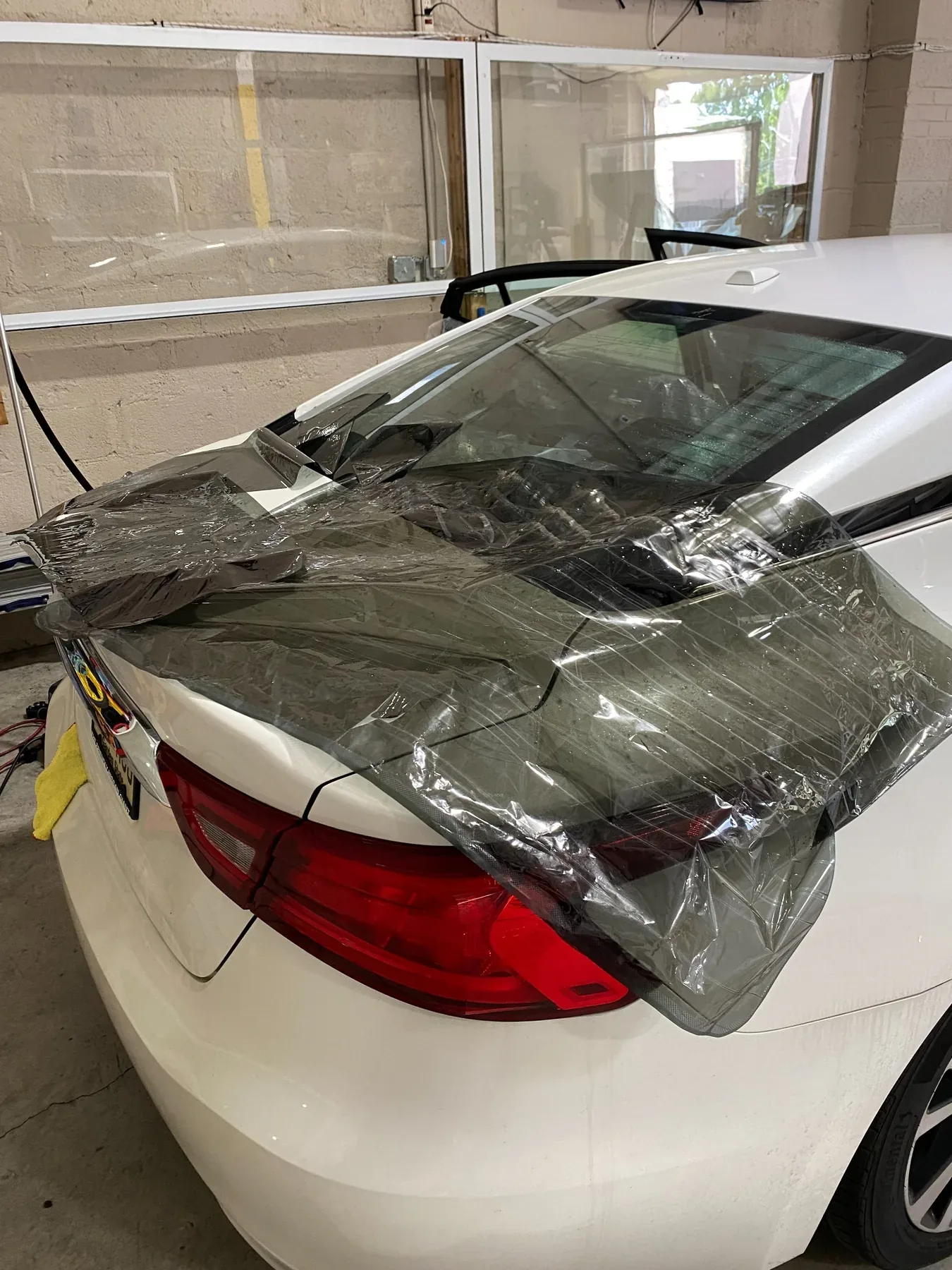
That's extremely dark.
Customers considering combinations like this need to think seriously about nighttime visibility.
Changing from standard to carbon or ceramic doesn't magically eliminate the visibility consequences of extremely low VLT.
For more information about darkness and nighttime visibility, read Can You See Through Ceramic Tint Better? Day & Night Visibility Explained.
Is There an Exact Formula for Stacked Tint Percentages?
There is a mathematical relationship between the actual visible-light transmission of each layer, but real automotive results aren't accurately predicted by simply assuming the advertised film names are exact measurements.
For example, a film marketed as 20% may actually measure somewhat differently.
The underlying automotive glass also affects the final reading.
Factory privacy glass varies by vehicle.
So while calculations can provide an estimate, the tint meter tells us what the actual vehicle is doing after installation.
That's why our real-world examples are given as approximate ranges rather than promises.
Is Factory Privacy Glass the Same as Window Tint?
No.
This is one of the most important distinctions in this article.
Factory privacy glass is glass that has been darkened as part of its manufacturing process.
There isn't necessarily a removable aftermarket film attached to the inside surface creating that darkness.
That's completely different from a vehicle that went to a tint shop and had aftermarket window film installed.
So when we install film over factory privacy glass, we're not necessarily doing:
Film + film.
We're doing:
Aftermarket film + factory-darkened glass.
That's a normal automotive tinting practice.
Can You Put Window Tint Over Factory Privacy Glass?
Yes.
We do this regularly on SUVs and trucks.
A customer may have clear or relatively light front door glass while the rear portion of the vehicle has factory-darkened privacy glass.
They may want:
- More privacy
- A darker rear
- Better heat rejection
- A closer visual match
- A specific overall appearance
We can install aftermarket film over that factory-darkened glass.
That is not the same thing as stacking aftermarket film over another aftermarket film installation.
What Percentage Is Factory Privacy Glass?
It varies by manufacturer, vehicle and specific glass.
In our tint-meter experience, factory-darkened rear glass can commonly measure somewhere around the high teens to mid-20% range depending on the vehicle.
We've seen examples around:
17%, 18%, 19%, 20%, 25% and nearby readings.
That's why we don't automatically assume every SUV's factory rear glass is exactly 20%.
We meter and evaluate the actual vehicle.
What Happens If You Put 20% Tint Over Factory Privacy Glass?
The final result can become substantially darker than the film's advertised 20%.
For example, if the factory privacy glass itself is already around the 20% range and we add approximately 20% film over it, the finished glass can meter or appear around the 5% range, depending on the actual vehicle and film.
This is a common strategy when an SUV owner wants the rear portion of the vehicle to have approximately a 5% appearance while using 5% film on the clear front doors.
Example: Cadillac Escalade With a 5% Look
Suppose a Cadillac Escalade arrives with factory-darkened rear privacy glass measuring around the 20% range.
The customer says:
"I want the sides and back to look like 5%."
One possible approach is:
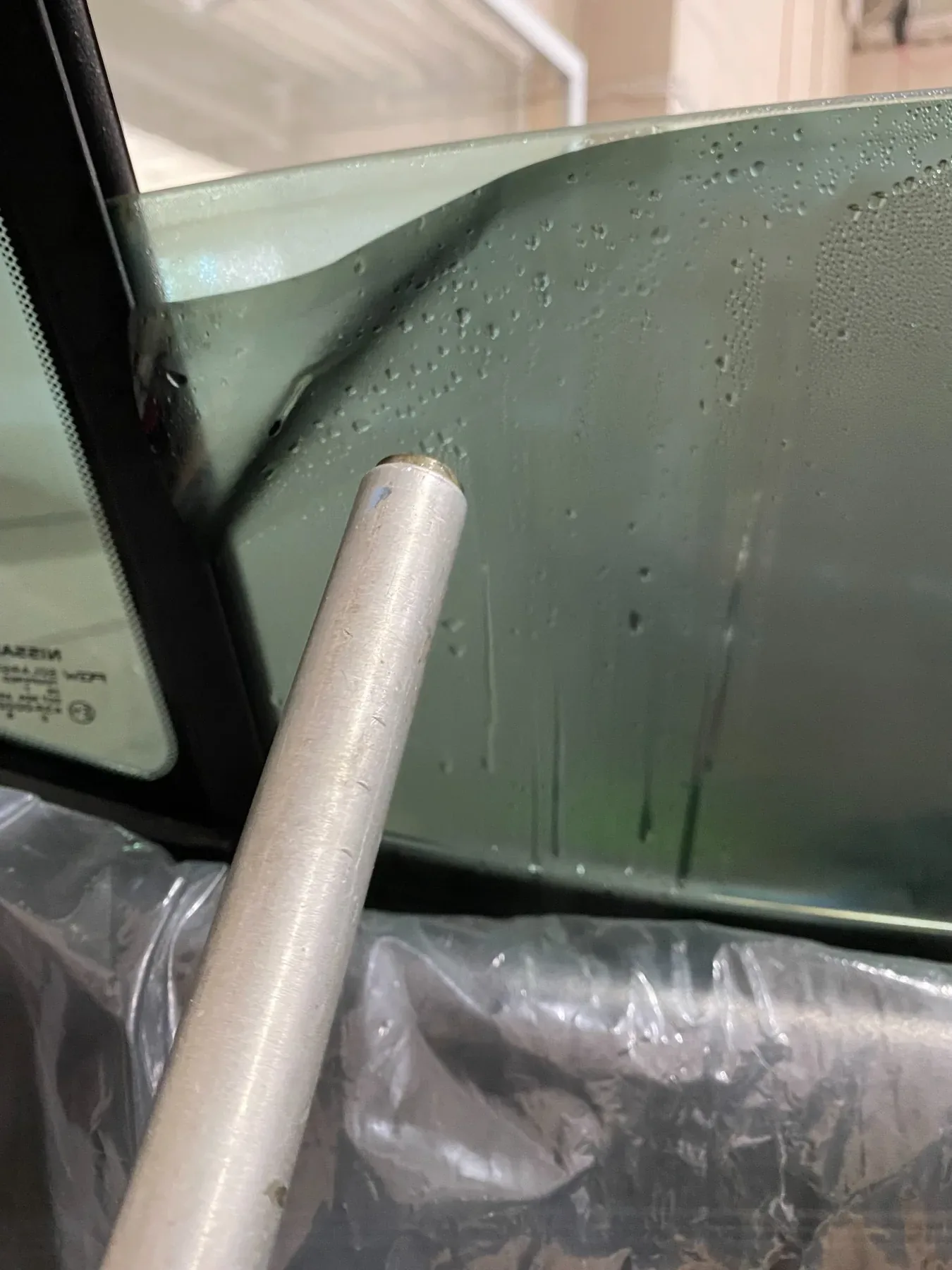
Front doors: approximately 5% film on the relatively clear front glass.
Factory-darkened rear glass: approximately 20% film over the factory privacy glass.
Because the rear glass is already dark from the factory, adding 20% film can bring the combined rear appearance much closer to the 5% front doors.
The exact meter reading can vary by vehicle.
That's why we don't treat every factory privacy glass as though it measures exactly the same.
Why Can the Front Windows Look Lighter Than the Rear Windows?
Even when the tint percentages are chosen to create a close match, the front and rear windows can still look different.
One of the biggest reasons is the windshield.
If nothing is installed on the windshield, a large amount of light can enter through the front of the vehicle.
That additional light illuminates:
- The driver
- Front passenger
- Dashboard
- Front seats
- Front portion of the cabin
From outside the vehicle, that can make the front windows appear lighter than the rear windows.
We've had customers pick up vehicles with very dark tint and ask:
"Why do the front windows look lighter than the back?"
Sometimes nothing is wrong with the film.
It's simply the amount of light entering through the windshield.
Does Interior Color Affect How Dark Window Tint Looks?
Absolutely.
Interior color can make a major visual difference.
Imagine two identical vehicles with the same window film installed.
Vehicle A has a black interior.
Vehicle B has a tan or light-colored interior.
Even if the tint meters similarly, the vehicle with the darker interior can appear noticeably darker from outside.
The lighter interior reflects more visible light back toward the glass.
That's why we don't judge tint percentages solely by looking at somebody else's car in a photograph.
The same film can appear different depending on:
- Interior color
- Windshield light
- Sunlight
- Cloud cover
- Viewing angle
- Time of day
The meter reading and the way the vehicle looks aren't always the same thing.
Why Doesn't 20% Always Perfectly Match Factory Rear Tint?
Customers frequently ask us to:
"Put 20% on the two fronts so it matches the factory back."
Sometimes that's exactly what they want.
But factory privacy glass doesn't measure exactly 20% on every vehicle.
We've seen factory-darkened glass vary depending on the make and model.
So before assuming one film percentage will create a perfect match, we need to look at the actual vehicle.
There's another factor too:
Even if the front and rear measurements are relatively close, the front can still appear lighter because sunlight is entering through the windshield and illuminating the front seats.
So a visual match isn't determined by VLT alone.
Can You Make Front Windows Match Factory Privacy Glass?
Yes, we can usually get the appearance very close, but customers need realistic expectations.
We consider:
- Factory rear-glass darkness
- Front-door glass
- Film percentage
- Interior color
- Windshield
- Overall appearance the customer wants
Some customers want the fronts to look similar to the factory rear.
Other customers tell us:
"The factory back is too light. I want everything darker."
Those are two different goals.
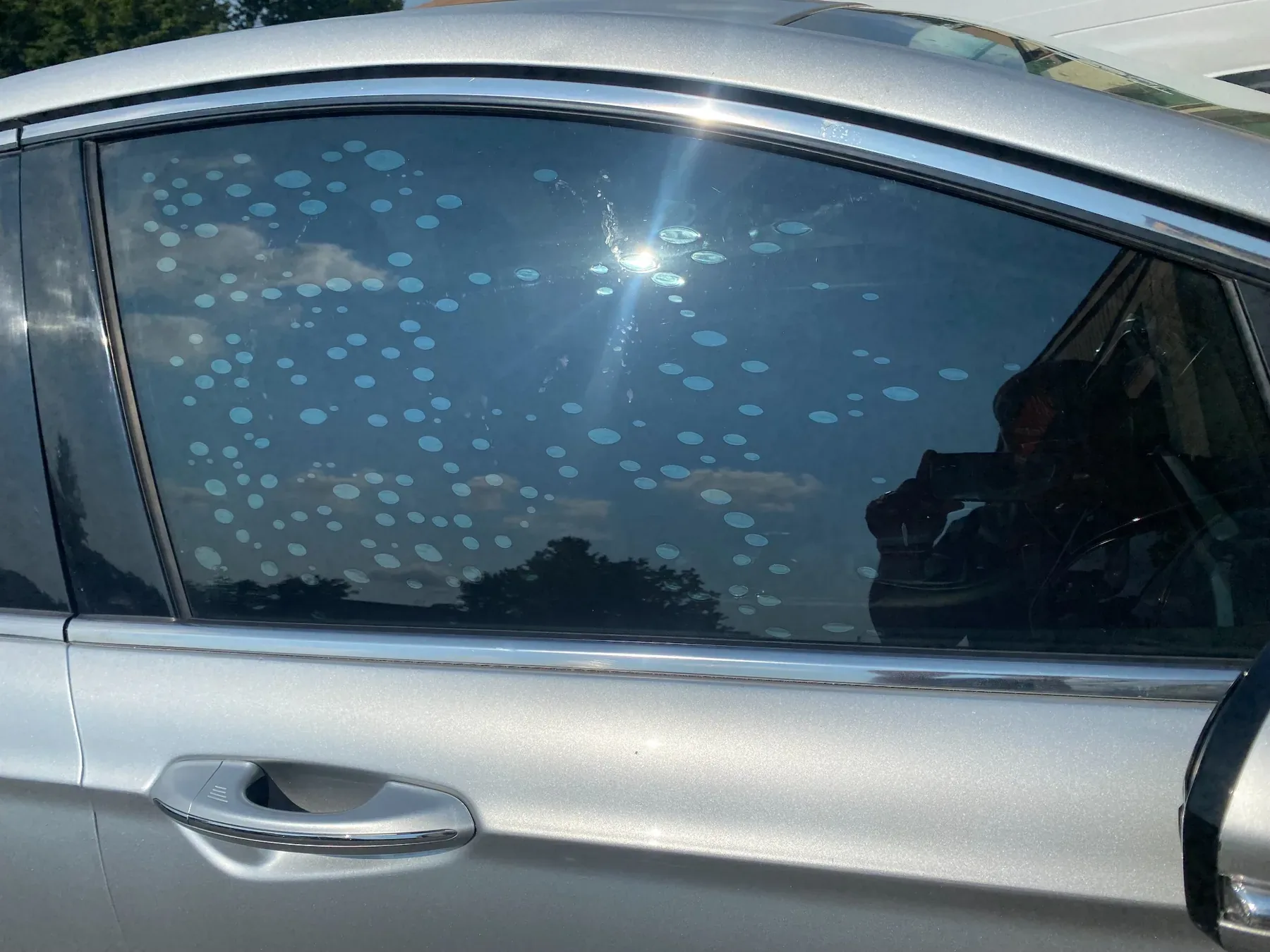
That's why we ask what the customer actually wants before selecting the film.
Is Putting Tint Over Factory Privacy Glass Considered Double Tinting?
From an installation standpoint, factory privacy glass and two layers of aftermarket film are not the same thing.
Factory privacy glass gets its darkness from the glass itself rather than from an existing removable aftermarket film layer.
So installing aftermarket film over factory privacy glass is a normal installation onto glass.
That's different from taking a window that already has aftermarket film attached to it and installing another aftermarket film over that existing layer.
This distinction is extremely important when customers ask whether we're willing to "tint over tint."
Can You Put Ceramic Tint Over Factory Privacy Glass?
Yes.
If a customer wants additional heat rejection on the factory-darkened rear portion of an SUV or truck, ceramic film can be installed over the factory privacy glass.
The existing darkness of the factory glass and the VLT of the new film will affect the final visible-light transmission.
The ceramic technology primarily changes the film's heat-rejection performance.
It doesn't erase the effect of the factory glass underneath it.
If you're deciding whether ceramic is worth the additional money, read What Is the Difference Between Carbon and Ceramic Window Tint?.
Can You Put Carbon Tint Over Factory Privacy Glass?
Yes.
Carbon film can also be installed over factory privacy glass.
At Dope Tintings, carbon is an option we recommend to customers who want good heat rejection without paying for our highest heat-rejection ceramic option.
Again, this isn't the same as stacking carbon film over an existing sheet of aftermarket tint.
We're installing film onto factory-darkened glass.
Can You Put Ceramic Tint Over Existing Aftermarket Tint?
Technically, yes, assuming the existing film is in suitable condition and the shop is willing to perform the installation.
But changing the new layer to ceramic doesn't solve the underlying warranty issue.
The ceramic film would still be installed on top of another piece of aftermarket film rather than directly onto properly prepared glass.
At Dope Tintings, that stacked installation would not receive our normal warranty.
If maximum heat rejection is your goal, we'd generally rather start with properly prepared glass and build the installation correctly.
Does Putting Ceramic Over Regular Tint Make the Bottom Film Ceramic?
No.
Adding ceramic film over another film doesn't transform the underlying film into ceramic.
You now have two different film layers.
The ceramic layer can contribute its own solar-performance characteristics, but the underlying installation is still whatever film was originally installed.
And if that original layer fails, you've still built your new installation over a compromised foundation.
When Does Stacking Aftermarket Tint Make Sense?
There aren't many situations where stacking is our first recommendation.
One situation where it can make practical sense is when a customer wants a darkness that isn't readily available as a single film option.
Another is when a customer already has a very good installation, wants it darker, understands the warranty tradeoff and simply doesn't want to pay for removal.
For example, a previous Dope Tintings customer may have 20% installed and later decide they want something closer to a 5% appearance.
If the existing installation is still excellent, we can discuss adding another layer.
But we make the tradeoff clear:
Stack it and lose the warranty
or
Remove it, install the desired film directly to the glass and retain the applicable warranty.
If I Want to Go From 20% to 5%, Should I Remove the 20% First?
Our preferred recommendation is:
Yes.
Remove the existing 20%, properly prepare the glass and install the desired 5% film directly onto the glass.
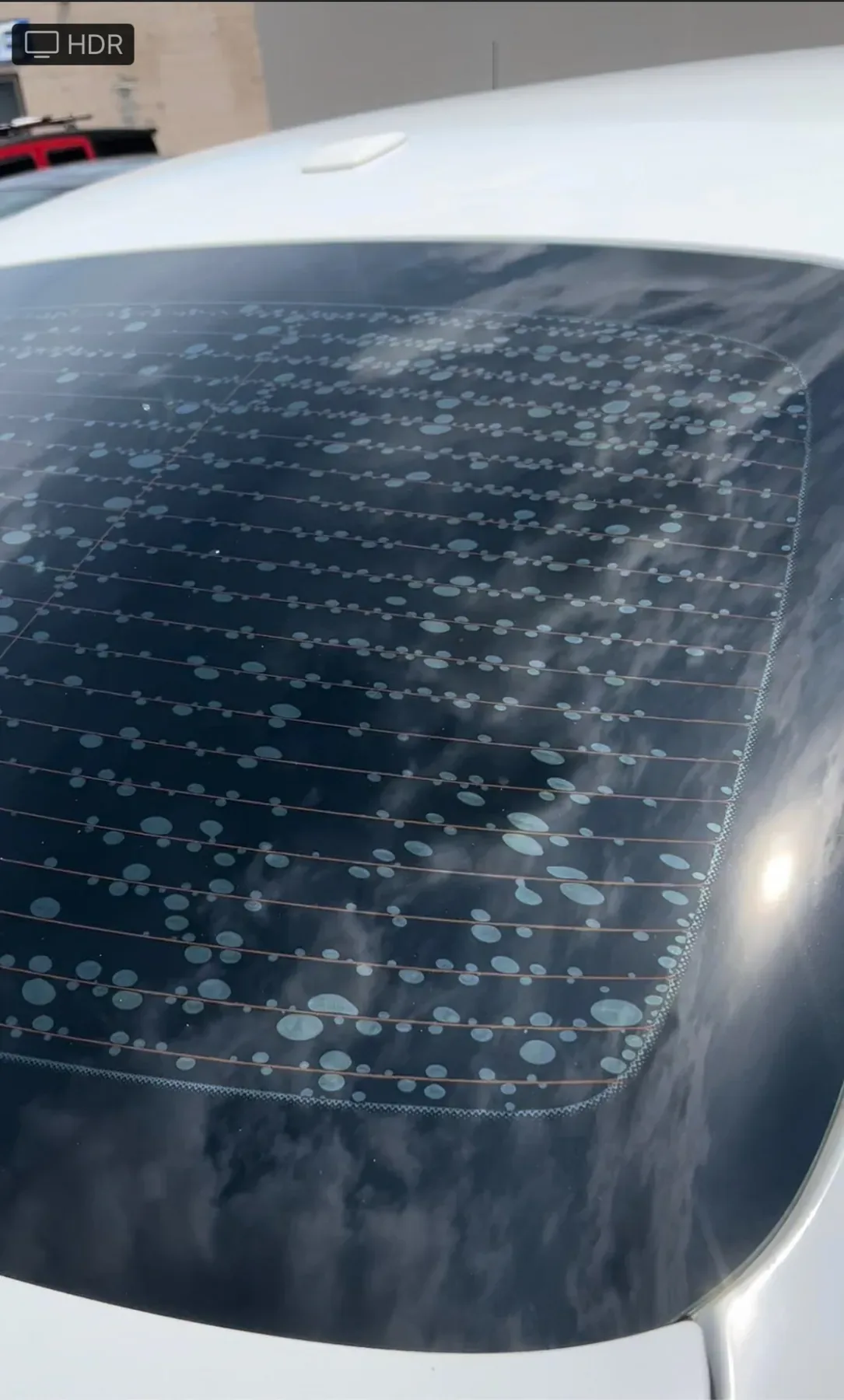
That gives you a clean new installation and allows the applicable warranty to remain in place.
If the existing 20% installation is in excellent condition and the customer specifically requests another layer instead, we can discuss that option.
But that becomes a customer-requested exception, not our preferred installation method.
What If I Don't Care About the Warranty?
Then the decision becomes more about your priorities.
We've had customers tell us:
"I know your work is good. I don't care about the warranty. Just make it darker."
If we've inspected the existing installation and believe it's suitable for stacking, we can discuss doing exactly that.
We're not going to force someone to pay for removal if they fully understand the tradeoff and choose otherwise.
But we're also not going to pretend that a stacked installation receives the same warranty as film installed directly to properly prepared glass.
The customer needs to make an informed decision.
Will Dope Tintings Stack Tint Installed by Another Shop?
Potentially.
We inspect it first.
If another shop's existing installation looks good or acceptable, we'll explain the customer's options.
If they want us to remove the old film and install ours directly to the glass, that's our preferred method.
If they specifically want another layer installed over the existing film, we may agree to do it after explaining that there is no warranty on the stacked installation.
If the existing film is already poor or failing, we're going to recommend removal.
What If I Don't Know What Film Is Already on My Car?
This is common with used vehicles.
You may not know:
- Who tinted it
- Film manufacturer
- Film type
- Film age
- VLT
- Warranty
- Whether it's standard, carbon or ceramic
That uncertainty is another reason removing the existing aftermarket film can be the better option.
It gives us a clean starting point.
Instead of building a new installation over an unknown product, we can remove it, properly prepare the glass and install a film whose specifications and warranty are known.
What If the Existing Tint Was Installed Years Ago?
Age alone doesn't automatically tell us whether the film is good or bad.
We've seen older professional installations that still look excellent.
We've also seen relatively young installations already showing problems.
What matters is the actual condition.
We're looking for:
- Bubbling
- Peeling
- Delamination
- Discoloration
- Adhesive failure
- Contamination
- Other visible problems
If you're wondering how long professional tint should last, read How Long Does Tint Last on a Car?.
Can You Put New Tint Over Purple Tint?
We don't recommend it.
If the existing film has turned purple or significantly changed color, that's evidence the old film has deteriorated.
Putting another layer over it doesn't restore the underlying film.
Remove the failed film.
Prepare the glass.
Then install the new tint.
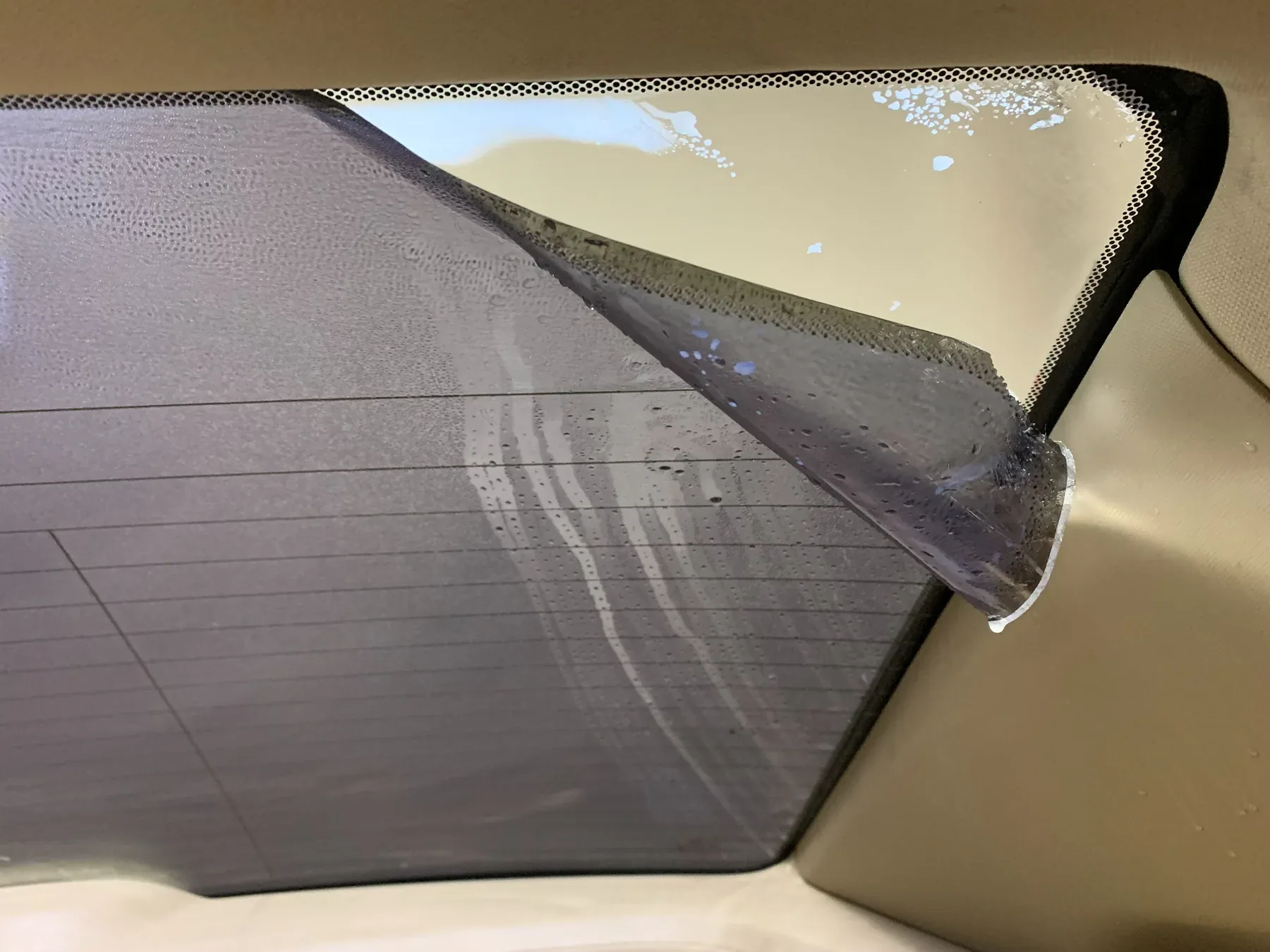
Can You Put New Tint Over Bubbling Tint?
No, that's not something we recommend.
Bubbling film is already failing.
The bubble remains underneath the new layer.
The failed adhesive or film construction underneath doesn't become healthy because another piece of tint was placed over it.
If your tint is bubbling badly enough that you're considering replacement, removal should be part of the job.
Can You Put New Tint Over Peeling Tint?
Again, we don't recommend it.
Peeling means the existing installation is already losing adhesion.
That is a bad foundation for another layer of film.
Putting new tint over peeling tint is like installing a new surface over something that's already separating underneath.
Start with properly prepared glass instead.
Can You Put New Tint Over Scratched Tint?
You technically can put another layer over scratched film, but don't expect the new layer to repair or hide the underlying damage.
If the scratch is in the old film, it may remain visible through the new layer.
If the actual glass underneath is scratched, new tint isn't going to repair the glass either.
Depending on lighting and film darkness, the scratch may actually become more noticeable.
Can You Put Tint Over Tint to Make It Darker?
Yes, physically you can.
That's one of the main reasons customers ask about stacking.
But understand what you're doing.
You're changing the combined VLT and creating a much darker window.
For example, based on our real-world meter experience:
- Approximately 20% over 20% can land around the 5% range
- Approximately 35% over 20% can land around the 10% range
- Approximately 5% over 20% can land around 2% in some applications
Those aren't guaranteed mathematical outcomes for every vehicle.
Actual results depend on the films and underlying glass.
And extremely dark combinations can create significant nighttime-visibility issues.
For a deeper explanation of dark-tint visibility, read Can You See Through Ceramic Tint Better? Day & Night Visibility Explained.
Is Stacked Tint Harder to See Through at Night?
It can be, because the combined VLT becomes lower.
This has nothing magical to do with the fact that there are two physical pieces of film.
The issue is the amount of visible light getting through the combined setup.
If your stacked combination meters around 5%, 2% or another extremely dark level, nighttime visibility can become difficult.
Don't assume that choosing ceramic for the upper layer makes an extremely dark combination easy to see through.
Dark is dark.
Is Tint Over Tint Legal?
Legality depends on the final result and the laws that apply to the vehicle and glass location—not simply on whether there is one layer or two.
A customer could have one layer that creates an unlawful setup.
Another vehicle could have factory privacy glass plus aftermarket film on glass where that darkness is permitted.
Because this article is focused on installation and stacking rather than giving a complete legal explanation, read our New Jersey Window Tint Laws: Complete Guide before choosing percentages based on legality.
Should I Remove Old Tint Before Installing New Tint?
In most situations, yes. That's our preferred recommendation.
Removing the existing aftermarket film allows the installer to:
- Inspect the glass
- Remove old adhesive
- Properly clean the window
- Address contamination
- Start with a known surface
- Install the new film directly to glass
- Provide the applicable warranty
That's the professional approach we prefer.
Stacking is an option in certain situations.
It isn't our default recommendation.
How Much Does It Cost to Remove Old Tint Before Re-Tinting?
Removal pricing depends on which windows are being stripped and the condition of the existing film.
At Dope Tintings:
- Two-front-window removal is currently $74.99
- Rear-window removal currently starts at $74.99
- Full removal on many coupes and sedans currently starts at $149.99
- SUV/truck full removal can start around $174.99
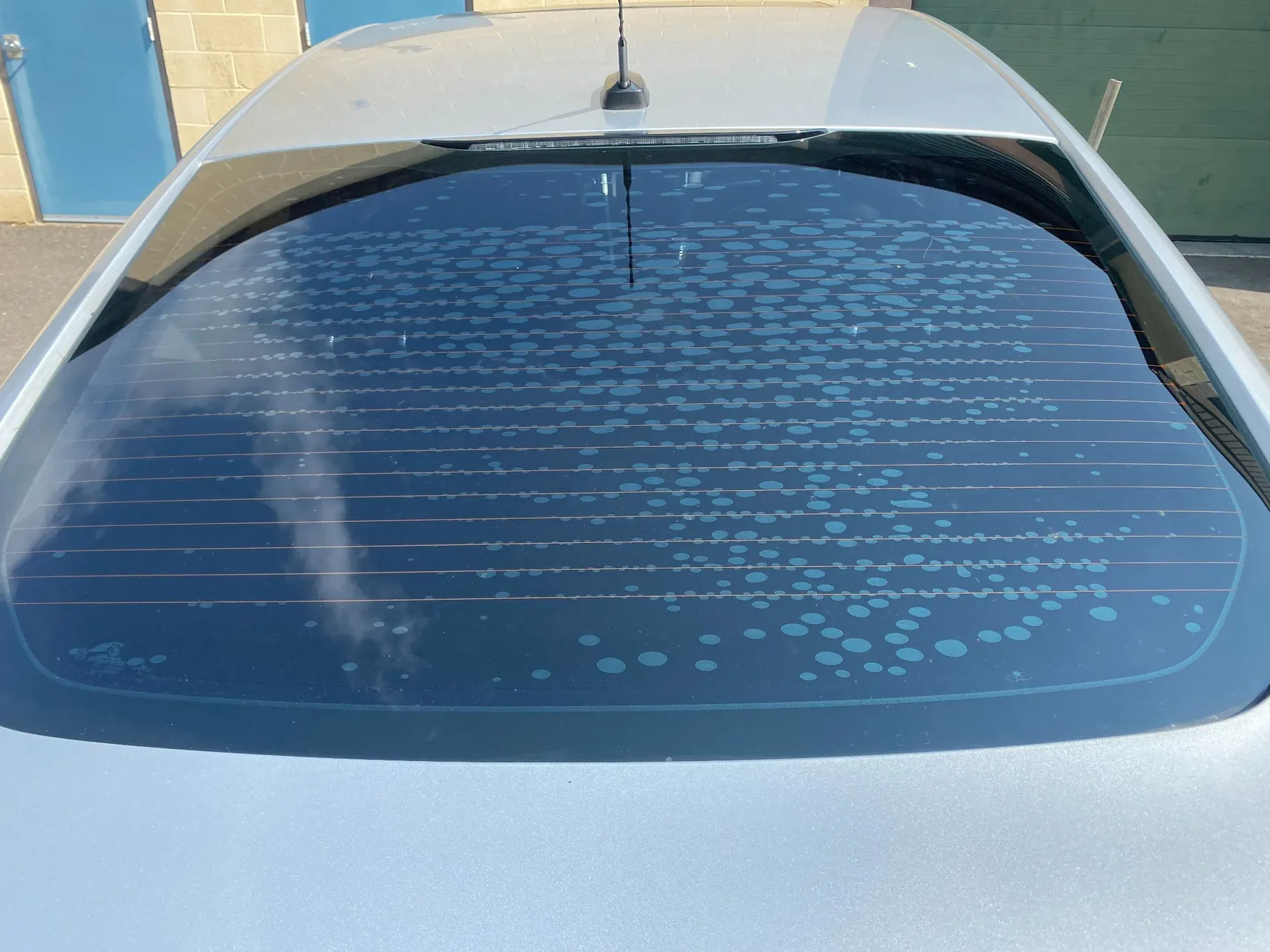
Full-vehicle and difficult rear-glass removals can increase depending on film condition.
For complete pricing, read How Much Does Window Tint Removal Cost in South Jersey?.
If you only need the front windows stripped, read How Much Does It Cost to Remove Tint From Two Front Windows?.
If the problem is specifically the rear glass, read How Much Does Rear Window Tint Removal Cost?.
Can Old Tint Be Removed and New Tint Installed the Same Day?
Often, yes.
If the existing film removes reasonably well, we can remove the old tint, properly prepare the glass and install the new film during the same appointment.
A difficult full-vehicle or rear-window removal may require considerably more time.
The condition of the old film determines the schedule.
For general installation-time information, read How Long Does It Take to Tint a Car? Complete Time Guide.
Tint Over Tint in Pennsauken and South Jersey
Dope Tintings provides professional automotive window tint installation and removal from our shop in Pennsauken, New Jersey.
We serve customers throughout Camden County, Burlington County and surrounding South Jersey communities, including:
- Pennsauken
- Cherry Hill
- Camden
- Maple Shade
- Cinnaminson
- Delran
- Collingswood
- Haddonfield
- Marlton
- Mount Laurel
- Moorestown
- Palmyra
- Surrounding South Jersey communities
If you already have aftermarket tint and want your windows darker, bring the vehicle to us.
We'll inspect the existing installation and explain your options.
You can then decide whether you'd rather:
Remove the old film and retain the applicable warranty
or, when appropriate,
Stack another layer and accept that the stacked installation will not receive our normal warranty.
Frequently Asked Questions About Putting Tint Over Tint
Can you put new window tint over old tint?
Yes, technically you can put new window tint over existing aftermarket tint if the original installation is in good condition. However, Dope Tintings generally recommends removing the old film and installing the new tint directly to properly prepared glass. We do not provide our normal warranty on stacked film installations.
Can you tint over existing tint?
Yes, but the existing installation should be inspected first. If the old tint is bubbling, peeling, purple, delaminating or poorly installed, we recommend removing it rather than stacking another layer over it.
Can you put tint over tint to make it darker?
Yes. Stacking film lowers the combined VLT and makes the window darker. The exact final reading depends on the actual VLT of each film and the underlying automotive glass.
Does 20% tint over 20% tint make 10%?
Not necessarily. Based on our real-world meter experience, approximately 20% over approximately 20% can produce a result around the 5% range, depending on the actual films and glass.
What does 35% tint over 20% tint equal?
Based on installations we've measured, approximately 35% over an approximately 20% surface can commonly meter around the 10% range, although the actual result varies by film and glass.
What does 5% tint over 20% tint equal?
This creates an extremely dark combination. We've seen approximately 5% over an approximately 20% surface meter around 2% in some applications. Actual results vary.
Why aren't stacked tint percentages exact?
Film percentages are nominal categories and don't always meter exactly at the number printed on the product. The underlying automotive glass also affects the final VLT measurement.
Is factory privacy glass the same as aftermarket tint?
No. Factory privacy glass gets its darkness from the glass itself. Aftermarket window tint is a film installed onto the glass.
Can you put tint over factory privacy glass?
Yes. Installing aftermarket film over factory-darkened privacy glass is a normal tinting practice and is different from stacking aftermarket film over another aftermarket film.
Can you put ceramic tint over factory privacy glass?
Yes. Ceramic film can be installed over factory privacy glass when a customer wants additional heat rejection or a darker appearance.
Can you put carbon tint over factory privacy glass?
Yes. Carbon film can also be installed over factory privacy glass.
Can you put ceramic tint over regular aftermarket tint?
Technically yes if the underlying film is in suitable condition and the shop agrees to the installation. At Dope Tintings, however, a stacked installation does not receive our normal warranty.
Does tint over tint affect clarity?
Quality films stacked over a quality existing installation don't automatically create optical distortion. However, stacking lowers the combined VLT, which can make the windows harder to see through, particularly at night.
Will tint over tint hide bubbles?
No. Another layer of film does not repair bubbling or failing tint underneath it. We recommend removing failed film before installing new tint.
Will new tint hide contamination in old tint?
Not necessarily. Making the window darker can sometimes make existing contamination or imperfections more noticeable.
What happens if the bottom layer of tint fails?
The upper layer is now sitting on a compromised foundation. Bubbling, peeling or delamination in the bottom film can affect the appearance and stability of the overall stacked installation.
Does having two layers of tint cost twice as much to remove?
Not automatically at Dope Tintings. If we properly get underneath the base layer, stacked films may come away together. Removal pricing depends more on film condition and labor than simply the number of layers.